English
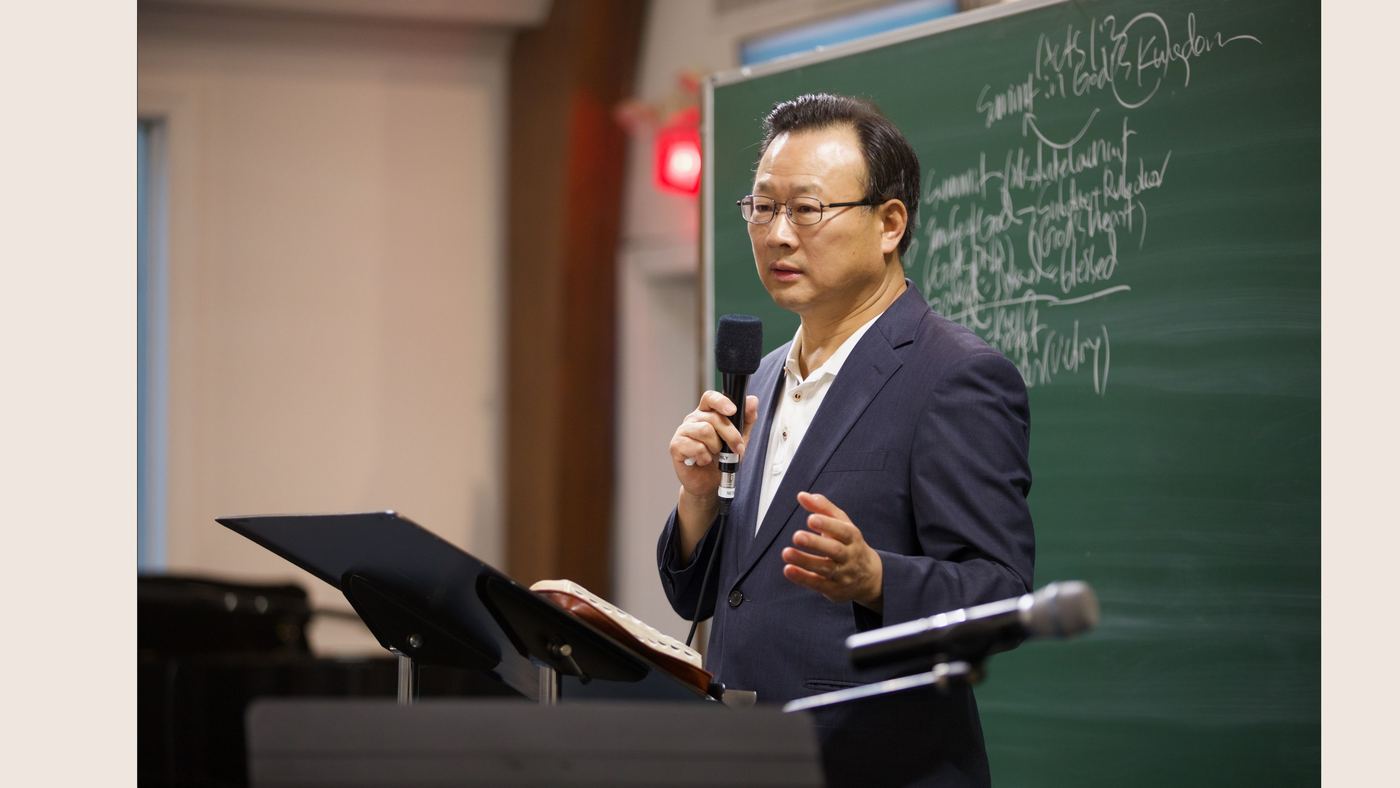
The Choice That Prepares God’s Blessing (Joshua 14:6–12) 1/4/2026
In this year’s New Year message, we held on to two things. First, we reflected on what God desires to accomplish through us, the conclusion of God and the conclusion of the Bible. This is the blessing of the three courtyards, and through it, the blessing of the true Church, the eternal Church, which is brought to completion. Second, we considered the answers and blessings God has promised to each of us personally, making it inevitable that we will be used for this work. This is God’s conclusion for each individual. It is the blessing of being leaders, and spiritual commanders, and witnesses who save all nations.
God will surely fulfill what He has promised. When will He fulfill it? There are two conditions.
First, it is when we look to the God who gave the covenant and believe that covenant as our own. We must not receive God’s promise merely as knowledge or comfort. We must stake our lives on it, hold it as our own, and believe. Then the covenant will surely be fulfilled, and its answers and blessings will be passed on to the next generation. This is what is emphasized in Deuteronomy 6:1–9 (the Shema).
This was spoken while Israel was still in the wilderness. God promised that Canaan would surely be conquered and that they would greatly prosper in that land. For this reason, Israel was commanded to love the Lord with all their heart, soul, and strength, to engrave His words on their hearts, and to pass them on to their descendants without fail.
There is another condition. We must make choices that gives God no choice but to bless us. Many things will happen this year as well. As prophesied, even more difficult situations may arise. At such times, everything depends on what kind of choice we make.
Zig Ziglar, author of the bestseller See You at the Top, said, “It is not environment or circumstances, but choices that make my life.” President Franklin D. Roosevelt, who led the nation through the Great Depression and World War II, said, “The choices we make today shape the reality of tomorrow.”
Caleb in today’s passage goes even further. This passage speaks about the land of Hebron that he chose. At a decisive moment, his choice became one that saved his family and descendants, saved all Israel (the Church), and saved the eternal future prepared by God.
- What kind of place was the land of Hebron that Caleb chose?
1) It was the land the Israelites feared most and therefore spoke ill of. Among the twelve spies sent by Moses, ten cried out in fear that the land should be abandoned. Because of this, Israel fell into unbelief, and as a result of that unbelief, they suffered the pain of not being able to enter Canaan (Numbers 14:23). In our lives as well, fearful environments and problems that can easily lead us into unbelief may come near us or stand before us. What choice should we make then?
2) It was the land where a confession of faith was proclaimed through Joshua and Caleb. “The LORD will bring us into this land and give it to us. It is a land flowing with milk and honey” (Deuteronomy 1:8). It was the land promised by God in response to that confession of faith. “But my servant Caleb, because he has a different spirit and has followed me wholeheartedly, I will bring into the land he went to, and his descendants will inherit it” (Numbers 14:24). Not a single confession or choice made in faith ever falls to the ground.
3) As the result of that faithful choice, that land became a place where the masterpiece of God’s greatest plan was fulfilled. Later, Moses blessed Caleb, giving him priority and the right of inheritance, saying that whichever land Caleb chose and set his foot on would become his everlasting possession (v. 9). He could have chosen an easier and more peaceful land, but he gave that up and made this choice. The result was tremendous. Later, David, a descendant of Caleb, became king in Hebron (2 Samuel 2:3–4), and eventually this land became the core city of the “city of refuge,” a place where even manslayers could live and where the high priest’s land was established (Joshua 20:7). Upon this foundation, the true Church was established.
- How was Caleb able to make such a choice? Through Caleb, God teaches us three things.
1) Hold on to God’s “only” and “absolute.” Within this are only Christ, the Kingdom of God, and the power of the Holy Spirit. Even salvation requires holding onto this (John 14:6; Acts 4:12). For believers, every choice must be based on this “only” and “absolute” standard of God.
① Only what God gives is complete and eternal. This is impossible by worldly or human standards. Only Christ, because we ourselves could not solve the problem (original sin, Satan, destiny), the Son of God came and personally made atonement (Hebrews 9:12). He died and resurrected for us and even now intercedes and prays for us at the throne (Romans 8:34). We are to move forward looking to His grace and help (what the Reformers proclaimed as “Only Christ”, Solus Christus). At that moment, Christ reigns over us, and the Kingdom of God comes. Only then is the power of darkness broken (Matthew 12:28). Then His wisdom and power come upon us, enabling us to transcend ourselves and make choices that see the future God has prepared.
② At that point, there is no need for us to fear the environment, reality, or threats. Caleb enjoyed this. Whether 45 years earlier as a spy or now at age 85, he was not afraid.
③ That is why he chose the land everyone feared, because it was the land God had promised. “If the LORD is with me, I will drive them out,” he declared (v. 12). Faith gives birth to faithful choices and challenges. This is why daily hearing the Word, meditating on it, and allowing the covenant to be imprinted and rooted in us is so important. What is imprinted and rooted will inevitably be manifested.
2) Make the choice of a true leader. Caleb was a hidden leader, overshadowed by Joshua, yet a leader God used. God has promised to use us as leaders for all nations, calling us ambassadors of Christ and a royal priesthood. Leadership must be trained even in small choices. This should be trained from childhood. We must develop character and a way of life that can yield, hide oneself, lift others up, and give all glory to God (Matthew 6:4; Philippians 2:3–5). The Reformers also proclaimed this: “Before God alone” (Coram Deo), and “Glory to God alone” (Soli Deo Gloria).
① The hidden leader Caleb chose the land that everyone feared and spoke ill of. This is the choice of “Nothing.” To human eyes and standards it is nothing, but to God it can become everything.
② The hidden leader Caleb chose the land that everyone ignored. This is the choice of “No one.” Choosing what others do not—hidden work—is the mark of a leader hidden from view but used by God.
③ The hidden leader Caleb needed no help from anyone except God. This is the choice of “Nobody.” God has promised us foundational help, absolute help, and eternal help (With, Immanuel, Oneness).
3) Make the choice of a true spiritual commander. ① He resolved to stand at the forefront of the conquest himself. Even at age 85, he said he could still go to battle (v. 11). This was not merely a physical war but a spiritual one. That is why God calls us to become prayer watchtowers whom He cannot help but use.
② The one who helped Caleb complete the conquest of Hebron was his son-in-law, Othniel. Caleb declared that he would give his daughter to the one who captured the land (Joshua 15:16–17). He set no other conditions.
Conclusion - After Caleb conquered the land of Hebron, the Bible says that the land had rest from war (v. 15). Through the choice of one person and one family, peace came upon Israel (all churches and believers), and through his descendant David, the eternal Kingdom of Christ came.
May we all be within this blessed choice every day, every moment, and in every situation this year.
The Choice That Prepares God’s Blessing (Joshua 14:6–12) 1/4/2026 January 4, 2026A Church That Bears the Fruit of the Three Courtyards (Isaiah 55:3–5) 1/1/2026
The book of Isaiah is often called the Gospel of the Old Testament. It most clearly prophesies the core message of Scripture and the three central covenants and blessings God has promised us. What are these three blessings? First, it is the covenant and blessing of Christ, who comes as the eternal answer to our lives (Isaiah 7:14; 9:6; 53:5; 60:1–2). Second, it is the covenant and blessing of the remnant—those who remain and are used by God with that answer (Isaiah 6:13; 10:21–22; 49:6). Third, it is the blessing of saving all nations through them—the blessing of world evangelization (Isaiah 55:3–5; 60:3–5; 61:8–9).
Through these three blessings, what is the final blessing God intends to complete? (This is God’s absolute conclusion and the Bible’s ultimate conclusion).
In the Old Testament, this blessing is explained through the tabernacle and the temple. In the New Testament, it is explained as the blessing of the church.
What do the tabernacle, temple, and church represent? First, God allows us to worship Him in the sanctuary and the temple and to enjoy all the blessings He has prepared. This is why worship is so important. Sunday worship is worship given as we begin the new week. The New Year worship services close one year and prepare for the new year God allows. If we can begin each day, even briefly, with personal worship, our lives will surely change.
Then, are the tabernacle, temple, and church merely places of worship? The individual who worships is the tabernacle, the temple, and the church (1 Corinthians 3:16). All of us together who worship are the tabernacle, the temple, and the church (Matthew 18:19–20). Finally, the day will come when the tabernacle, temple, and church are eternally completed—the New Jerusalem church (the eternal church) descending upon the new heaven and new earth, completed by Christ at His return.
This is the conclusion of Isaiah (Isaiah 56:7; 60:7; 66:22) and the conclusion of the Bible (Revelation 21:1–5; 22:16). Each person who has been saved becomes a holy tabernacle, temple, and church, and on that day the church will fully restore the glory of the Triune God.
Israel failed, collapsed, and was taken into captivity because they lost hold of this blessing. This is also why God chose and saved the Jews first—yet when they lost the three covenants and the meaning of the tabernacle, temple, and church, they were ultimately defeated by Satan. This is the blessing that our church and each individual must continue to restore in the new year. We are called to be witnesses of this blessing.
- The ministry of the three courtyards is a blessing that must be restored in the tabernacle, the temple, and the church
The key to all ministry in the Holy Place and the Most Holy Place is Christ. Each year, the high priest sacrificed a lamb and sprinkled blood, and each day the priests offered sacrifices—this all points to the salvation work Christ accomplished for us. As our Savior, Redeemer, and Mediator, Christ finished every problem on the cross (John 19:30) and even now intercedes for us (Romans 8:34).
The issue comes after that. In the courtyard of the temple, there were three groups of people whom the saved were required to care for. These are the people we often refer to today as the marginalized, blind spots, and disaster zones. Who were they?
1) Gentiles who had not yet received salvation (multicultural ministry, 237 nations and 5,000 tribes).
① As people who were saved first, the Jews despised them, amd they later suffered destruction and hardship. They knew nothing of missions except the reluctant Jonah, and they turned the Court of the Gentiles into a marketplace (John 2:13–17).
② This year as well, we must focus on multicultural ministry and missions to the 237 nations and 5,000 tribes. We must discern what God truly desires. This is also why this year the small group system was reorganized so that all ethnicities are integrated by region.
2) The sick who could not enter the temple (healing ministry).
① In the Old Testament, the sick could not enter the temple. Rooms were prepared in the court of healing where they could stay, worship, and receive prayers for healing through the priests. This is why messages of healing continue to be proclaimed from the pulpit.
② This is also why, following medical missions, we established free weekend clinics. Through the gospel of Christ alone, we heal, evangelize, and do missions among those who suffer. Though it may seem small, it is what pleases God.
3) Children (remnants) preparing for the future.
① In Old Testament times, women and children were not allowed into the sanctuary or the temple. Rooms were therefore prepared in the courtyard for them. This is the meaning behind Jesus’ words, “Let the little children come to Me” (Matthew 19:14).
② Now, as four language groups gather and the Saturday Summit School—especially the preschool—continues to grow, we are lacking rooms. That is why we are preparing to build a new education building and mission center. Commit yourselves with the resolve that this may be the final work of your life.
- God promised how he would bless each of us for the ministry of the three courtyards
No matter how inadequate we may be, God has promised to bless us. This is why David is given as our model. God called him from the sheepfold (Psalm 78:70), and though he experienced many hardships and failures, God used him to the very end (1 Chronicles 29:28).
1) God established David as a witness to the nations. Hold onto the covenant, pray, and challenge yourself so that your studies, workplace, and industry may become testimony to all peoples. Hold onto the covenant, pray, and challenge yourself so that even your pain, shame, and tears become testimony. God says He will use even the wicked and the unrighteous if they return (v.7), for His thoughts and ways are different than ours (v.9). Turn your weakness, pain, failure, and shame into opportunities for healing and stepping stones for God’s work.
2) God established David as a leader for all peoples. Train leadership that saves and leads people. Establish spiritual foundations through prayer and the covenant (spirituality). Develop character that embraces, yields, forgives, and helps others. This is why God allows problems and conflicts. Even Christ humbled Himself and obeyed to fulfill the Father’s will (Philippians 2:7–8). With this attitude, challenge yourself in study, work, and industry, relying on the power and grace of the Holy Spirit (Zechariah 4:6). God will make your life a masterpiece.
3) God established David as a commander for the sake of all peoples.
① Learn to know spiritual realities and engage in spiritual warfare so that even one soul may be saved. This is why we continually pray over evangelism targets, breaking the powers of darkness behind them. Even those we evangelize may be attacked by Satan at any time—this is why we must serve as constant prayer watchmen.
② Missions are spiritual deployments overseas. This is why short-term missionaries pray and train together for at least forty days. David established watchtowers throughout the land, placing swords, shields, and watchmen there (Song of Songs 4:4). This is the ministry of the local church. God promised that when we hold onto the covenant (the covenant of 7-7-7) and pray, He will send His heavenly hosts and angels to work tirelessly on our behalf (Isaiah 62:6–7). Then we will see the blessings of 3,000 disciples, 300 local churches, and 30 nations.
Conclusion - The year 2026 marks the 30th anniversary of our church. Until now, God has led us to the true blessings of the tabernacle, the temple, the church, and the Three Courtyards. This blessing is called an eternal covenant (v.3). It is a blessing we must enjoy in this age and continue to enjoy until the Lord returns. May the new year be a year in which the flowers of the Three Courtyards bloom and bear abundant fruit.
A Church That Bears the Fruit of the Three Courtyards (Isaiah 55:3–5) 1/1/2026 January 3, 2026The Christmas God Desires (Luke 2:8–14) 12/21/2025
At Christmas, people greet each other with “Merry Christmas.” In English, “Merry” means “joyful and glad,” and “Christmas” means “worshipping Christ.” In the passage, angels appeared to shepherds in the fields, announcing the birth of Christ and singing: "Glory to God in the highest, and peace on earth to those on whom His favor rests.”
First, Christ’s coming to earth brings glory to God in the highest (the heavenly throne). Christ is worthy of glory in heaven. It is because He is God Himself, the Son (Colossians 1:15–17). The One who receives glory came to us. The God of glory came to us, became our Savior, and through Him, all believers receive light, life, authority, and power (salvation). With Christ present, the powers of darkness surrender (Luke 10:19), and those who have His life enjoy eternal blessings with Him (John 5:24). More importantly, through His authority and power, we are called to bring life, healing, and blessing to the world (Ephesians 5:8; 1 Peter 2:9).
Second, “peace on earth to those on whom His favor rests.” This means that for individuals and the world that is with Christ, He brings peace. One of the greatest blessings we are to enjoy on earth is this. It is inner peace in us, family peace, neighborly peace, and national peace. Yet we see endless conflict, strife, and war. Why? Christ came to this earth, and people still shout “Merry Christmas,” yet peace is absent. The reason is clear. People do not know why Christ came. Without understanding the blessings He brings, “Merry Christmas” becomes a formal, empty greeting. So, what kind of Christmas does God desire for us?
- A Christmas that saves me.
1) It must be a Christmas that confirms who Christ is and what He has done for me.
① The glory, life, authority, and power of God in Christ have come to us. Because we could not come to Him, He humbled Himself to come to us and give His life for us. This is God’s absolute love for us (Romans 5:8).
② Take quiet, deep time for reflection. This year’s Christmas can have special meaning. Even at the first Christmas, Jerusalem was busy and noisy (Matthew 2:3). God, however, revealed the joyful news to the shepherds in the fields and the distant visitors from the East (Gentiles), who went to worship Christ first.
2) It must be a Christmas where Christ is experienced in my environment and reality. The shepherds were lowly people—the same reason David was “called from the sheepfolds” (Psalm 78:70). Christ chooses, finds, and saves us regardless of our circumstances or realities. Is it lonely? Despairing? This is the perfect opportunity to deeply experience God’s love.
3) It must be a Christmas where I give myself to Christ.
① To “give oneself” or “commit” is to respond to God’s plan, love, and choice for us. Worship is that time. Like the wise men, we offer gifts to Christ in gratitude.
② It is an expression of thanks for God’s love, grace, and blessings revealed through Christ. Sending cards or gifts at Christmas expresses gratitude for received grace and love. This gratitude prepares the way for greater blessings (Psalm 50:14–15, 23).
- A Christmas that saves my community (home, school, workplace, region, nation).
Shepherds are precious because they faithfully tended their flocks. We also are given “fields” where God wants us to enjoy, share, and bring blessings to others (Psalm 16:6–7).
1) My happiness in Christ spreads to others.
① There is an invisible flow that is spread. It is described as a “spiritual virus” in Scripture (Acts 24:5). We create a “happiness virus.” This is the kind of Christmas we should have.
② The peace Christ gives is this kind of peace (John 14:27). Think about what it means for this peace to be different from the peace that the world gives. If someone asks you if you are happy, what would be your response? This does not mean you have no problems or conflicts. True peace comes in times of problems and conflicts. It is why Scripture tells us to cast all anxieties on God and pray with thanksgiving (Philippians 4:6–7).
2) Christmas festivals and programs exist to share this joy. They help our children remember Christmas and invite neighbors to share the blessing.
3) Christmas is an opportunity to share with neighbors and the needy while spreading the gospel. Giving gifts is not the gospel itself. When their hearts open and are prepared, the gospel can be shared at the right time. Even decades ago, people went house to house singing carols to bless neighbors for this reason.
- A Christmas that saves the future
1) The people present on the first Christmas are models for us.
Simeon, who longed for Christ, prophesied He would be a light to the Gentiles (Luke 2:26). Anna, widowed and praying in the temple, prophesied how Christ would redeem all people (Luke 2:38).
2) We wait for Christ’s return to complete salvation for eternity and rule the new heaven and new earth.
Until then, our mission is to spread the gospel to all nations (Matthew 24:14). This is why we invest fully in multiethnic ministry and missions. The enemy seeks to block these blessings. Even at the first Christmas, Satan used King Herod to try to kill Christ (Matthew 2:13). Therefore, we must keep unwavering faith and enjoy spiritual victory while awaiting Christ (Ephesians 6:10–18).
3) Until that day, our mission is to pass on Christ’s covenant to our posterity.
This is why we devote ourselves to ministry for future generations and why small gifts are given as encouragement.
Conclusion - May this Christmas save me, save my community, and save the future. May its blessings be daily, continuous, and eternal.
12.21.25 The Christmas God Desires
The_Christmas_God_Desires_Forum_Questions_12-21-2025 La_Navidad_que_Dios_Desea_Preguntas_12-21-2025_ES
The Christmas God Desires (Luke 2:8–14) Luke 2:8–14The War to Save Gibeon (Joshua 10:1–5) 12/14/2025
Through the book of Joshua, we are watching Israel’s war to conquer Canaan. What does this war have to do with us? When applied to our lives, this war represents the spiritual battle for world evangelization, the conclusion of God. On this earth, believers, especially evangelists devoted to world evangelization, may face much opposition, persecution, failure, and crisis (2 Corinthians 1:8–9; 7:5; 11:23–28). The enemy working behind these attacks is not people, but evil spirits (Ephesians 6:12). Yet we already know the conclusion. The conclusion Joshua and the Israelites had is the same one we hold today. God gives victory and turns everything into evidence. There are three reasons for this.
First, this is a war God prepared (Joshua 1:3; 5:15). It proclaims judgment against those who oppose God. Satan reigns as the ruler of this world, and humanity follows him. But in the end, he must kneel before Christ and await judgment (Revelation 21:7–15).
Second, this is a war God Himself fights (Josh 10:14; 10:42). This is why Israel triumphed over the remaining Canaanite kings. In the last days, the forces of the red dragon will fiercely try to destroy the saints, yet they will be defeated for the same reason (Revelation 17:14).
Third, after victory, Christ will come to that land. We are waiting for the Christ who will return. All judgment has been entrusted to Him (John 5:22; 2 Timothy 4:1), and through Him the new heaven and new earth must begin (Revelation 21:5–7). Though it may seem like we are suffering for a time, every spiritual battle we face is ultimately a battle we are destined to win. So now we ask, why must we fight? For whom do we fight? How do we fight? And what is the conclusion?
- Why, and for whom, must we fight?
Why must we fight? Because we must restore what God originally gave us. We can no longer afford to lose it again (Heavenly mandate). First, we must fight to protect ourselves (the spiritual battle to save our own lives). For this purpose, the saved have been called as God’s army (Exodus 12:41; Ezekiel 37:10; 2 Timothy 2:3–4).
1) What was taken from us? The blessing of Genesis 1:27–28. We were lives created in God’s image to rule over and subdue the world. But in Genesis 3, humanity was deceived by the devil, and with the image of the devil, we began to live corrupted lives. This is why corruption continues endlessly. Instead of ruling the world, humanity is oppressed, trampled on, and are enslaved to it.
2) God restored this blessing by sending His Son as the Christ (the blessing of the gospel and salvation).
① Before the ages, God prepared Christ, who is the gospel itself (Romans 16:25), and then He called us (Calling). In Christ, God chose us in His infinite grace and love, justified us, and called us His children (Ephesians 1:3–5). When we heard and believed the gospel, God sealed us with the Holy Spirit (Ephesians 1:13) and made us members of God’s household - the people of His covenant (Ephesians 2:19).
② God now commands us to enjoy this blessing in reality and to save people like ourselves and all nations (Mission). For this mission, God made us ministers of the gospel (Ephesians 3:7) and enabled us to enjoy all that He is able to do (Ephesians 3:20). He causes us to grow for His good works (Ephesians 4:15–16) and pours upon us the authority and power of Christ’s light so that we may save those in darkness (Ephesians 5:8–9). From this flows evangelism and missions.To enjoy this blessing and not lose it, God commands us to fight the spiritual battle to the end and put on the full armor of God (Ephesians 6:12–18).
- Now, how must we fight?
1) The battle against the remaining Canaanites in this passage is a battle for evangelism and missions (a war for our local fields and the world field).
① The Gibeonites, prepared by God, came to Israel. They became God’s people and even servants of the temple. ② To destroy the Gibeonites, the remaining Canaanite people and kings united their forces. Satan still acts the same way today. Even though he knows he cannot defeat God’s people, he fights desperately. With deception, he gathers his forces to attack the saved people, the church, and especially those whom we have evangelized and brought to life.
2) How should we fight when the people we evangelized, or the mission fields we support, face such difficulties?
① We must prepare to win this battle. They are disciples (Mark 3:13–15; Luke 10:19). Pray prayers of spiritual warfare. ② Hold onto the reason God must give us 300% answers and blessings in every field, and challenge forward. This includes 100% blessing for myself, 100% blessing to save my field, 100% blessing to save the world and the future. Even when we do small and ordinary things, we need to do them holding onto the covenant. Regardless of circumstances, inevitable and absolute blessings will come. God gave this covenant even when Israel was taken into captivity (Isaiah 55:4–5: “a witness to the peoples, a leader and commander of the peoples”).
③ When you hold onto this covenant and challenge in faith, you will see the works God. The power that transcends time and space, unprecedented power, and the light that overcomes all darkness will be revealed (the blessing of the throne). Israel did not win by military force alone. More enemies died from the hailstones God sent than from the sword (v. 11). Through Joshua’s prayer, the sun stood still and the moon stopped. It was an unprecedented, never-repeated event (vv. 12–14). Hold onto God’s absolute reason for such miracles (covenant), see it in advance, enjoy it, experience it, and challenge forward(CVDIP).
- What is the conclusion? Three blessings we must experience and complete in Christ. God Himself fought for Israel, and through that blessing the conquest of Canaan was completed (the completion of world evangelization).
1) The blessing of “Only.” The one and only God is with me, helps me, fights for me, and gives me victory. Are you in a time of despair? A time of fear and loneliness? This is when you must experience the “only” blessing and enjoy its conclusion. It is a blessing where God alone is sufficient, and He becomes your joy and your everything. Those whom God used experienced this in daily life, in crises, and at the conclusion of their lives (Joshua 24:15; Ps 23:1; Esther 4:16).
2) The blessing of uniqueness No one could defeat Israel. When God grants victory, no one can mock or oppose us. Before Satan and unbelievers alike, God turns even our small tasks, studies, and problems into His masterpieces.
3) The blessing of re-creation. Possessing Canaan was not the final conclusion of the conquest. God transformed a land that symbolized corruption (Genesis 13:13; 18:20; Leviticus 18:2). Beyond that, the kingdom of David was established there, and from his lineage Christ came, and through Christ all nations would be saved.
Conclusion - When problems, conflicts, and crises arise, hold onto the covenant and engage in intense spiritual battle through prayer. Fight the spiritual battle for the fields entrusted to you (family, school, workplace, and industry). May you be blessed as a soldier and commander in Christ’s army, fighting the spiritual battle for this generation.
12.14.25 The War to Save Gibeon
The_War_That_Saved_Gibeon_Forum_Questions_2025-12-14 Meditacion_del_Pulpito_y_Preguntas_2025-12-14_ES
The War to Save Gibeon (Joshua 10:1–5) Joshua 10:1–5People Prepared by God (Joshua 9:3–10) 12/7/2025
For God’s saved people, nothing is a greater blessing than gaining people. Even in business, those who succeed gain people, and those people become your strength in ordinary moments and in crucial moments. (As the novel Sangdo says: “Business is not about profiting money but about profiting people.”) It is the same in ministry. We have already gained God Himself. If, on top of that, we gain the people God has prepared, that is everything.
The same is true for world evangelization. We must enjoy the five powers given by the Holy Spirit, and one of them is manpower. In the book of Joshua, the conquest of Canaan represents our conquest of the world. The final barrier to that conquest was the war with the united Canaanite coalition.
According to verses 1–2, all the peoples of Canaan gathered to fight Israel. The key people who helped in this moment were the Gibeonites in today’s passage. Seeing Israel’s wars against Jericho and Ai, they approached Israel in fear and made a covenant of peace. They became Israel’s allies, and not only that, they became servants of God’s temple, taking on the tasks of the Levites. Later, until Solomon built the temple, the ark of the covenant was kept at Gibeon, where the people served God. There, Solomon offered a thousand burnt offerings and received God’s great wisdom (2 Chronicles 1:3–6).
Encounters with people prepared by God produce such results. May you live within this blessing. Through the way Joshua and the Israelites gained the Gibeonites, we learn at least three lessons.
- When did this blessing come to the Israelites?
As we shared in the previous Wednesday service, it came after they experienced failure at Ai, renewed everything, and challenged again. What was the conclusion of the failure at Ai? It confirmed who the people of Israel, the people of God’s covenant, really were.
1) The healing of God’s people Though shameful, God exposed everything and healed the remaining nature, greed, and pride from the wilderness. Because God saved us while we were still sinners, He continues to heal us (Romans 5:8; Romans 8:26; Romans 8:34). Through painful and embarrassing times, God shapes us into vessels He can use.
2) They did not remain in failure or give up. They challenged again and experienced restoration and re-creation. In the end, Ai fell, proving that God’s covenant people ultimately gain victory.
3) All the nations saw the evidence, and through it, Israel gained the Gibeonites.
Though the Canaanites formed a coalition against Israel, the Gibeonites chose to join the people of God. This is why believers must see every problem, conflict, and crisis as an opportunity for God’s answer and blessing.
- These Gibeonites were people prepared by God.
At the believers’ field (school, workplace, business, evangelism field), there are people whom God has prepared.
1) Some people are simply desperate and seeking help. All the peoples of Canaan trembled after seeing the victories of Jericho and Ai. Thus, they formed a coalition. In the field there are many dying, desperate, crying out for help. But we must discern whether they are people truly prepared by God. If you try to rescue a drowning and clamoring person without discernment, you may drown with them. You must either have the strength to restrain them or wait until they lose strength. This is why we must pray and wait earnestly when trying to save someone.
2) There are certainly people prepared by God. He leads us to them through prayer.
① We preach the gospel to all because we are searching for those whom God has appointed and prepared (Acts 16:31). ② There are many prepared disciples in the field. Regardless of their status, background, or condition, we must meet those whom God has prepared. God converted Paul and then connected him to Ananias, saying, “He is My chosen instrument” (Acts 9:15). When Paul, as an evangelist, faced closed doors and prayed deeply, he met Lydia (Acts 16:13–15), and the Church of Philippi began. ③ When we face crises, God enables us to meet people who risk their lives to help.
When Israel faced annihilation, what did Queen Esther say after hearing from Mordecai? “Who knows whether you have come to your royal position for such a time as this?” (Esther 4:14), “If I perish, I perish” (Esther 4:16). During King Ahab’s idolatrous rule, Obadiah risked his life to save 100 prophets (1 Kings 18:4). When Jesus died on the cross, Joseph of Arimathea secretly cared for His burial (John 19:38).
3) Those whom God prepares humble themselves. This is God’s absolute grace.
① Cornelius, a Roman centurion, knelt before Peter to receive the message (Acts 10:25–26). This cannot happen by human effort. ② What is the humblest posture before God? It is to acknowledge our sin, weakness, and powerlessness, and receive the gospel. The Gibeonites did this, and God accepted them and set them to serve the temple. ③ They accepted the role of cutting wood and drawing water for the congregation in the temple. Before God, being utterly humble is no problem. We have already gained God and are His children. The lower we become, the more God exalts us (James 4:6), and the works of darkness fall. Satan himself fell because of pride (1 Timothy 3:6).
- The future prepared by God
1) God knew the plans of the Canaanite coalition that would oppose Israel.
And God had already prepared helpers for His people (Jehovah Jireh). Satan uses every scheme to destroy us (Ephesians 6:12), but God prepares everything for the believer who holds onto the covenant. This is why we must stay awake, meditate on the covenant, and build our watchtower of prayer (Isaiah 62:6–7).
2) Our salvation was prepared in the same way.
① God knew humanity would fall by Satan’s deception, so He prepared Christ before the ages began. That is why the gospel is called “the secret hidden for long ages past” (Romans 16:25). ② In Christ, God predestined us before the foundation of the world to receive heavenly blessings, be justified, and become His children (Ephesians 1:3–5). We are the people God has prepared, so we must quickly discover who we are in Him.
3) God now sends us to save those He appointed for salvation before long ages past. Our evangelism and missions are part of God’s eternal plan prepared long ago. Therefore interpret everything through evangelism and missions, and make the conclusion for your life and the world there (Matthew 24:14; Matthew 28:18–20; Acts 1:8).
Conclusion - God knows everything about us and has prepared everything for us. He takes responsibility for our past, present, and future, turning all things into testimony. May you enjoy the blessing of being God’s prepared person, and of meeting the people He has prepared for your life.
2025_12_7 Pulpit Meditation 2025_12_7 Meditación del Púlpito
People Prepared by God (Joshua 9:3–10) Joshua 9:3–10Lessons from the Defeat at Ai (Joshua 7:1–5 11/30/2025
Israel, who had just brought down the mighty walls of Jericho, suffered defeat and collapse in the battle against Ai—a city incomparable to Jericho in size and strength (v. 6–9). Why did God allow this? And why does Scripture record such an event?
1 Corinthians 10:11 says that all the failures of God’s people were written as examples for us, especially for those living in the last days. It is for us to look at ourselves, renew ourselves, and prepare to become vessels whom God does not have a choice but to use. Why does a saved child of God, who has received important answers and been used by God, one day suddenly fall? We must first understand the reasons.
- Scripture teaches that there are at least three reasons why God’s people fail.
1) Ignorance of spiritual reality
① Why did God command Israel to carry the ark of the covenant ahead and blow trumpets made of ram’s horns at Jericho? It was the covenant that Christ would come and completely crush Satan, the enemy of God and of all believers. This is also why it was prophesied that anyone who tried to rebuild Jericho would lose his firstborn and youngest son (Joshua 6:26). In every situation, Satan cannot overcome the Christ whom God sent, nor can he overcome God’s people (Romans 16:20). Now all we must do is open our eyes to spiritual reality and fight. This is where many believers fail.
② Ignorance does not simply mean “lack of information.” It means knowing something in your head, but failing to apply it personally. Adam and Eve knew why God gave the tree of knowledge, and they knew Satan existed. But when Satan actually attacked, they were not spiritually aware, and they fell in a an instant.
Job also feared God and was upright and blameless (Job 1:1). He certainly knew Satan existed. Yet when raiders stole all his possessions, a storm killed his children, and severe sickness struck his body, he did not realize that this was the work of Satan. The conclusion of Job is that his spiritual eyes were opened (Job 42:5).
③ Peter too followed Jesus, cast out demons, and carried out important ministry (Mark 3:13–15). He never imagined that Satan would attack him, who was willing to die for the Lord (Luke 22:31–32). One reason God sometimes allows Satan’s attacks is so we may see spiritual reality through our own problems.
2) Desires rooted deeply in the human heart.
① Human desire is endless. This is why Scripture says that learning to be content brings great gain in godliness (1 Timothy 6:6). The most dangerous sin is idolatry (Exodus 20:4–5), and the Bible defines unending greed as idolatry (Colossiians 3:5).
② This hidden desire was the root cause of Ai’s defeat (Josh 8:22–26). God commanded Israel not to keep anything from Jericho but to destroy it all. Yet Achan hid and stole some of it. He missed the spiritual meaning behind Jericho’s destruction and could not overcome his greed.
③ Behind human failure lies Satan’s temptation. Satan first stirs up desire, then attacks. This desire can come from wounds, from comparison, or from competitiveness. Such things become strongholds Satan builds inside us, so we must recognize them and fight by holding onto God’s power (2 Corinthians 10:4–5).
3) Pride and self-arrogance rooted within us.
① We must guard against this in ordinary times and in difficult times. Even despairing and giving up because things are hard is pride, judging ourselves by our own standards. If God has not given up on us, why should we give up on ourselves? This was the difference between Judas Iscariot and Peter.
② We must be especially careful after receiving important answers and blessings. This was the immediate cause of Ai’s defeat. After defeating Jericho, they became overconfident. Joshua accepted the spies’ report, “They are few; do not trouble all the people by sending them” (v. 3). This is why we must always stay alert, and remember, “Let him who thinks he stands take heed lest he fall” (1 Corinthians 10:12).
- How then should we live so that we do not lose important blessings through failure?
The defeat at Ai did not end in failure. Through complete renewal, it became a turning point in the conquest of Canaan (chapter 8). True faith, true power, and true spiritual skill is the ability to turn trials and failures into the greatest answers.
1) Hold onto the covenant and start again.
① Christ has already finished every problem (John 19:30). We are those transferred from the kingdom of darkness into the kingdom of the Son (Colossians 1:13–14). God will never give up on us until our salvation is complete and His masterpiece is finished (Philippians 1:6). Though weak and failing, those who love God will see all things work together for good (Romans 8:28).
② Enter into enjoying the covenant 24/7. Satan also works 24 hours to destroy us. To “enjoy” means to look to Christ who works in our weakness, wounds, and all that we do. Look to Christ and the throne even for five minutes during scheduled times of prayer daily (Romans 8:34; Hebrews 7:25).
2) Bring before God anything within you that has become a channel for Satan, and begin a life of absolute obedience.
① God exposed Achan’s hidden greed and sin (v. 11–18). Before all Israel, Achan, his family, and his hidden things were judged. God was warning how terrifying the result of sin is (Romans 6:23). This is the judgment of the last day (Matthew 25:41).
② Yet thankfully, God opened a way for all our sins, failures, and iniquities to be resolved. He patiently waits for us to repent and start again (Isaiah 43:25; 1 John 1:9). Christ, our Redeemer, intercedes for us from heaven every time we fail (1 John 2:1). Never give up. God can renew everything (This is His 25 hours, re-creation).
3) See God’s absolute things in the small things, and challenge toward eternity.
① Even the failures caused by Satan begin with small things. Ai became a painful but vital lesson.
② Likewise, the answers and blessings God gives us also begin with small things. God does not require something grand from us. He does not require that we have exceptional ability. God can make a masterpiece out of our small things (Isaiah 60:21–22). He delights in small faithfulness (Matt 25:23). What we do for “the least of these” is counted as done unto Him (Mattew 25:40). In the end, these become eternal works, inheritance, and crowns.
Conclusion - The defeat at Ai is a mirror for us today. The important point is that Ai did not end in failure or shame. Israel rose again, conquered Ai, and moved closer to the complete conquest of Canaan. This is God’s covenant, God’s method, and God’s conclusion.
Lessons from the Defeat at Ai (Joshua 7:1–5 11/30/2025 November 30, 2025Enjoy the Eternal Covenant of the Feast of Tabernacles (Deuteronomy 16:13–17) 11/23/2025
This week is Thanksgiving Sunday, the greatest holiday in the United States. Many people think Thanksgiving began with the Puritans who came to America in 1620. If knowing that helps us recover the faith the early Puritans had, that is a blessing. They came to this land determined to live only by biblical faith. Even though they lost their loved ones to cold and sickness during the first winter, they still offered the first Thanksgiving here, believing firmly that God would surely bless them. But the true origin of Thanksgiving is found in the Bible, specifically, in the Feast of Tabernacles.
- God placed at least three covenants in this feast and commanded us to keep it.
In one phrase, this feast is God’s conclusion and completion for the life of a person who has been saved.
1) It is a feast of thanksgiving for all the blessings God has given through our labor during the year (v.13).
Though the year may have had many confusions and hardships, God has held us and blessed us up to this point. In verses 15–17, God says not to come before Him empty-handed, but to bring an offering according to the blessing He has given. This is not just thanksgiving for blessings already received. We are to give thanks while looking ahead to all the answers and blessings we will receive.
2) It is a feast to give thanks for God’s eternal salvation.
God told Israel never to forget the time they lived in the wilderness after being freed from suffering and curses in Egypt (Leviticus 23:41–43).
① Their coming out of Egypt symbolizes our salvation from eternal curses and destiny. The blood of the Passover Lamb ended all the shame of Egypt (related to last week’s message on the meaning of Gilgal).
② As they journeyed from Egypt through the wilderness, they lived in temporary tabernacles. The wilderness was not permanent. That is why, during this feast, God commanded them to build booths and live in them for a week (The name “Feast of Tabernacles”). 2 Corinthians 5:1 says our earthly life is like a “tent,” and when we leave this tent, we will receive an eternal house in heaven. This is the eternal hope we enjoy. This is why God commanded the feast to be kept forever (Leviticus 23:41).
3) God says that on that day we will stand like the most precious and glorious fruit in His kingdom.
Just as a farmer gathers the harvest and separates the wheat from the chaff, keeping only the wheat in the storehouse (this is why the feast is also called the “Feast of Ingathering”).
① God is shaping our wounded, broken lives into a holy temple where He will dwell (Ephesians 2:21–22). He is making us into a spiritual house and spiritual priests He will use (1 Peter 2:5).
② Thus, God first chose us in Christ, justified us, and made us His children (Ephesians 1:3–5).
Christ is our Savior (John 14:6), Redeemer (Hebrews 9:12), Mediator (Hebrews 9:15), and Healer (Acts 10:38). Therefore we must not give up but look to Christ, who restores, heals, and uses us for His glory.
③ God will never give up on completing our salvation until the day of Christ (Philippians 1:6).
If God does not give up, why do we give up on ourselves? This is why discouragement, despair, depression, and even suicidal thoughts arise. If God does not give up, why do we easily give up on others? This is why hatred, anger, and even murder occur. The heart of God, that gives up on no one, is absolutely essential for every believer, especially for evangelists.
- How then should we live, having this amazing covenant for the conclusion of our lives? God commanded us to come to His temple every year and keep the feast so that we would consider how we ought to live.
1) If we truly know God’s conclusion prepared for the saved, we must live with thanksgiving.
① Are you facing difficulty or discouragement right now? That is not the conclusion. Christ has already finished everything on the cross (John 19:30), and God works all things together for good (Rom 8:28). God will make every part of our lives into evidence and raise us as witnesses who save others and the world (Acts 1:8). If we truly pray and wait, God will move angels and work without rest (Isa 62:6–7).
② Thanksgiving comes from faith in the answers and blessings God will give. Thanksgiving for blessings received is a given. But God commands us to give thanks for blessings yet to come. That is our faith that we trust Him and entrust our entire life to His goodness. It says that when we offer thanksgiving and call upon Him in trouble, He will deliver us and honor us (Psalm 50:14-15).
③ Thanksgiving heals even our brain and body. This is scientifically supported and part of God’s creation design. Endorphins and even stronger hormones like “dynorphins” which strengthen immunity (even against cancer), are released when we rejoice and give thanks. This is why Scripture says, “By prayer with thanksgiving present your requests to God.” Then His peace guards our hearts and minds (Philippians 4:6–7).“Guards” implies that there is an enemy that tries to steal them, just like Israel being bitten by serpents in the wilderness (1 Corinthians 10:9–10).
2) If we know God’s prepared conclusion for the saved people, we must live by sharing.
① This is God’s heart and character. Live by sharing. We must teach this from childhood. One reason the end times will be painful is that people will love only themselves (2 Timothy 3:1–2).
② Thus, God told Israel to invite Levites without inheritance, servants, foreigners, orphans, and widows to share the feast. Sharing in workplaces and businesses is biblical and becomes seed for blessing (Ecclesiastes 11:1, Luke 6:38).
3) If we know God’s prepared conclusion for the save people, we must live looking toward what is eternal. What eternal things do we have? At least three.
① Eternal life. This is why Scripture tells us to set our minds on things above, not on earthly things (Colossians 3:1–3). Christ, who is eternal, is seated on that throne above, and our life is hidden in Him. When our life is supplied with strength from above, even small tasks produce limitless passion and fruit.
② Eternal background. This is why God made us His children (Philippians 3:20). The moment we became His children, we gained heavenly citizenship, a background incomparable to any earthly citizenship.
③ Eternal inheritance and reward. Every effort made on earth with eternal perspective becomes eternal inheritance (Galatians 6:9). Especially persecution, tears, or losses for the gospel will become reward and a crown on that day. Even that crown we will lay before Christ, and with Him we will reign over all things (Revelation 4:10–11; 22:5).
Conclusion - May this Thanksgiving be an opportunity for you to enjoy the greatest thanksgiving, sharing, and blessing as you hold onto the eternal covenant.
11.23.25 Enjoy the Eternal Covenant of the Feast of Tabernacles
Feast_of_Tabernacles_Forum_ENG Fiesta_de_Tabernaculos_Foro_ESP
Enjoy the Eternal Covenant of the Feast of Tabernacles (Deuteronomy 16:13–17) 11/23/2025 November 23, 2025Jericho That Had No Choice but to Fall (Joshua 6:1–7) 11/16/2025
At last, God placed the Israelites in front of the city of Jericho. Verse 1 says that the people of Jericho were terrified and shut their gates tightly. Since this was the moment when the conquest of Canaan would actually begin, some Israelites must have felt bold and full of courage, while others were likely anxious and afraid.
Jericho was known as the most fortified city in all of Canaan. Yet this city had no choice but to fall, and it truly did fall. After its fall, Joshua declared that whoever tried to rebuild it would lose his firstborn when laying its foundation and another son when setting up its gates (v. 26).
We must enjoy the important blessings God has given us and be used for world evangelization, but a seemingly unbreakable fortress like Jericho may stand in our way. It may be within us, within our families, or within our workplace and field. In such places, we may face stress, discouragement, and despair. Why? There are at least two reasons that bring us into such situations.
First, we either do not have the covenant, or it is unclear to us. The covenant is God’s absolute plan given as His promise. Within it are God’s love, power, vision, and even our future. And all of this has been granted to us in Christ. Our assurance in this covenant must be greater and stronger than our problems (to be filled with the covenant is to be filled with the Holy Spirit). This is why God had the Israelites receive circumcision at the Jordan and pray deeply. That was thee confirmation and assurance of the covenant. This becomes crucial whenever we face important tasks, new beginnings, hardships, or crises.
Second, we lack awareness of spiritual reality or lack spiritual strength. Scripture clearly says that our enemy Satan keeps attacking and deceiving us to the very end (1 Peter 5:8). When we are ignorant of this spiritual reality, we can be struck down like Job (Job 1:1) or Peter (Luke 22:31–32). Yet through such times, God opened Job’s spiritual eyes (Job 42:5), and Peter rose as an evangelist for his generation.
Jericho’s fall was God’s absolute plan. In Canaan, the kingdom of David had to be established, and through his lineage, Christ the King of kings and Lord of lords was to come. God always fulfills His absolute plan according to His perfect time schedule (Kairos time schedule). For the Israelites, the rise of the second generation under Joshua was precisely that moment. What is important is that the Israelites had already been prepared to be used in this way. They were prepared by God Himself. The tears and dedication of the first generation were part of that preparation, and through many events, the remnant generation was raised. This is the reason we focus on remnant ministry. We are preparing for the coming remnant age. So what had been prepared?
- They were prepared to believe, hold on to, and obey the covenant. God had continually allowed them to experience that the covenant He established would surely be fulfilled.
1) Through continuous problems and events, He led them to meditate on the covenant and experience its fulfillment. When crossing the Jordan and now before the fall of Jericho, God commanded them to put the Ark of the Covenant in front. When Joshua prayed, the commander of the Lord’s army appeared to him (Joshua 5:13–15). It was heavenly hosts sent by God (Isaiah 62:6–7).
2) What were the three things inside the Ark of the Covenant? ①God’s written Word, the Ten Commandments. These signify Christ, the Word that became Flesh (John 1:14). Through His death, He fulfilled the commandments (law) and gave us His righteousness (Hebrews 9:12). This is the mystery by which we have become children who receive every heavenly blessing (Ephesians 1:3–5).
② The jar of manna was eternal life given through Christ (John 6:48–51). We have been born again (John 3:5). We have become a new creation (2 Corinthians 5:17). We received the mystery to be with God eternally. As long as He is with us, we have no reason to fear anything.
③ Aaron’s budding staff is the authority Christ gives. By Christ’s authority, we overcome darkness, conquer the world, and save others (Mark 16:17–20). This is why believers who possess Christ’s authority are called a royal priesthood (1 Peter 2:9).
3) Holding onto this covenant, they were to go into the world and become those who save the world. They were to march around the city with the Ark in front (v. 4), without saying a word (v. 10). From a worldly perspective, this makes no sense. Yet they obeyed. Not one person spoke in unbelief (1 Peter 3:10).
- Seven priests were to carry ram’s horn trumpets and blow them on the seventh day (v. 4).
1) Ram’s-horn trumpets were made from the horns of a lamb. This prophesies the resurrection and victory of Christ. Satan attacks us through many problems and fears, but God tells us to fight spiritual battles holding onto this covenant of victory. We must enjoy lifelong victory in this spiritual war (1 Peter 5:7–9). We can no longer live deceived and defeated like Adam. Every blessing we are to enjoy comes after winning this battle of faith (Matthew 4:1–11). Hold onto the covenant of victory. We are fighting a battle already won (1 John 4:4).
2) To gain this faith and strength, we need a 1:1, personal prayer time with God (Mark 9:29). If possible, use the first hour of your day, early morning. Joshua and the people rose early and marched around the city (v. 12, 15). Many key blessings in Scripture began early in the morning (Exodus 16:21, Mark 1:35, Matthew 28:1). Early morning brings clarity of mind, health, and makes the days longer.
3) When the Lord returns, the trumpet will sound with the angels (Matthew 24:31, 1 Corinthians 15:52, 1 Thessalonians 4:16). God has promised us eternal victory. Even if you stumble briefly, rise again and continue to the end (Proverbs 24:16). Those who overcome will be acknowledged as God’s children (Revelation 21:7) and will reign over all creation in the new heaven and new earth (Revelation 22:5).
- On the seventh day, when all the people shouted together, the city collapsed (v. 5).
1) This is the work of God that takes place when His people become one unity, one community. God made us one family in Christ (Ephesians 2:19) and one body (Ephesians 4:4). This is what we confirm whenever we partake in communion. This is also why multi-ethnic ministry is possible (Revelation 7:9–10).
2) The Jews and Catholics who have lost the gospel are still very good at becoming united. Through that strength, they accomplish many important works (especially in raising their next generation). Protestants, however, are weakened by doctrinal fights and denominational conflicts. Churches even compete with one another. In families, churches, and nations, division always leads to destruction, and behind division is the spirit that separates (Jude 1:19). This is why Scripture urges us to maintain unity through humility, gentleness, patience, and the bond of peace (Ephesians 4:2–3).
3) This is also why God allowed our church to be named “One Mind Church.” To the Israelites returning from captivity, God promised to give “one heart and one way (one action),” and that unity will become an everlasting covenant (Jeremiah 32:39–40). This is the very heart of Christ (Philippians 2:1–5).
Conclusion - There are many Jerichos. Even within us, there are strongholds like Jericho (2 Corinthians 10:4). Hold only to the covenant of Christ, fight with assurance of victory. Seek the way to forming unity through God’s power (2 Corinthians 10:5). May you become a person who enjoys eternal victory.
Jericho That Had No Choice but to Fall (Joshua 6:1–7) 11/16/2025 November 16, 2025Circumcision at Gilgal (Joshua 5:1–5) 11/9/2025
When the Canaanites heard that the Jordan River had been parted before the Israelites, their hearts melted and they lost courage (v.1). At that time, God commanded something completely unrelated to war. In chapter 4, He had commanded them to take twelve stones from the Jordan and set them up as a memorial. In this passage, He commands circumcision for the children who were born in the wilderness. This meant they had to wait at least several weeks (v.8).
- What is circumcision?
It is a covenant ceremony confirming the relationship between God and His chosen people. In the New Testament, this became the foundation for infant baptism and baptism.
1) It is a ceremony declaring that a child born to a couple chosen by God’s covenant is also one of God’s chosen people. Circumcision was performed on the eighth day after birth. What can a baby understand at eight days old, or even at one year? It must be done purely based on the parents’ faith and confession.
① It is a ceremony in which the parents proclaim before God and people that this child has become a child of God’s promise. This is not just thanksgiving for receiving a child or expressing affection. It changes the parents’ perspective—how they see the child and how they will raise the child. The child is one prepared and sent by God—a child of the promise.
② In Genesis 17, God commanded this rite to Abraham even before he had any children. He gave Abraham the promise that through him, all nations would be blessed, and that He would be the God of his descendants. So from youth, one must hold onto this covenant when choosing a spouse, getting married, and preparing for children.
2) This is a time of decision and vow to raise the promised child entrusted to us by God as a person of God.
① Even if other things are lacking, parents must resolve and pledge to plant God’s covenant in the hearts of their children (Ephesians 6:4). If a child holds onto God’s covenant, God Himself will take responsibility, bless, exalt, and use that child.
② To do this, how accurately will the parents themselves need to know, hold, and live out the covenant? In the early church and during the Reformation, parents had to undergo at least one year of spiritual training before their child could be baptized.
③ Ultimately, children must receive all the covenantal blessings from their parents. Therefore, within the parents there must first be a covenantal relationship of loving and serving God (Deuteronomy 6:5–6). Whatever covenant and spiritual state the parents hold onto will be transmitted directly to the children.
3) The final important part is the content of the covenant. When we hear and believe the gospel of Christ, the promised Holy Spirit seals us (Ephesians 1:13).
① Our salvation comes only through Christ (Acts 4:12). Salvation is both the beginning and the end of all blessings. Just as the Israelites were freed from Egypt on the day they applied the blood, we have been set free from fate, curses, and the power of darkness (Romans 8:1–2). This is the mystery by which we can no longer be oppressed by weakness, lackings, or wounds (Romans 8:32; Acts 10:38). True self-worth begins here.
② From the moment we are freed, we become children of God who will receive heavenly blessings (Ephesians 1:3–5). We don’t need to struggle for human approval or worldly success. Enjoy your identity as a child who inherits God’s blessings. Our very lives become blessings and answers (Romans 8:26, 28). From here comes assurance of life.
③ Yet there is one who waits to steal this blessing. That’s why God gave us the covenant of spiritual victory (Genesis 3:15; 1 John 3:8). God said He will oppose those who oppose us (Genesis 12:3). So there’s no need to compete, fight, or be hurt by anyone. Just cast all your anxieties on the Lord and stay spiritually alert to fight the spiritual battle (1 Peter 5:7–9).
④ Through all the evidence that follows, we are to save people and the world (Acts 1:8). For that purpose, God blesses, exalts, and gives us testimony. From this comes evangelism and missions—knowing the absolute reason for enjoying blessings, challenging the highest places, and serving in the most humble places to save everyone.
2. Why did God reaffirm this covenant through circumcision?
Because challenges and enemies still remained. But whatever happens, we must go forward with God’s conclusion already established.
1) When problems arise again, we must conclude that they are actually the time for all problems to end. ① Verse 9 gives the conclusion. God said this was the day He rolled away the reproach of Egypt. In other words, this was the time to end all past shame, pain, and disgrace.
② Sometimes God allows us to face shameful or painful moments. They are times of healing through facing the covenant—but we must confirm that no problem is truly a problem anymore. That’s why Jesus declared, “It is finished” (John 19:30). We must confess and conclude this truth with our lips (Rom10:10).
2) Only after concluding that all problems are finished can we see the future God has prepared. They named the place of circumcision “Gilgal,” meaning “rolled away.”
① When fate, curses, and wounds are rolled away, the absolute future of God becomes visible.
Later, when Canaan was conquered and the monarchy of Israel began, Gilgal became its first capital (1 Samuel 11:14–15).
② Don’t dwell on the past. Learn to quickly let go of what must be let go(Isaiah 43:18-19)
. Don’t be trapped by the past—think about the future God has prepared. Pray for it, envision it, enjoy it, and challenge yourself to what must be done now (CVDIP). Do this in your studies, business, finances, and health. Clarify the covenant (through meditation) and gain strength through prayer (prayer watchtower).
3) In that prepared future, our next generation must also be ready. That’s why God told them to set up the twelve stones from the Jordan at Gilgal as a memorial for future generations.
① The Jewish people are still exemplary in their devotion to the next generation. Even after being taken captive and losing their sovereignty, the first generation built synagogues for their children. That is why Paul went into the synagogues. They taught the Torah and Hebrew to instill covenant identity and pass on the blessings the first-generation had experienced. They also taught their children to dedicate themselves when God blesses them (consecration).
② Another strength of the Jewish people is community education. There’s no “your child” or “my child”—every child is God’s child entrusted to all of us. That’s why we focus on remnant unity ministry. It’s also vital for evangelism—our education system should even draw unbelievers back to God.
Conclusion - You must draw the conclusion of your life. Conclusions about your past problems, present challenges, and future direction. May you and your descendants reach this conclusion only in Christ, and become God’s eternal masterpiece.
Circumcision at Gilgal (Joshua 5:1–5) 11/9/2025 November 9, 2025The Twelve Stones Taken from the Jordan (Joshua 4:1–7) 11/2/2025
As the first step in conquering Canaan, God divided the Jordan River and commanded the Israelites to cross. He then gave them an important command. From the very spot where the priests carrying the Ark of the Covenant had stood in the middle of the Jordan, twelve representatives—one from each tribe—were to take up a stone and set it as a memorial. After a trip, people often take photos or buy souvenirs to remember where they’ve been. But these twelve stones were not just souvenirs. They were to be an everlasting memorial for Israel (v.7).
- Within these stones were three promises that God gave to His people. These are blessings we are to enjoy for life and eternity, and proof that God surely fulfills His promises. They were not to take just any stones, but stones from the exact place where the priests stood with the Ark of the Covenant in the middle of Jordan (v.3). What was God truly teaching them?
1) God’s blessing and mission for His people of the covenant (v. 21–22) In short, God wanted future generations to remember and inherit the covenant and the God who fulfills it.
① As Israel conquered Canaan and entered a new age, they must never forget that all blessings came only from God. If they forget that, both they and their descendants would fall back into slavery. They would be crushed again under the powers of sin and darkness. It was Christ who delivered us from that bondage (Acts 10:38; Colossians 1:13–14).
② Especially in times of suffering and hardship. Scripture warns that darkness will cover the earth (Isaiah 60:2) and perilous times will come (2 Timothy 3:1). We must prepare for such times. We must make sure that future generations would go into the world holding onto this answer. They must remember how God helped their ancestors and parents overcome.
③ No other method was needed. When the priests stepped into the water carrying the Ark of the Covenant before them, the river parted. This is the blessing of spiritual victory for those who challenge themselves in faith rather than become oppressed by their environments.
2) God’s evangelism for those without the covenant and our mission (v.24)
① God’s purpose was that all peoples of the earth might see His mighty power and fear Him. This is how God evangelizes. Even unbelievers who oppose Him must be humbled (Exo. 14:4). ② The message that salvation comes only through Christ must be proclaimed (Romans 10:14). This is God’s second method of evangelism. It may be a foolish method of preaching, but we must be prepared (1 Corinthians 1:21). Those who are prepared will receive salvation even through this “foolish” method (Acts 13:48). Even if one soul is saved, heaven rejoices. Therefore, use every ministry and system—Summit School, Preschool, Free Clinic, and others—as opportunities to share the gospel.
③ The most practical way is by becoming witnesses. This is God’s third method of evangelism. This is the reason for God to turn our entire lives (our studies, work, pain, and suffering) into testimonies (Acts 1:8). Wherever you are, whatever you do, hold onto this absolute reason and challenge yourself in faith. Teach the next generation to discover this reason while they are young. This is the focus of our remnant ministry. Methods and teaching do not come first. We must help them form a covenant contract with God.
3) God’s eternal future and our mission.
① Verse 7 says, “These stones shall be a memorial to the people of Israel forever.” This means God has prepared an eternal future and an inheritance of glory for us.
② What is that eternal future that God has prepared? Through Christ, the one promised to come in Canaan, the Kingdom of God comes to this earth (Luke 17:21; Matthew 10:28). And on the day, He returns, a new heaven and new earth will be established (Revelation 21:1–5).
③ When will that day come? When the gospel has been preached to all nations (Matthew 24:14). That is why we focus on multiethnic missions and the 237 nations missions. Now is the most crucial time to dedicate ourselves to this calling. This is also why God must bless our work, and why trials and crises come.
- What must we pass down and leave behind as we hold onto this covenant of blessing and mission? We must build our own twelve-stone memorial, ensuring three things remain as testimony.
1) The covenant of God The Bible is the record of God’s covenant, and every blessing we enjoy is within it.
① When God created mankind, He gave them the covenant of all blessings (Genesis 1:27–28, First Covenant). When they ate the fruit of tree of knowledge, they lost everything.
② From then, people were enslaved by Satan, fate, and curses, but God sent Christ as the only way out (John 14:6; 1 John 3:8, Hebrews 9:15 New Covenant). By believing in Christ, we become children who receive every heavenly blessing (Ephesians 1:3–5).
③ God intends to turn all things in our lives into testimonies and use us as witnesses to save all nations (Acts 1:8). And Christ come again (Eternal Covenant). This covenant is the core of Scripture, the gospel. Engrave it in your heart, and pass it down to your children and world.
2) Faith toward God. God fulfills His covenant when we believe. Faith is trusting both the God who made the promise and the fulfillment of that promise. When must that faith appear? In our daily lives. Life itself is difficult without faith.
① Let the covenant Word you hear from the pulpit and the scripture you meditate on take root deeply (John 15:7).
② But when conflict, crisis, pain, or despair come, seek the covenant God gives you in that time (Psalm 107:20). If you respond with faith at that time, that moment can become the greatest blessing of your life. Prayer is the time when we can receive the faith to overcome the problems each person faces(Jeremiah 33:3; John 14:12–14; Mark 9:29).
③Jesus asked, “When the Son of Man comes, will He find faith on the earth?” (Luke 18:8). In the last days, God seeks the faith of the “ones who remain” (Romans 11:5).
3) The evidence received from God. When we hold onto God’s covenant and challenge in faith(spiritual fight), evidence follows. That’s how the Jordan River parted, Israel’s enemies fell, and the Canaan age began. We too need evidence for the Remnant and 237 age.
① Scripture says we are surrounded by a great cloud of witnesses (Hebrews 12:1).
② God has placed us in the line of the covenant (covenant journey) and the line of evangelism (evangelists’ journey) of this age.
③ Through even our small devotion, we leave evidence. That is the spiritual system and bartizan for future generations. That’s why each of the 12 tribes was commanded to set up a stone—because everyone has a unique role in this mission. Conclusion - The past 30 years of our church’s history have been, by God’s grace, a bartizan and system of this covenant, faith, and testimony. Now may our next generation rise as the heralds, successors, and recreators of this blessing.
11.2.25 The Twelve Stones Taken from the Jordan
Pulpit_Meditation_and_Forum_Questions_11-2-2025 Meditacion_del_Pulpito_y_Preguntas_del_Foro_11-2-2025
The Twelve Stones Taken from the Jordan (Joshua 4:1–7) 11/2/2025 November 2, 2025Overcome Your Environment and Win (Joshua 3:1–7) 10/26/2025
The conquest to open the Canaan Age has begun. And that conquest came through war. But it was not the kind fought by unbelievers or the wicked. For those who are saved, the real battle is spiritual warfare (Ephesians 6:12).
Satan does not fight unbelievers, because they already belong to him (John 8:44, John 14:30). Even if he leaves them alone, they will continue to serve him (1 Corinthians 10:20) and ultimately share in his judgment (Ephesians 2:2–3, Matthew 25:41). The real issue is with believers and the Church. The ruler of this world hates those who have been saved (John 15:19). Because they were taken from his domain (Colossians 1:13–14). Scripture says Satan prepares to attack God’s people and the Church (Revelation 12:17). When he finds an opportunity, he will attack ruthlessly (1 Peter 5:8, Ephesians 4:25–27).
But here lies the important key. Satan is afraid of believers. Just like during the Canaan conquest. Christ crushed the serpent’s head (Genesis 3:15), and that same authority of Christ is within us (Luke 10:19). Even more important conclusion is that when we resist him with faith, he will flee (James 4:7), and as much as Satan attacks, God will turn it into unimaginable blessings (Job 42:10). Everything (pain, tear, and momentary failure) becomes part of God’s masterpiece. And with that evidence, we are called to heal and save those suffering more deeply than ourselves, ultimately becoming witnesses who bring life to all 237 nations (Luke 22:31–32, 1 Timothy 1:15).
1. Satan’s first method of deceiving and attacking us is our environment.
This is the easiest way for him to deceive and attack us, and one of the deadliest traps for believers.
1) There are at least three kinds of environments.
① Natural environment. Before the Israelites even fought a battle, they were blocked by the Jordan River. Before any war against enemies, they had to win this one first. If it were today, they might have built a bridge to cross. Behavioral philosophers in modern education claim that if you create a good environment and give rewards, you’ll get the best results. But is that true? Adam fell even in the best environment of all.
② Psychological environment. The same physical situation can feel completely different depending on one’s psychological state. A person who once suffered in the mountains may feel deep anxiety just by seeing them. Psychologists say this must be treated, often through confrontation therapy.
③ Social environment. Family conflict can cause lifelong scars and result in lifelong influence (dysfunctional homes, dysfunctional schools). Negative rumors, negative information (age of overwhelming news, distorted news, fake news) can cause fear and stress, leading to poor judgment and wrong actions (just like the ten spies).
2) If we fail to overcome these environments, what would be the result? We end up oppressed by our environment, not able to do anything. We resort to running away, hiding, and missing out on the blessings meant for us.
① That’s why God led Israel to cross the Jordan river. He could have taken them around it, but He wanted to heal their hidden wounds and show how He works in impossible circumstances.
2. The mystery by which the Israelites overcame their environment of Jordan river and had victory is in the passage.
Are you facing a difficult, hopeless situation where no one can help you? You must discover the answer.
1) Joshua and the people spent three days of deep time (deep meditation). Joshua rose early (v.1), and after three days, he finally spoke (v.2). What kind of time was this? ① First, confirm the covenant in whatever you do. This is why we worship and hold onto the Word before any important event or decision. It is to confirm God’s promise and receive His guidance. As we do important works, and begin our days, if we do not have the Word of God, it will be fatal (Amos 3:7, 8:11).
② Second, make a 1:1 concentration time, a covenantal contract with God. This is why Joshua told the people to consecrate themselves (v.5).
③ What was the accurate covenant that God gave at that time? Joshua probably was nervous, taking after Moses. “Today I will exalt you in the sight of all Israel, so they may know that I will be with you as I was with Moses” (v.7). 2) They were told to go forward with the Ark of the Covenant before them (v.3–4). Before us is an environment that makes us fear, fall into unbelief, and give up, but see how God, who promised Canaan conquest, works. ① The Canaan Age was already promised to Abraham. It is the same blessing we now inherit (Galatians 3:14, 29). God had promised, “Every place you set your foot will be yours” (Joshua 1:3).
② The Ark symbolized faith in the God who gives and fulfills His covenant. What were the three things inside the Ark of the Covenant? The Ten Commandments, the Budding Staff, and manna. These were all blessings fulfilled by Christ. The Ten Commandments if the blessing that completed and ended all curses of the law (Matthew 5:17, John 19:30). The Budding Staff is the authority of Christ that God gives to his servants and believers (1Peter 2:9). It is the blessing of saving all lives. Christ who ended all curses and gave us the authority of the Priesthood will save al lives through us.
③ Why did God tell them to carry the Ark ahead? Because He Himself would go before them—to lead, to help, and to open the way. That is the reason God sent the Holy Spirit (the helper). This is what He does for us at the throne (Isaiah 62:6–7). Every day, every moment, follow His guidance, depend on His help in every circumstance, and experience Him opening doors. Make this become your life. Our weak and lacking lives will become evidence and masterpieces. 3) When the priests’ feet touched the river, the water will split (v.8). This is the role of the servants of the Lord, and it also represents the life of all believers who challenge themselves before their environments.
① They prayed for 3 days, and the water overflowed (v.15). But when the priests’ feet touched the river, the water stopped. This is the act of faith and challenge in faith.
② The evidence thus revealed was the power of the Holy Spirit (Zechariah 4:6–7). This is why acts and challenges of faith are important. Faith must go beyond knowledge and words and must move into action (James 2:16). Conclusion - God has given us the covenant of world evangelization. He takes responsibility for our present and opens our future. May you be a believer who confirms His covenant, keeps your eyes fixed on the God who goes before you, and rises to overcome your environment through acts of faith and obedience.
10.26.25 Overcome Your Environment and Win
Pulpit_Meditation_Forum_10-26-2025Meditacion_Pulpito_Foro_26-10-2025
Overcome Your Environment and Win (Joshua 3:1–7) 10/26/2025 October 26, 2025Find Rahab Prepared in the Field (Joshua 2:1–7) 10/19/2025
For the Israelites, the Canaan Age was extremely important. It was God’s absolute plan and an absolute blessing that His people were meant to enjoy. This blessing is also one that we must enjoy in this generation. Why is that? Originally, Canaan was the land promised and given to Abraham long before Moses and Joshua (Genesis 12:1–3). Therefore, it was called the Promised Land. The blessings that Abraham and Joseph enjoyed were all centered in this land. It was the land containing the covenant of the Christ—where they were to become the source of blessings, form a great nation, overcome every enemy, and through them all nations would receive life and the blessing of God. However, after Joseph’s death, these blessings were all lost. They went down to Egypt, became comfortable there, and eventually became slaves, living without a future. This is the life that has left God (unbelievers), and also of people of God who have lost hold of God’s covenant (believers). This is not merely a story about the Israelites. The blessings promised to Abraham are the covenantal blessings to be enjoyed by all who are saved in Christ (Galatians 3:14, 3:29). Yet today, many believers and churches live apart from these blessings. They are losing strength, closing doors, and seeing world evangelization as impossible.
1. What is the covenant of Genesis 12:1–3? God promised Abraham the blessing he would enjoy when he left his country, relatives, and father’s house and went to the Canaan. That Canaan represents the covenant of Christ. It is the blessing to be enjoyed when one enters into the Christ. In other words, it is the blessing that every believer must recover from the moment of salvation. 1) The blessing of being the source of blessings (fundamental blessing). The moment we receive salvation, we become the ones who enjoy heavenly blessings (Ephesians 1:3–5). Yet many live unaware that they are the source of blessings, still crushed by wounds, fate, reality, and spiritual problems. 2) The blessing of possessing a great name and strength (representative blessing). Through the one who is the source of blessings, one’s family, field, and church receive strength (Acts 16:31, Isaiah 60:3–7). This includes the power of the Holy Spirit, the light, and the blessings of the throne. 3) The blessing of spiritual victory (irresistible blessing). Opponents may arise to block the blessings and answers we are to enjoy (the Genesis 3 problem), but they can never prevail. God Himself will oppose those who oppose us (Revelation 17:14, Romans 16:20, Revelation 21:7). 4) The blessing of saving all nations through me and my descendants (historical blessing, world evangelization blessing). God’s kingdom must come upon all nations, and they must enjoy God’s blessings together (Remnant age, 237 age). When this blessing is not shared, nations hate each other, wage wars, and live in pain. The completion of God’s kingdom will come when Christ returns and establishes the new heaven and new earth (Revelation 21:1–5). When will that be? When this gospel is proclaimed to the ends of the earth (Matthew 24:14). Therefore, evangelism and missions are vital.
2. Who are those called to restore this blessing and be used by God? 1) On a covenantal level, they are those chosen by God’s grace in each age as people of the covenant (Ephesians 2:12, 19). They are the remained ones of the age, the “remnant” of that generation (Romans 11:5); the people who hold God’s promise. Among them was Noah, who built the ark (Genesis 6:8, 14), and Abraham, who obeyed God’s call (Hebrews 11:8). Today, we who understand this mystery are the heirs of that covenant. 2) On a gospel level, they are called disciples (Acts 11:26). Who is a disciple? One who is called by Jesus to go and proclaim this gospel to save all people (more during Wednesday service). ① During His earthly ministry, Jesus’ main focus for three years was raising these disciples (Matthew 4:19, Mark 3:13–15). ② His final mission before ascending to the throne was to “go and make disciples of all nations” (Matthew 28:18–20). These were not perfect people. They lived with wounds, limitations, and failures in the world. That is why Jesus commanded them to heal others’ spiritual problems through the gospel (Mark 16:15–20). Even the weakest among them were to be fed and nurtured. That is why he said, “feed my lambs” (John 21:15–17). ③ Ultimately, they risked their lives to save people like themselves and all nations. Though they faced suffering, persecution, and even death, they were promised a hundredfold reward (Mark 10:29–30) and eternal glory with Christ (Luke 22:29–30).
3. Those who conquered Canaan and opened the Canaan age were also remnants and disciples of their time. 1) The representative was Joshua, the main figure of the book of Joshua. He stayed closest to Moses (Joshua 1:1), remained in the tent of meeting to deepen his spirituality (Exodus 33:11), and Moses even changed his name to Joshua (Numbers 13:16). In the end, Moses laid hands on him, passing down all authority, wisdom, and blessing (Deuteronomy 34:9). 2) Caleb was Joshua’s friend and fellow servant of the covenant throughout his life. From youth, he trained alongside Joshua and later confessed his faith as one of the spies (Numbers 14). At the crucial moment of Canaan’s conquest, Caleb showed the people what true dedication meant (Joshua 14). 3) Rahab, the Canaanite woman mentioned in this passage. Before entering Canaan, Joshua sent two spies who met Rahab—forming a spiritual team. ① Who was Rahab? She was a Canaanite woman (there are disciples also among unbelievers),, seemingly insignificant and a prostitute (Joshua 2:2). ② What is important are the three choices Rahab made. These reveal God’s standard for those He uses, the standard for His disciples. She chose the covenant that God’s people held onto, chose faith in the God who gives and fulfills that covenant (Hebrews 11:31), and chose the salvation and future that only the one true God could give. Others may choose their own plans over faith. They may choose flesh and the world over salvation and the future of God’s people. ③ The work that God accomplished through Rahab. Through a single disciple found in the field, God’s great works began. Her confession of faith encouraged all the Israelites and began the conquest of Canaan (Joshua 2:9–11). Through her descendants came the royal line of David, and she became an ancestor of the Christ(Matthew 1).
Conclusion — God will open the age of the Remnant and the 237 nations through us. We are the remnants chosen by grace and the disciples of Christ called for these blessings. May we choose the covenant, faith, and God’s future at every moment, and be believers who receive answers by finding disciples like Rahab prepared in the field.
10.19.25 Find Rahab Prepared in the Field
Find Rahab Prepared in the Field (Joshua 2:1–7) Joshua 2:1–7