English
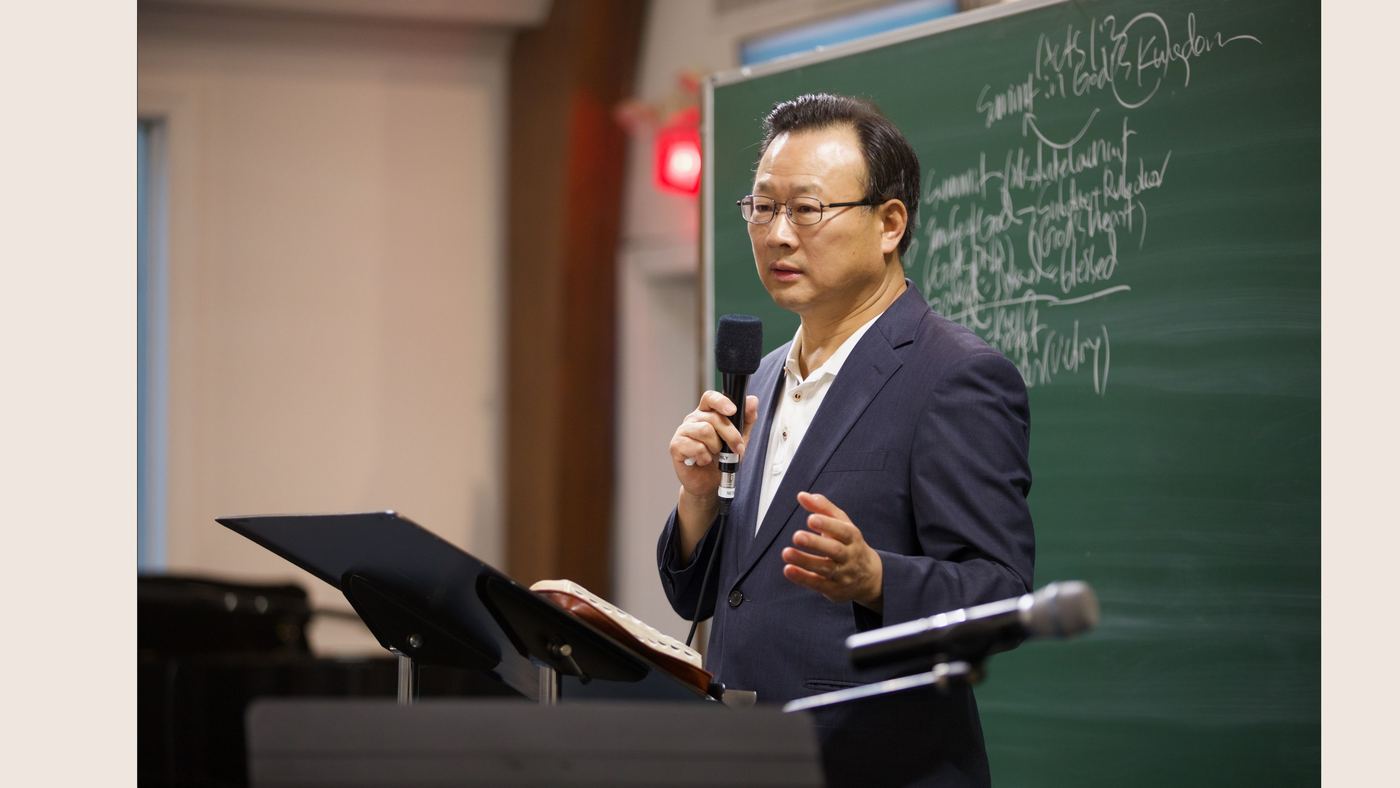
Judge Deborah and Her Coworker Barak (Judges 4:1–9) 3/29/2026
After Shamgar, the fourth judge is Deborah, along with her coworker Barak who helped her. Shamgar was a victor who killed 600 Philistines with an ox goad, but there is no record that he ruled Israel. The primary role of a judge was not only to defeat Israel’s enemies but also to govern the people. This is a foreshadowing of Christ, who has kingship. Christ possesses eternal kingship, has overcome our enemies, and now rules us through the Holy Spirit. In that sense, we are sharing about Deborah, who played a role like a type of Christ.
Deborah was the only female judge. In the Old Testament, this is likely the first and last instance of a woman being established as a leader. What is certain is that if God chooses to use someone, it does not matter whether they are male or female—especially in the gospel (Galatians 3:28
). The work of the Lord is not done by human ability. If the Lord intends to use someone, no one can stop it.
More importantly, Deborah did not fight alone in battle. There was someone who stood before her and fought. It was Barak, who became her lifelong coworker. Together, they created God’s masterpiece.
- What kind of Judge was Deborah?
1) She was the wife of Lappidoth and a prophetess. The mention of her husband shows that she faithfully supported her family. For any leader or worker, if they are not living alone, this is an essential quality.
① Taking good care of one’s household is the beginning of leadership (1 Timothy 3:2–5). From this, the next generation is raised and future leaders emerge. Also, those in important positions must have helpers. This is why God gave Eve to Adam as a “coworker” to help fulfill his calling.
② Deborah was a prophetess. She was chosen and used by God, and a prophet is one who receives and delivers God’s Word. No matter how complete someone may seem worldly, if God does not intend to use them, they cannot be used.
③ When Jesus called the twelve disciples, He “called those He wanted” (Mark 3:13–15). For three years, He trained them spiritually to overcome enemies, love souls, and save people through evangelism. This is the most important training for those who will be used as leaders in the church.
2) Deborah was used in a time of great crisis. True leadership emerges in difficult times. Whether in family, church, or society, leadership brings important results in difficult times.
① Israel had been oppressed for 20 years by a Canaanite king with 900 iron chariots (v.3). These were powerful war machines, carried by two horses, and there were armed men shooting arrows on the chariots. With that alone, Israel trembled in fear, and Israel had no power or weapon to defeat them.
② Yet in verses 14–15, God handed the enemy over to His people, throwing them into confusion. Those who experience God’s work like this are true believers and disciples, the bartizans of God’s kingdom. If God works and helps us, no enemy can stand against us.
3) For those saved by God, three absolute things must be clear.
① Look to the Triune God who rules from the heavenly throne (absolute bartizan). He transcends time and space, is unprecedented and never repeated, power of light that overcomes darkness, and has the power to save all nations. God sets His bartizan and watchmen and continues His work for those who look to Him (Isaiah 62:6–7).
② God is with us through the Holy Spirit in every path we take (absolute journey). He goes with us, guides us, and works through His power. This must be enjoyed through prayer. This is why we must meditate on the Word given, and enjoy the blessing of prayer (Joshua 1:8–9).
③ Believe that God will use even someone lacking like me to save others and reveal His glory (absolute guidepost). God used the early church, starting from Calvary, the Mount of Olives, and Mark’s Upper Room to reach conquest of Rome. At Calvary, the covenant of Christ that solved sin and broke Satan’s power was fulfilled. At the Mount of Olives, Jesus taught about God’s kingdom, the blessing and mission, for 40 days to the failed disciples. At Mark’s Upper Room, through 10 days of concentrated prayer, the Holy Spirit came and everything changed. These people saved Rome.
- Barak, the coworker who helped Deborah win the battle.
1) Deborah first called Barak and told him God would defeat the enemy through him (v.6).
① Barak hesitated at first, just as we often struggle due to our circumstances. So he asked Deborah, God’s prophet, to go before him.
② This is far better than acting in pride and falling into arrogance, trusting only one’s own strength. Many leaders fall into pride, working with their own powers, seeking and falling into their own glory (e.g., Pharaoh, King Saul, King Herod).
③ This is why Jesus entered Jerusalem on a donkey (Matthew 21:1–5). He showed humility and lived to fulfill the Father’s will (John 6:38). Christ Himself became a coworker with the Father.
2) Barak placed Deborah in front and chose to be her coworker.
① The Bible contains many models of such coworkers who created God’s work together.
There were important co-workers to Moses in the age if the Wilderness. Jethro, Aaron, Hur, Joshua, and Caleb. Joshua had co-workers that led the age of Canaan conquest. The leaders of the twelve tribes and hidden coworker Caleb. There were many co-workers that opened the door of world evangelism along with Paul.
② They were “God’s coworkers,” established and blessed by Him. They also became coworkers to God’s servants and to one another. In family, workplace, and church, we should become such coworkers who fulfill God’s will.
Conclusion - After these two defeated Israel’s enemies, Deborah ruled Israel for 40 years, and there was peace in the land. The conclusion of the song they sang is this. “Lord, may all Your enemies perish like this, but may those who love You be like the sun when it rises in its strength” (Judges 5:31). May we also be able to sing this confession of blessing together.
3.29.26 Judge Deborah and Her Coworker Barak
Pulpit_Meditation_Forum_Questions_3-29-2026 Meditacion Pulpito Foro_3-29-2026
Judge Deborah and Her Coworker Barak (Judges 4:1–9) Judges 4:1–9Mission within the Eternal Covenant (Isaiah 55:1–5) 3/22/2026
We are living in a very difficult age. Since the fall of mankind in Genesis 3, endless disasters and wars have been prophesied in the Bible. Then how should God’s people live in such a time? The Bible records God’s absolute plan concerning the suffering that humanity faces. Therefore, in verses 1–2, those who are thirsty, hungry, and suffering are called to come to God and listen.Whether it is personal, family, church, or societal problems, God’s people must find God’s absolute plan in Scripture.
First, fallen humanity cannot solve its own problems, so we are told to hold on to Christ (Isaiah 7:14; 9:6; 53:5; 60:1–2). This is our heavenly mandate. No matter what happens, we must hold on to Christ, because Christ is the power and wisdom of God (1 Corinthians 1:24).
Second, within this Christ, God has chosen and called those who will be used. They are called the remnant (Isaiah 6:13; 10:21–22). This is our calling. When God calls us, it contains His absolute grace and love (Romans 11:5). We are saved within this grace. Our suffering becomes an opportunity to deeply enjoy that grace. We are to live our whole lives enjoying it (1 Corinthians 15:10).
Third, through those who hold on to this absolute answer and absolute grace, God will save all nations (Isaiah 49:6; 60:1–5). This is the mission of those who hold on to the absolute answer and grace. Even if we are small and lacking, if we hold on to God’s heavenly mandate, calling, and mission, God can do anything through us (Isaiah 60:21–22). God has given this absolute plan as a promise. That promise is called the covenant, and it is an eternal covenant (verse 3).
- Through those who hold this covenant, God has promised three blessings (4).
Do not struggle merely for success. A good university or a good job is not the issue. Become one who enjoys God’s blessings (a spiritual summit).
1) He will establish them as witnesses to all peoples. This is also Christ’s final promise. He will raise us to be witnesses to the ends of the earth (Acts 1:8). No matter the situation, do not be shaken. The God of the throne has become our absolute bartizan (Isaiah 62:6–7). Our weaknesses, hardships, crises, tears, and suffering, all can be overcome when we hold on to this conclusion. This is not just any testimony. It is a testimony that can save all nations. There are people waiting to hear our testimony.
2) He will establish them as leaders of all peoples. A leader is one who goes ahead. What do they do? They show the way (John 14:6), give the answer (John 19:30), and plant vision (Acts 2:17). We must not live at the level of unbelievers in the field. We must not go to missions and return having done meaningless things. We must accomplish this work.
3) He will establish them as commanders of all peoples. People suffer disasters without knowing where it comes from. We must proclaim Christ to them and, through the authority of His name, break the power of darkness behind it (Mark 16:17–18). Those who know the mystery of Christ and pray to break darkness will change the flow even in places where they briefly stay.
- Why must God bless those who hold this covenant in this way?
Because saving all nations is God’s heart, plan, and ultimate conclusion (Isaiah 66:22).
Since people miss this, God sometimes allows His beloved people to enter problems.
1) This is why God allowed Israel to become slaves, captives, and subjects.
① In the age of slavery, who were called? Joseph, sold as a slave, was recognized by his master and later by the king (Genesis 39:3; 41:39). Only later did he realize why God sent him to Egypt (Genesis 50:20). Moses, raised as a prince but becoming a murderer, fugitive, and powerless man, was called by God and sent to Pharaoh (Exodus 3:18). Through him, God broke Pharaoh and freed Israel from 400 years of slavery.
② In the age of captivity (Babylon and Persia), who were called? Though elevated as governors and queens, they were envied and targeted by Satan. Daniel continued praying with thanksgiving even knowing he would be thrown into the lions’ den, and God saved him. Even the king acknowledged it (Daniel 6:26). Esther confessed, “If I perish, I perish,” fasted for three days, and stood before the king. Her enemies were completely defeated.
③ When Israel was under Roman rule, how did God use the Mark’s Upper Room church that had the conclusion of only Christ? They held to the Word proclaimed through Peter, prayed, and broke bread, and the number of believers grew daily. Though persecution increased, God sent them to Antioch, beginning the first world missions. In the 18th century, God used England because its churches sent missionaries worldwide. In the 19th and 20th centuries, God used America for the same reason. In the 21st century, God is using Korea, once poor and war-torn, for this purpose.
Whether individuals, families, or nations—when aligned with God’s mission, they are used like this.
2) “A nation you do not know will call you” (5a).
① Those chosen by God receive grace of salvation, dedication, and signs of blessing. Through mission dedication worship, we realize God’s calling and mission and preview these blessings.
② This is why Paul saw the vision of Macedonia when crossing into Europe (Acts 16:9–10). In the field, we will meet prepared people from many nations – 237 nations and 5000 tribes.
Even in problems, if we think of God’s will and pray with His heart, we will experience these blessings.
3) “A nation that does not know you will run to you” (5b).
① “Run” in Hebrew implies coming with thirst, earnestness, and longing. The multi-ethnic disciples we met at our church came with this kind of longing. When we share why only Christ is the answer, their lives become testimonies, and God raises them up.
② God has been doing this and will continue until the day the Lord returns. All the disasters and wars today are signs that the end is near. The end will come after the gospel is preached to all nations (Matthew 24:14). Those used for this are the absolute disciples.
Conclusion - This is possible because God has already glorified us at the moment of our salvation. All who have received Christ already possess His life, light, authority, and glory (Isaiah 60:1–2). May today’s mission dedication worship be a time for both individuals and the church to deeply restore all the blessings God has prepared.
3.22.26 Mission within the Eternal Covenant
Pulpit_Meditation_Forum_Questions_2026-03-22 Meditacion_Pulpito_Foro_2026-03-22_ES
Mission within the Eternal Covenant (Isaiah 55:1–5) Isaiah 55:1–5The Judge Who Won by God’s Wisdom (Judges 3:12–17) 3/15/2026
After the judge Othniel died, God’s people once again did evil and followed the idols of Canaan. At that time, the peoples of Moab, Ammon, and Amalek joined forces and oppressed Israel again, and Israel served them for 18 years.
In their suffering, Israel cried out to God again, and God raised up the judge Ehud to save them. Ehud was from the tribe of Benjamin, and the record especially emphasizes that he was left-handed (v.15). People who use their left hand a lot are sometimes said to have more developed brain function, but in any case, he was a man with special wisdom.
When bringing tribute (things offered yearly to a ruling king) to the king of Moab, Ehud told him he had a secret message and asked to meet privately. At that moment, he killed the king with the sword he had prepared beforehand.
When Ehud killed the enemy king, he said, “I have a message from God for you.” Why did he have to say this? It meant that the wicked were being judged by God’s command. The strength and wisdom to carry out that task came from God. In this evil age filled with darkness, it is extremely important for us to live with God’s wisdom. Where does that wisdom come from?
1. “Wisdom” is originally one of the greatest gifts given by God.
1) Wisdom was one of the blessings humans enjoyed as those created in God’s image. This wisdom is not merely the instinctive intelligence that animals have for survival, nor is it simply knowledge gained through study.
① It refers to the ability to live out God’s will while ruling and subduing all creation in the life God has allowed. However, through the event of Genesis 3, when humanity fell into sin, we lost this blessed wisdom and became people who live being robbed and defeated.
② How wise Satan is in doing evil? When he brought down Adam and Eve, he saw their hidden greed and told lies that inevitably led to their fall (Genesis 3:5–6). When Jesus was crucified, Satan even moved kings (Matthew 2:8), falsely accused Him of rebellion (Luke 23:2), manipulated religious leaders to label Him a heretic (Acts 24:5), and even entered Judas Iscariot so that he would betray Jesus for thirty pieces of silver (John 13:27).
③ Even now Satan uses every evil scheme to tempt and destroy the church and God’s people. He stirs up bitter envy and conflict and causes people to oppose the truth, making them destroy one another. Such wisdom does not come from above but is earthly, unspiritual, and demonic (James 3:15).
2) The event that restores God’s wisdom to us is salvation.
① Through the event of the cross, God completely destroyed Satan’s wisdom. Satan probably thought his wisdom had won by having Christ crucified. But that was the very moment Satan was crushed. Through the cross, Jesus paid the price for all humanity’s sins and opened the way of salvation for all who believe. Therefore, the message of the cross is foolishness to those who are perishing, but to us who are being saved it is the power of God (1 Corinthians 1:18).
② Through the cross, God’s love, wisdom, and power were revealed. For humans to receive salvation through the cross—the punishment reserved for the worst criminals—is not something everyone can believe. Only those chosen by God can believe it (1 Corinthians 1:27). Only those who have received God’s grace can believe it (Ephesians 2:8). This is God’s absolute love, absolute blessing, and absolute power. And we are the ones who are within it (1 Corinthians 15:10).
③ Christ, who willingly came to give us this blessing, is the very power and wisdom of God (1 Corinthians 1:24). Thus, the completion of all wisdom is fulfilled through Christ. This is why the judges were considered foreshadows of the coming Christ.
2. In Christ, we must stand as disciples who save ourselves and the world through God’s wisdom. We must obtain this wisdom and raise our future generations to grow within it (Luke 2:52).
1) From the moment we accept Christ and receive His life, we become people who can enjoy this blessing. Through the redemptive work of the cross, Christ saved us. Through His resurrection He crushed Satan’s head and gave us the life of Christ. This means Christ is with us through the Holy Spirit (1 John 5:11–12).
2) What does Christ do while seated at the right hand of God and dwelling in us through the Holy Spirit?
① He pours out the Spirit of wisdom and revelation so that we may know God deeply (Ephesians 1:17). This is called spirituality. We must enjoy this blessing daily by hearing the Word, meditating on it, and praying. Wisdom allows us to discern Satan’s deception when he tries to mislead us through problems and conflicts. When crises come, the Holy Spirit enables us to understand the deep things of God and the grace given to us (1 Corinthians 2:10–12).
② The Holy Spirit helps us understand the Word and gives us the exact answer from the Word whenever we need it (John 14:26). After receiving the answer ourselves, we share it with those who suffer without answers. This is the life of an evangelist. Joseph, though a slave, gave answers to the king of Egypt through this blessing (Genesis 41:38–39). At that time, darkness was broken, people were set free, and lives were saved (Mark 16:17–18). This is what the judges did.
③ The Holy Spirit is the Spirit who governs us. While ruling over us, He gives us the practical wisdom we need. This is the blessing of the spiritual summit. Whatever we do, God gives wisdom so that problems are solved and our work becomes a masterpiece. That is why even small tasks must be done with prayer and challenged through prayer (as Edison testified throughout his life). Especially when doing the Lord’s work, we need special wisdom from God, not worldly wisdom (Exodus 31:3).
3. There are three fundamental and practical ways to enjoy this wisdom. The Book of Proverbs is called the book of wisdom. The word “wisdom” appears most frequently there (the Hebrew word hokmah). It was written so that we may live victorious lives in the world through God-given wisdom (Proverbs 1:1–5).
① All wisdom comes from fearing the Lord (Proverbs 1:7; 9:10). Fearing God does not simply mean being afraid. It means loving God, worshiping Him, and living according to His will. This is why we praise, thank, and exalt God in every event and circumstance (Romans 12:1, living sacrifice).
② When we lay down our own thoughts and wisdom and acknowledge God, He will guide us with His wisdom (Proverbs 3:5–6). Because this one and only God created us, saved us, and made us His people.
③ This one and only God has given us three “onlys.” These are things unbelievers can never possess. Only Christ (absolute answer). Only the Kingdom of God (absolute background and mission). Only the power of the Holy Spirit (absolute power). When we acknowledge, confess, seek, and long for this “Only,” even though we are weak, we are no longer lacking (Galatians 2:20).
Conclusion - In this world full of ongoing difficulties and conflicts, I bless you to become disciples who are victorious through the wisdom that comes from the one and only God.
3.15.26 The Judge Who Won by God’s Wisdom
pulpit_meditation_forum_questions_2026-03-15 meditacion_pulpito_preguntas_foro_2026-03-15_spanish
The Judge Who Won by God’s Wisdom (Judges 3:12–17) Judges 3:12–17Those Who Were Left in the Land (Judges 3:7–11) 3/8/2026
After Joshua’s generation dies, the later generations of Israel continually suffers under the Canaanite people. At first, they thought they could compromise and simply live alongside them. However, just as God had warned, those people became traps and thorns, bringing suffering upon the Israelites. It says that they were ruled over for eight years in that land (v.8).
Why did they have to go through such things? First, the responsibility of the parents’ generation was great. They failed to pass down the correct covenant and faith. They did not properly teach who God was, or how God had fought for His people and led them to that point.
But there was another reason. God allowed it.
Why did God allow it? There are many times when we cannot understand what God is doing. Yet there is certainly a deep purpose within it. In verses 1–2, it says that God left the unconquered Canaanite nations in the land for two purposes.
First, He left them to test Israel, who had not experienced all the wars of Canaan.
Judges 2:21–23 explains this more specifically. God wanted to see whether the descendants would follow the example of their parents who held onto the covenant and obeyed God in conquering Canaan. Even today, God tests our choices of faith and obedience through many problems and events. In ordinary times it may appear that we believe well, but what we choose in times of crisis and difficulty is what truly matters.
Second, He wanted to teach those who had not known war how the people of God achieve victory within it. In reality, God Himself was doing what the parents’ generation had failed to do. God never abandons the future generations of His chosen people. Though they may suffer in the world because they do not understand, God Himself works directly in their lives.
- This is God’s love toward those who are saved
Would great would it have been if Jesus, on the cross, had simply sent Satan who deceives and commits evil in human life directly to hell? Then God’s people would not need to face temptation, failure, and suffering again.
1) The day will come when our enemy Satan is completely destroyed.
Christ will return, judge all evil, and cast Satan behind it into hell forever (Revelation 20:13–14). Then the new heaven and the new earth will be opened (Revelation 21:1–5). There are eternal blessings that God’s people will enjoy (Revelation 22:5).
2) Until that time, there is something God desires from us.
While living on this earth, we are to know Christ, the eternal answer of life whom God has sent, and within that Christ live as those who overcome life’s despair, suffering, and every enemy. Through this process, our lives reach the conclusion of only Christ (Galatians 2:20). At that point, other problems no longer matter. Even the small things we do become God’s masterpiece and testimony (Romans 8:28). Through this, we are to save people like ourselves and go to the ends of the earth to save all nations (Acts 1:8).
3) Without this training and experience, we don’t even get to just live. We will continue to be deceived by the world and live in suffering. The later generations of Israel in the Book of Judges lived this heartbreaking life. When parents truly love their children, they sometimes send them into challenges to train them and raise them into great people. Likewise, God trains us like an eagle that stirs up its nest and carries its young on its wings (Deuteronomy 32:11–12).
- This is God’s method for using those who are saved
Not only the wicked remain in the world. The wicked remain for a time of wickedness (Proverbs 16:4, 2 Peter 2:9).
1) There are also those whom God has chosen and left behind for His purpose. They are the remnants (Romans 11:5).
① Before the judgment of the flood, God chose Noah to build the ark (Genesis 6:8). Through the ark He prophesied Christ, and Noah lived as the evangelist of his generation (Hebrews 11:7; 2 Peter 2:5).
② During the age of the Tower of Babel, when idolatry was strong, God chose Abraham and sent him to Canaan (Genesis 12:1–3).
③ When Israel faced destruction, God chose Esther to save the nation and establish the Feast of Purim (Esther 9:24–26). Haman drew lots to determine the day Israel would be destroyed, but on that very day he died and Israel was saved. Likewise, Satan believed he had won when Christ was crucified, but the cross was actually the day Satan was defeated.
2) God has called us as remnants in this age. God gave us four blessings and missions.
He intends to establish us as witnesses of this ge. That is why He planted within us the “holy seed” (Isaiah 6:13), which is Christ.
① Though we are very lacking, we save the world with the mystery of Christ. These are the remaining ones. ② Satan stands against the church to destroy it, but we will overcome together with Christ (Revelation 17:14). These are the ones who will remain. ③ Though we live in a world full of suffering and disasters, through our faith and prayers we change the spiritual flow (Mark 16:17–18). In this way we become the ones who remain. The world and the devil must see God’s evidence through us and through our church. ④ Then summit future generations who are used for only Christ, only evangelism, and only missions must arise. These are the ones who leave behind. This is why we focus on evangelism, missions, and the remnant ministry of raising the next generation. Caleb was blessed because he raised such a future generation. The first judge of Israel in this passage, Othniel, was that very person.
- What kind of person was Othniel, the one who remained?
1) As emphasized before, every judge is first a prophecy and foreshadowing of Christ.
① Othniel acted as their deliverer (v.9). God raised a deliverer for the Israelites. In the same way, Christ came as our Savior (Luke 2:10). With the authority of the Priest, King, and Prophet, He liberated us, broke Satan’s power, and remains with us forever.
② The Spirit of the Lord came upon Othniel, and he fought against the king of Mesopotamia and won (v.10). This represents Christ who came as the victorious One. We are to continue enjoying spiritual victory together with this victorious Christ. We fight a battle that has already been won (1 John 4:4). Not only do we win, but everything becomes a testimony (1 Corinthians 15:57–58).
③ When Othniel governed Israel, the land had peace for forty years (v.11). This represents Christ who came as the eternal King who rules us (Luke 1:33). It is the Kingdom of God that comes within us (Romans 14:17). In a world full of conflict, division, and suffering, we must enjoy the blessing of Christ ruling our spirit, heart, thoughts, body, and every part of our lives.
2) These judges also foreshadow the disciples of Christ who will be used at God’s appointed time for the work He delights in.
God neither wants us nor our future generations to be people who merely attend church. He wants us to stand as disciples of Christ.
Conclusion - The wicked are also left for a time of evil. But we are the ones left behind in this age to give the world the answer and to live in victory.
3.8.26 Those Who Were Left in the Land
pulpit_forum_questions_spanish_2026_03_08 pulpit_meditation_forum_questions_2026_03_08
Those Who Were Left in the Land (Judges 3:7–11) 3/8/2026 March 8, 2026The Reason God Raised Up Judges and the Blessings (Judges 2:16–23) 3/1/2026
In the Book of Judges, the next generation of Israel repeatedly failed. They were continually attacked by the Canaanites and even lived having the crops they worked so hard to harvest taken from them. This is why the Book of Judges was recorded.
At that time, God raised up judges and delivered Israel from the hands of those who plundered them (16). The Hebrew word for “plunderers” means “destroyers” or “those who take away.” Spiritually, it symbolizes Satan in John 10:10. He is the thief who comes to steal, kill, and destroy. Christ came to give us life and to allow us to enjoy it abundantly. Ultimately, the twelve judges represent Christ and the spiritual leaders He raises up.
The word “judge” originally means “one who judges,” but here they functioned as “deliverers” (16). That Deliverer is Christ.
We must ask an important question. After God established such tremendous victory and systems of conquest through Joshua, why did He allow this to happen? The answer appears in verses 21–22, but we will reflect on that next week from the pulpit.
More importantly, we must discover how God’s people could suffer such failure and shame, and what covenant they were to hold onto at that time.
- Through the book of Joshua, God has already warned why his people suffer in the world
It happens when God’s people lose hold of their covenant with Him and compromise with the world or follow the world again.
1) This was Joshua’s earnest plea in his final sermon.
① If they mixed with the Canaanites and served their idols, it would become thorns, snares, and traps to them (Joshua 23:13). God even warned that He would withdraw the blessings He had given and turn them into disasters (Joshua 24:20).
② God told them He chose Israel and promised He would bless His chosen people. If they entered Canaan and held only to God’s Word and followed Him, everything would become a blessing (Deuteronomy 28:1–19). The same blessing is promised to us who are saved in this age (Ephesians 1:3–5).
③ When Joshua declared, “As for me and my house, we will serve the Lord,” the people also vowed to do the same. At Shechem, Israel’s representatives made a covenant ceremony and even set up a stone as a memorial (Joshua 24:24–27).
2) Then why did the next generation live in such suffering? First, the fault of the parents’ generation was great.
① Unlike Caleb and Othniel mentioned last week, they did not go forward to conquer the remaining land. It was not because they lacked strength. From the beginning, God fought for them and promised that one would chase a thousand (Joshua 23:10). But they did not hold onto that covenant. How do we know? They did nothing. They did not even think of fighting.
② Another reason was that they failed to pass down the covenant. If I myself do not clearly hold the covenant, what can I pass on? Relaying is not just through words. it is influence through life. This covenant must be instilled in childhood. That is when imprinting is completed. By the teenage years, it takes root and becomes one’s nature through their problems and conflicts. At that stage, parents must pray silently behind the scenes, breaking the forces of darkness and fighting together for them.
③ What is the covenant we must truly hold, enjoy, and pass on? For Israel, the land of Canaan represented the covenant of Christ who would come. It meant to hold onto only Christ. He broke all the sins, curses, fate, and the authority of hell in our lives and lineage and is with us with eternal life. To conquer that land meant to fight and defeat the corrupted forces already occupying it. Spiritually, they were the powers of evil and darkness, yet in the world they appeared splendid. The fruit of the tree of the knowledge of good and evil was like that (Genesis 3:6). At times the world may seem enviable. Do not be deceived. Fight and restore the blessings that were stolen.
- Though they failed and lived oppressed, when they cried out, God sent judges.
1) When Israel recognized their problem and cried out to God, He sent judges (v.18). What does “cry out” mean? It means to pray with
groaning and pleading from the depths of our problems and suffering. Living in a world filled with darkness, with many hidden wounds inside us, we may face hardship and failure. At that time, we must come before God and cry out (Jeremiah 33:3). The Holy Spirit also groans and intercedes for us (Romans 8:26).
2) We must train ourselves to establish a routine of prayer. Jesus became our model.
① He prayed early in the morning (Mark 1:35). He confirmed answers during the day (John 11:41), and prayed at night over important matters (Luke 6:12).
② The forces of darkness display their power and schemes to destroy me, my family, the next generation, and the church that saves the world.
③ Even if I alone build a bartizan of prayer and stand as a prayer watchman, God works upon it (Isaiah 62:6–7). Then God becomes my bartizan, leads my life’s journey according to His promise, and guides me precisely according to the timetable to save the world.
3) When they cried out, what did God do through the judges?
① He delivered them from problems and suffering (Psalm 50:15). It says God relented (v.18). ② Their enemies were subdued again (Deuteronomy 33:29). God allowed them to enjoy spiritual victory. He enabled them to fight and overcome the forces of sin, darkness, and curse, and to become true spiritual summits. ③ Everything became testimony and glory to God (Psalm 50:15). God personally helped them and, when necessary, attached people to help them.
- The blessing fulfilled then is the kingdom of God. The judges ruling the people was a model of God’s Kingdom. It signifies the restoration of Christ’s kingship. We must hold firmly to the three aspects of Christ’s kingship.
1) He is the King who destroyed the authority of Satan, our enemy. This was the first gospel given to us (Genesis 3:15). He gave us authority to trample the devil (Luke 10:19) and promised eternal victory through His resurrection (1 Corinthians 15:58). Now we live with Him, destroying the works of the devil and healing the world (Mark 16:17–18).
2) He is the King who reigns within us(Luke 1:33). That blessing is the Kingdom of God we enjoy on this earth (Luke 17:21; Matthew 12:28). Though problems and crises continue in the world, when He reigns over us, we can transcend all things. In every problem, we realize God’s will and receive the peace and joy He gives (Romans 14:17).
3) He is the King who will make all things new and reign forever(Revelation 22:5). It is written that we who are with Christ will also reign with Him forever
Conclusion - May we be believers who hold onto the only Christ, who is our spiritual Judge and Deliverer, enjoy His blessings, and pass them on to others.
3.1.26 The Reason God Raised Up Judges and the Blessings
3-1-26 Pulpit Meditation and Forum Questions Meditacion del Pulpito_3_1_2026
The Reason God Raised Up Judges and the Blessings (Judges 2:16–23) Judges 2:16–23The Prepared Team, Caleb and Othniel (Judges 1:8–15) 2/22/2026
Why did God record the Book of Judges and give it to us? We will share that next week (because the reason appears in chapter 2).
The Book of Judges begins with Caleb and Othniel, descendants of the tribe of Judah. This was the only tribe that continued the remaining conquest of Canaan. Most of the tribes failed in conquest, compromised at times, and lived in suffering. But these men became the model of victory in conquest.
Though they were few in number, they became witnesses. Jesus said, “When the Son of Man comes, will He find faith on the earth?” (Luke 18:8). The Bible says that those with true faith are few, but they are the “remnant” whom God has set apart (Romans 11:5). Through today’s passage, may we hold onto that covenant and become the remnant of this age who remain within that blessing.
In verse 1, they asked God who should go up first to continue the conquest of Canaan. The tribe chosen was the tribe of Judah. And the two men who led the tribe of Judah in this passage were Caleb and Othniel.
There is a distinctive feature about them. There was an age difference. Caleb belonged to the first generation of the conquest of Canaan, while Othniel belonged to the second generation. The key point is that both clearly held onto the covenant regarding Canaan. Holding onto that promise, they challenged in faith and stood at the forefront. According to their faith, they became the only ones to conquer the remaining land of Canaan and enjoyed the blessing of possessing the largest territory. More importantly, through their descendants the kingdom of David was established, and that land became the starting point of David’s kingdom (2 Samuel 5:3). Through those who held onto God’s promised “only” covenant, works of uniqueness and re-creation were accomplished (they must become our model).
- The importance of a team formed by those who hold onto the covenant.
When forming a team, skills, character, and background are important. But for those whom God desires, blesses, and uses, there must be one essential thing. Faith that holds onto the “only” covenant. That is why God sent the tribe of Judah first.
1) The foundation, core, and conclusion of that covenant is only Christ. Why did God send Abraham to Canaan and promise he would become a source of blessing? Why did Joseph, Moses, and Joshua strive so much to conquer Canaan? Because on that land would come Christ, our eternal salvation and eternal covenant. This Christ must become the source of all our faith. They became witnesses who saved their generation (Hebrews 12:1–2).
2) When God chose the tribe of Judah, its representatives Caleb and Othniel obeyed and staked their lives on it.
Christ has become the eternal answer of our lives, worthy of staking our lives on Him. Through His tragic death, we received eternal redemption (Hebrews 9:12). Through His resurrection, we received new life to enjoy God’s eternal Kingdom (1 Corinthians 15:50). At that moment, the powers of darkness that sought to destroy our lives were broken (1 Corinthians 15:25–26).
① We simply need to remain in this Christ. No matter what problems, suffering, or failures come again, we can overcome (1 Corinthians 15:57). ② Live a life that enjoys Christ. Always rejoice, pray without ceasing, and give thanks in all circumstances (1 Thessalonians 5:16–18). Then God’s will is fulfilled in our lives, and everything is turned into testimony. ③ Form a team that can stake their lives together for Christ (Romans 14:8). Then the authority of the heavenly throne moves, and even our small works become God’s masterpiece (Matthew 18:19–20). For 30 years, God has led our church in this way. If we as individuals and as a church continue to hold onto the covenant of only Christ, we can do anything and have nothing to fear.
- A team that holds the covenant of Christ and challenges for God’s Will is important
This is the second reason God chose and sent the tribe of Judah first. They were people who challenged for God’s Kingdom and His will to be established on this land, and God used them (Matthew 6:33).
① They relinquished all vested rights. There were privileges Moses had once promised, but Caleb relinquished them (Joshua 14:9). Even when we accomplish important things, it is crucial to hide ourselves and resolve that only God’s glory and will be revealed. Insisting on our own rights and efforts is a decisive cause of failure for God’s people.
② They used that surrendered privilege to choose Hebron, the land everyone feared (Joshua 14:12). They selected Hebron, like the greatest fortress in Canaan, and challenged it in faith. This became an example to all Israel, a model of true devotion, and all Israel gained strength through it.
③ Their devotion produced a future masterpiece. Who could have known that on the land they chose, the kingdom of David would be established, and that the eternal Christ would come? The covenant we hold today, the faith we choose today, and the devotion we offer today create eternal masterpieces.
- One family and two people who held the covenant and devoted their lives changed history
It is important for many people to form a team. When many gather in a church, it is easier to accomplish big things with that strength. But God can make one into a thousand through even one person or one family that holds the covenant and challenges in faith (Joshua 23:10; Isaiah 60:22).
1) As mentioned last week, let the family become such a blessed team.
① Let husband and wife become a team and coworkers used by God, let the family become God’s team that He uses (mission home). The next generation raised in that home will become a team and the greatest masterpiece too.
② After the war ended, Othniel became Caleb’s son-in-law. At that time, Caleb’s daughter Achsah made a request of her father (verse 15). While seeking her father’s blessing (acknowledging the spiritual authority of the father as priest of the household), she asked for two springs of water. The land given to them for their marriage was in the Negev desert region, so wells were essential. Though they received desert land, they obeyed without complaint and asked for wells to survive and to bring life to that land. The Negev region they conquered later became part of Israel’s boundary, including today’s area near the Dead Sea (which is why we must study history).
2) Find your team within the church.
① The department or district assigned to you is also a team permitted by God. Value it in the Lord and find blessings and answers there. ② It may begin with awkward or uncomfortable relationships. Take the initiative to share the covenant and prayer topics (spiritual communication). Above all, train yourself to see one another’s strengths and to support each other (that is how relationships and teams are formed).
3) Find the team God has prepared in the field.
① There are certainly disciples God has prepared in the field. Especially seek them among multicultural/multiethnic people (Gentiles, in Old Testament terms). The two key figures in the conquest of Canaan were of Gentile background. Caleb and Rahab. Both entered the tribe of Judah.
② Caleb himself was originally a Gentile. He is called “Caleb the Kenizzite” (Joshua 14:6), and Kenaz is associated with the land of Edom. He was a Gentile, even connected to the Canaanites, but God chose him, and he grew in faithful belief (Numbers 32:12).
Conclusion - Times will grow more difficult. That is why the blessing of prepared people and prepared teams is so important. May we be found among them.
2.22.26 The Prepared Team, Caleb and Othniel
Pulpit_Meditation_and_Forum_Questions_2-22-2026 Meditacion_del_Pulpito_y_Preguntas_2-22-2026
The Prepared Team, Caleb and Othniel (Judges 1:8–15) 2/22/2026 February 22, 2026The Only Mission My Family and I Must Enjoy (Joshua 24:14–18) 2/15/2026
This is Joshua’s second sermon. In his first sermon, he emphasized that the absolute mission of conquering Canaan was the blessing of preparing God’s Kingdom. The Kingdom of God must be established through Christ the King of kings, and those who would be used for that purpose were first the saved people of Israel, and in this age, it is us who have become the spiritual Israel.
Today’s second sermon is about the covenant concerning me and my family, who will be used for the Kingdom of God. Through Joshua’s own choice and resolution of covenant for himself and his household, he gave the mission that all believers, God’s eternal family, must hold onto.
Difficult times will continue to come. They have already been prophesied (Isaiah 60:2; Matthew 24; 2 Timothy 3). That is why those of us living in this age are important. God chose me first, allowed me to have my family, and desires to bless me and my family for an absolute reason.
What preparation, what choices, and what devotion must we make? Verse 16 declares, “But as for me and my house, we will serve the Lord.” Within Joshua’s proclamation, we must discover the “only” mission that my family and I will enjoy. Even if we do not have a physical family, we can find this mission within the church, where we have become God’s eternal family.
- “As for me and my household.” This is the mission of holding onto God’s absolute plan for us and our families. It is the beginning of the mission. First, hold onto the covenant. That becomes our faith and the absolute bartizan through which God works. When Abraham entered Canaan, he received the covenant (Genesis 12:1–3) and held onto it. His descendants became Israel. In today’s passage, when Joshua and his coworker Caleb held onto that covenant, their families became models of conquering Canaan.
1) God saved us first to use our families and lineage to save the world (the covenant of source)
When God called Abraham, He said, “You will be a source of blessing.” Those who are saved in Christ will enjoy all the blessings of Abraham (Galatians 3:29). Therefore, the covenant of “only Christ” that we personally hold onto is crucial.
① Only Christ accomplished eternal redemption for me with His own blood (Hebrews 9:12). Redemption from what? From original sin (Romans 5:12), generational sin (Exodus 20:4–5), and my personal sins (1 Peter 3:18).
② In Christ, God has now made us His child and His people, establishing us to enjoy heavenly blessings (Ephesians 1:3–5). Like Abraham, we have become a source of blessing, and through us a blessed family and lineage are formed.
③ As His children and people, God dwells within us by the Holy Spirit and reigns over us. This is the blessing of God’s Kingdom that we must enjoy (Luke 17:21; Romans 14:17). Then the forces of darkness are broken (Matthew 12:28), and everything about us becomes a testimony (Acts 1:8).
2) If we hold onto this covenant, every problem my family and I face becomes a time to receive God’s absolute evidence (the covenant of the witness)
① No matter what problem comes, do not be shaken, do not give up, and do not leave it as a wound. Wounds from family relationships can be severe. The Bible even says one’s enemies may be members of one’s own household (Matthew 10:36). But this is a time for spiritual eyes to open. We must win there in a way that shames the devil. After that, our heavenly calling will be realized. Joseph was sold by his brothers, but God turned it into good and formed the twelve tribes of Israel (Genesis 50:21).
② Therefore, the family must become the best team united only in the covenant. Create a team of spiritual summit leaders. The declaration, “As for me and my house, we will serve the Lord,” was possible because that family was already united.
③ Cast away all unbelief concerning your children (Matthew 8:13). God has called them as the remnant of this age (Romans 11:5). God prepared, chose, and sent them to you. He planted a holy seed within them (Isaiah 6:13). God will raise and establish them (Genesis 45:5). Everything about them will become evidence to save the world, and they will be used as witnesses (Acts 1:8).
3) Pray deeply about how to pass down and continue this covenant to the next generation (the covenant of succession). That is why Deuteronomy 6:4–9 tells us to love the Lord who gave us this covenant with all our life and stake our lives in passing it down.
① Joshua was a descendant of Joseph. Joseph had properly relayed the covenant. Joseph left a will that when God led His people back to Canaan, they should carry his bones with them (Genesis 50:25). Why did he say this? Because he himself had received the covenant God gave to his ancestors (Genesis 13:15; 28:15). Though he was sold into Egypt but received the blessing to become a prime minister, what mattered most to him was the covenant.
② Through his descendants, Christ the eternal covenant would come, but tangible blessings continued as well. From the tribe of Joseph came four judges, including Deborah and Gideon.
- “We will serve the Lord.” This is the mission of success in the Worship.
When does God fulfill the covenant He gave and grant evidence in our lives?
1) It is when we worship the God who gave us the covenant. Worship is the time when we look to Him, exalt Him, and rejoice in Him. From the beginning, humans were created to worship God and enjoy all the blessings He prepared (Genesis 1:27–28). But people rejected God. That is why this passage repeatedly warns not to follow the idols of the Canaanites.
2) How seriously did Joshua value worship?
① In his youth, while serving Moses, he “did not leave the Tent of Meeting” (Exodus 33:11). All the people God used truly lived lives of worship and enjoyed every blessing there.
② When crossing the Jordan and when toppling Jericho, Joshua rose early to worship God (Joshua 3:1; 6:12). Success in worship is success in everything in life. The ten core teachings that Rockefeller’s mother left him centered on the blessing of worship.
3) What is the most important core of worship? What we offer to God is important, but what we receive is even more crucial. that is the Word. Joshua’s strength was that he always followed the Word. God made all his ways prosperous (Joshua 1:7–8). Even within the family, the Word must flow among one another. Then God’s Kingdom and His reign come upon that household.
- “As for me and my house, we will serve the Lord.” This is the mission of the World Evanglism to save everyone through that blessing. Pray that you and your family become a mission home that God uses to save others and the world.
1) Resolve that you and your family will devote yourselves to what others do not do, and that the fruit of it will reveal only the Lord’s glory.
2) Begin something that helps and saves at least one person through what you and your family possess. That is the start of evangelism.
3) Always share conversations of thanksgiving for what God has given and give glory only to Him. That is true forum. If even one pastor, church officer, businessperson, or professional whom God will use arises from within such a family, the world can be changed and saved.
Conclusion - May Joshua’s confession of faith become yours, and may every family be blessed to fulfill these three missions.
The Only Mission My Family and I Must Enjoy (Joshua 24:14–18) Joshua 24:14–18The Remaining War for the Kingdom of God (Joshua 23:1–7) 2/8/2026
Although the conquest of Canaan had not yet been fully completed, the time had come for Joshua to finish his mission (v. 1). At this point, through two sermons, he delivered the final covenant that the Israelites truly needed to hold onto.
The theme of the book of Joshua is the conquest of Canaan. This was the reason God delivered Israel from 400 years of slavery. It was also why God did not abandon them but continued to train them to the end, even as they passed through countless conflicts, problems, and failures in the wilderness. Through this process, next-generation leaders like Joshua and Caleb arose, along with the Remnant generation who stood with them.
Here we must ask the question again. Why did God so insistently lead them to conquer the land of Canaan? Was it simply to give Israel land so that they and their descendants could survive? In a practical sense, that is true. But if we stop there, many misunderstandings arise. Then is God only the God of Israel, more specifically, only the God of the Jews?
- Here we must discover God’s 3 hidden and eternal plans.
1) Because Christ, who would save all mankind on this earth, had to come.
① This was the covenant God gave long ago when He chose Abraham and sent him to Canaan. God promised that he would become a source of blessing there. Through his descendants all the nations of the earth would be blessed (Genesis 12:1–3; 22:18). ② That “descendant” did not simply refer to Isaac, but was a prophecy pointing to Christ (Galatians 3:16). The Israelites went down to Egypt and lost this land, and God restored it to them.
2) Christ came to that land of Canaan, and through Him we too enjoy the blessing of salvation in this age. He came as a descendant of Abraham and a descendant of David, and through that lineage many people were used by God (the genealogy in Matthew 1). ① Through Him, we received eternal redemption, became God’s children and people, and gained the right to enjoy heavenly blessings (Ephesians 1:3–5). ② Our salvation is God’s eternal choice, given so that we might praise the glory of His grace (Ephesians 1:6). For the saved believer, there is nothing that is not grace (1 Corinthians 15:10). Through this grace, our lives are secured (Ephesians 2:13).
3) Through those who are saved, God seeks to restore something He truly desires. It is the Kingdom of God.
① First, He gathers those whom He has decided to save. He sets apart the citizens of God’s kingdom (Ephesians 2:19). ② Christ reigns over us forever as the King of kings and Lord of lords (Revelation 17:14). ③ God’s kingdom must first be restored in the land where we live. Only then can we live in true peace (Romans 14:17). The complete Kingdom of God will be established after Christ returns, judges the corrupted world and humanity, and makes all things new (Revelation 21:5). This is the reason God sought to destroy the Canaanite peoples. They were the most extreme example of idolatry and a model of a corrupted life. That judgment will be fully executed when Christ returns (John 5:22), and we are now living in those last days (Luke 12:56; Ephesians 5:16).
- Then, what must we do now? We must finish the remaining war for the Kingdom of God. That is the message of today’s passage.
1) First, firmly hold onto God’s promise of conquering the world.
① God declared that He Himself had fought for Israel until now (v. 3). They had seen with their own eyes all that God had done for them, and God was the One who fought on their behalf. This is exactly what Christ did first when He came. The Kingdom of God began. How did it begin? By traveling through the land of the Jews, freeing those bound by darkness, healing them, and breaking the power of darkness (Matthew 12:28).
② God promised that He would help Israel to the very end so that they would possess the land (v. 5). This was not a conquest driven by personal greed or ambition. Jesus did not teach power or war for such conquest (Matthew 26:53). Instead, He died willingly as a ransom for all humanity and rose again to give eternal life. This was true conquest.
③ This is also why God had to bless Israel in Canaan. So they would stand as witnesses. God promised that enemies who came against them by one road would flee before them by seven roads (Deuteronomy 28:7). He also promised to bless their storehouses, their land, and everything they put their hands to (Deuteronomy 28:8). Before His ascension, the Lord gave the same covenant. “You will be my witnesses to the ends of the earth” (Acts 1:8).
2) Now we must hold onto the authority of His name and fight to the end. When does God work for us, and how should we fight?
① First, we are told to hold firmly to the Word with all our strength and not turn to the right or the left (v. 6). This does not mean merely trying not to sin or fall into unbelief. With our wounded and broken strength alone, that is impossible. We must have the Word we personally hold onto. That is why the “three todays” are important, and why daily meditation and Scripture memorization matter. God created the world by His Word, and even now He dwells in us and works through His Word (John 15:7). At decisive moments, He gives us answers, wisdom, strength, and guidance through His Word (2 Timothy 3:16).
② God also commanded them not to “enter into” the remaining nations (v. 7). In Hebrew, “enter into” means “to participate in a relationship” or “to mix with.” This does not mean cutting ourselves off completely from the world. It means not mixing what belongs to God with our own greed, wounds, or worldly things. Within us are long-formed 12 systems of Satan. That must not become the standard for our thoughts, choices, and actions. These include self-centeredness (train yourself to deny yourself), flesh-centeredness (set your heart on what is spiritual and above), and success-centeredness (worldly ambition that leads to pride, discouragement, and despair). We must especially fight against fate, generational curses (spiritual problems) that have settled into our unconscious and become habits and dispositions. Wee can train and transform our personalities, emotions, even diseases with the power of the Holy Spirit (Ephesians 4:22–24).
3) At this time, the bartizan of God’s kingdom is established within us. God grants victory (v. 10). A bartizan is necessary for victory. God promised that He Himself would be our bartizan and our watchman (Isaiah 62:6–7).
① It starts with the bartizan established within us. Kingdom of God coming upon us personally (Luke 17:21). Those who are in Christ can never be destroyed (Matthew 16:18). The Holy Spirit helps us (John 14:16–18; Romans 8:26).
② The main point is the bartizan established in our field. Kingdom of God coming upon our fields (Matthew 12:28). As we continually pray for our field, the power of darkness is broken, and the flow of that field is transformed into a flow of blessing.
③ The conclusion is the bartizan established throughout the world. Kingdom of God established over all nations (Acts 28:31). This is why Paul was so determined to go to Rome. Then why must we live in today’s Rome, America? We must save the multiethnic peoples here and enjoy the blessing of being used to expand God’s kingdom from here to the ends of the earth.
Conclusion - We continue to face many problems that can lead us into confusion, discouragement, and despair. Darkness covers all the earth (Isaiah 60:2). May we be blessed to overcome and conquer the world by the power of the “only,” and to be continually used to establish the Kingdom of God in the midst of it.
The Remaining War for the Kingdom of God (Joshua 23:1–7) Joshua 23:1–7The Altar Built on the Banks of the Jordan (Joshua 22:10–16) 2/1/2026
As the conquest of Canaan was being brought to completion, a serious internal conflict arose among the Israelites. On their way back, the three tribes who had first received their inheritance east of Canaan built an altar on the banks of the Jordan River. To anyone who saw it, it looked like a shrine for idol worship (10). Mistaking this for idolatry, the rest of the Israelites assembled an army. At that point, they sent Phinehas, the son of the priest, along with representatives of the remaining ten tribes to investigate the matter. After hearing the explanation, they realized that this altar was not for idol worship. Rather, it was built as a witness so that future generations on the west side of the Jordan would not mistake the Israelites on the east as a different people. They were on the verge of war, so this was truly fortunate. Why is this incident important, and why was it recorded?
First, it was a record for future generations. It teaches us to pass on to our descendants all the ministries we carried out while holding firmly to the covenant. The gospel movement we are engaged in has faced much persecution and has shown many shortcomings. Yet the judgment of how pleasing this gospel truly is to God must be left to future generations. That is why, through Remnant University and through our church, we seek to leave behind many testimonies as evidence for the sake of the next generation. This is our absolute mission and method to leave behind for them.
Second, whether in institutions, families, or individuals, we must be cautious of such conflicts even when we are living in God’s blessing. Misunderstandings like this can arise, and when they become a channel for Satan, they can destroy all the blessings that have been built up. If a war had begun among the Israelites because of this incident, all the labor they had invested in holding onto the covenant until then would have come to an end.
- When problems, conflicts, or crises come to us, how should we resolve them?
Even God’s saved people can face such times. We have been deemed righteous (justified) by the blood of Christ and restored to the status of God’s children. Yet within us still remain wounds and habits shaped by a self-centered, flesh-centered, and world-centered nature. Satan attacks these areas to make us fall again, but God tells us to turn such times into three kinds of opportunities.
1) If there are shameful events or failures, use them as opportunities for renewal. ① God sometimes allows us to go through hardships in order to make us whole. How many failures did Israel experience in the wilderness? There were endless complaints against one another, accusations, and unbelief toward God. Why did God allow this? “To humble you and test you, and in the end to do you good” (Deuteronomy 8:16). ② When someone misunderstands or criticizes us, we should instead listen for God’s voice in it and find what needs to be renewed in us. Building a large monument at the Jordan was too one-sided. With just a little communication, the misunderstanding could have been prevented, but it was not.
2) Use them as turning-point opportunities. Satan may exploit our weaknesses to cause suffering and injustice (Joseph is a prime example). Yet God turned that into Joseph’s opportunity to the palace and a means to save many nations (Genesis 50:20). Historical works such as John Milton’s Paradise Lost and John Bunyan’s The Pilgrim’s Progress were also born out of such circumstances.
3) Make them times to grow deeper as people of God and to enjoy deeper blessings. ① The Holy Spirit intercedes for us (Romans 8:26), and the Lord at the throne intercedes in prayer for us (Romans 8:34). —absolute bartizan. Through this, our relationship with God deepens, and our relationships with important people also deepen (1 Samuel 22:1–2). ② Being in the gospel does not mean problems will never come. It means that when problems come, they are transformed into answers and blessings (Jeremiah 33:2–3). The same applies to families and churches. In the end, with these testimonies, they go on to save the world and the nations.
- There is training we must now go through so that we can evangelize the world and leave blessings for future generations.
1) We must train ourselves in communication. ① Communication with God. We must communicate with God daily through the “three todays” (as the priest did daily in the sanctuary). Only then can we experience God’s depth, height, and breadth in every problem and circumstance (Isaiah 55:8–9). We must hold onto the Word given for today. Otherwise, we will end up living by our own thoughts, nature, and destiny. We must gain strength through today’s prayer. Then God reveals His deep things and the grace He has given us even in the midst of problems (1 Corinthians 2:10, 12). We must make everything a testimony through today’s evangelism. This is why God promised to establish us as witnesses (Acts 1:8).
② Communication with ourselves. We must be able to give ourselves answers and messages. In every problem and situation, we should examine our past, present, and future. Is this issue connected to a wound from my past? If so, I must rise above it. God is healing me. Is the present reality trying to break me down again and become a channel for Satan? Then boldly break the darkness and enjoy Immanuel. Believe that God is with me now, comforting me and leading me into blessing. Cast away worries about the future and entrust everything fully to God. As long as I am in the gospel, He has perfectly prepared my path (Psalm 71:18).
③ Communication with others. Communication with family, co-workers, and fellow believers is crucial, as is communication with people we meet in the field. Communication with those above us is important. The incident in the passage failed in that regard. The three tribes should have asked Joshua. Communication with those beside us is important. Working without communication only creates issues. It makes one a troublemaker who works alone. Communication with those below us is important, so we can understand their circumstances, help them, and raise them up.
2) Daily sharing and relationships of trust are important. Many misunderstandings arise because there is no relationship of sharing and trust. Paul had many good co-workers who supported him, all bound together by deep sharing and trust in the gospel. ① When Paul sent Timothy and Epaphroditus to the Philippian church, he said this. Timothy was one “who will sincerely care for your situation” (Philippians 2:20), and Epaphroditus was distressed because the believers had heard of his illness and were worried about him. Such attitudes cannot exist without regular sharing. ② When Paul sent Tychicus to the church in Colossae, he said this. “He will tell you all the news about me; he is a beloved brother, a faithful minister, and a fellow servant in the Lord” (Colossians 4:7). In the workplace, in the church, and within families, we must pray and strive to build such relationships.
3) People of God must create oneness (one mind) in the gospel. We have together become people of the covenant, and in Christ we are one family, one body, and one entity (Ephesians 4:16). Creating division and conflict is Satan’s work (1 John 3:8), but the Holy Spirit brings unity (Ephesians 4:2). We must train ourselves to guard this unity.
Conclusion - This incident was not merely about resolving misunderstanding and conflict and achieving reconciliation. It created the history of “Ed” (“a witness between us that the Lord is God,” v. 34). It confirmed a relationship that could have collapsed together under Satan’s deception and instead turned it into a deeper relationship of blessing and covenant. I pray that in our families, churches, and fields, every conflict will be transformed into such a blessing.
The Altar Built on the Banks of the Jordan (Joshua 22:10–16) Joshua 22:10–16Cities Established for the Descendants of Levi (Joshua 21:1–7) 1/25/2026
After completing the distribution of the land for the people of Israel, God assigned two special tasks. One was the establishment of six cities of refuge, and the other was the setting apart cities for the descendants of Levi, who served the temples.
What is noteworthy is that, unlike the other tribes, the descendants of Levi were not given their own territorial inheritance. Instead, they were scattered among the twelve tribes. They were made to live in 48 towns spread throughout the 12 tribes, and among these, 7 were designated as cities of refuge. What does this mean?
- The purpose was for the descendants of Levi, as those who served the sanctuary, to focus solely on God.
1) The descendants of Levi were not permitted to take on other work or professions. They were to devote themselves all day to the work of the Tabernacle, listening to God’s word there and concentrating on prayer. This is why God said that He Himself would be their eternal inheritance (Numbers 18:20). This does not mean that worldly necessities were unimportant.
2) Then how were the descendants of Levi to live and eat? Here lies God’s deep intention. ① First, God allowed the Levites to eat a portion of the fellowship offerings that the people presented to God (Deuteronomy 18:1–2). This did not mean merely eating leftovers. Rather, it taught the people to support the servants of the Lord with a heart of devotion to God (Galatians 6:6). ② God also commanded that the people give one-tenth of all their income and produce to the Levites (Numbers 18:21). Originally, the tithe was practiced voluntarily from the time of Abraham (Genesis 14:20; 28:22). Later, when the twelve tribes of Israel were established, God made it a law and designated it entirely as the income of the Levites. Thus, although the tithe is offered to God, it became the livelihood of the Levites, who had received no land inheritance. ③ God made this tithe the source of all the economic blessings that believers must enjoy. He even said, “Test Me in this,” promising to pour out blessings until there is no more need when a full tithe is given (Malachi 3:10). This taught the people to acknowledge first that God is the One who truly blesses them and that all their income comes from Him. While receiving these blessings, they were to take responsibility for the priests and Levites whom God had set apart on their behalf. This was the practical way for believers to serve God and truly enjoy His blessings. This is also why God commanded honoring one’s parents (Mark 7:12–13).
- There was an even more practical reason. It was to enable the priests and Levites to devote themselves fully to blessing the people.
God desired to bless His redeemed people, teach them, guide them, and heal them into vessels that He could use. He entrusted this work to the priests, with the Levites assisting in their ministry.
1) One aspect of this ministry was leading the people in the sacrifices offered to God. ① In our terms today, this corresponds to worship given to God. Among all things in the church, worship takes first priority. Believers are to worship God, give thanks, and fix their eyes on Him, receiving all blessings and answers through that worship. ② The command to keep the Sabbath (the Lord’s Day) was not merely about resting. It was about remembering the One who saves, sustains, and blesses our lives, and living while enjoying all the blessings He gives.
2) Another task was blessing the people with the Word and conveying God’s will. In worship, other elements are our confession of faith to God (praise and offerings), which God gladly receives and is important. Then comes the order in which God blesses us through the proclamation of His Word from the pulpit. ① In the Old Testament times, priests gathered the people and taught the Word, but this occurred only at special times (Deuteronomy 33:10). ② In the New Testament times, Christ completed our salvation and enabled us to enjoy that blessing weekly. This was foretold in the book of Ezekiel. Ezekiel’s vision for Israel in utter despair showed that when God’s Word was proclaimed, dry bones rose, breath entered them, and they became a mighty army (Ezekiel 37:1–10). Later, the vision expanded beyond individual restoration to the salvation of the world (Ezekiel 47:1–12). ③ The place where this blessing began and was fulfilled was the upper room in Mark’s house. Through the apostles, the Word began to be proclaimed, and believers gathered every Lord’s Day to hold fast to the Word, fellowship, and pray. What was the result? Even amid persecution, they experienced economic blessing to the point of selling their possessions to share with others, were praised by the people as witnesses, and the church gained strength and grew daily (Acts 2:41–47).
3) The final ministry of the priests was to heal and give life to the people. When someone committed an unclean act or had a disease, they were to present themselves to the priest for examination and judgment (Leviticus 13:2; 14:2). While this was partly because there were no proper physicians in Old Testament times, it also served to block the destructive results of sin and to open a path for healing and restoration from spiritual problems. This has at least three meanings. ① Christ came as the Healer, healing our spiritual sickness, emotional wounds, and physical diseases (Isaiah 53:5). ② Within the church, this authority and power were entrusted to pastors (James 5:14–15). ③ Believers who have received this blessing are now to go into the world and restore those who have failed, are sick, and are oppressed. Thus, all believers are called royal priests in the field (1 Peter 2:9) and are given authority for spiritual healing (Mark 16:17–18).
- Now, how can we enjoy these blessings and be used for what pleases God?
1) We must help the servants of the Lord devote themselves fully to worship, the ministry of the Word, and the healing of broken lives. This is why the seven deacons (church leaders) were appointed in Acts 6 to care for struggling believers and oversee church matters (Acts 6:7). The believers mentioned in Romans 16 all served in this way, supporting pastors and evangelists as protectors, co-workers, and hosts.
2) Enable the servants of the Lord to truly pray for and bless the congregation. Knowing and caring for the circumstances of the believers is a pastor’s responsibility. For church growth, associate ministers and lay leaders must carry this out well. Requesting prayer from pastors before making important decisions is also vital (as David requested prayer from Nathan before building the temple). This is why prayer requests are written on offering envelopes. Believers who are preparing for important answers or blessings should always seek a pastor’s blessing (as Eli the priest blessed Hannah).
3) Many figures like the priests and Levites of this age must rise up. They are the future pastors and future church leaders. We should actively participate in various trainings and especially pray for institutions that raise future pastors and leaders, such as Remnant University.
Conclusion - The establishment of cities for the descendants of Levi was the practical path for serving God well and enjoying His blessings. I pray that you will become the real recipients of these blessings and answers (the witnesses, leaders, and commanders) God raises up.
1.25.26 Cities Established for the Descendants of Levi
Pulpit_Meditation_Forum 2026-01-25 Meditacion_Pulpito_Foro_2026-01-25
Cities Established for the Descendants of Levi (Joshua 21:1–7) 1/25/2026 January 25, 2026The Reason God Commanded the Establishment of Cities of Refuge (Joshua 20:1–6) 1/17/2026
God allotted the land of Canaan to the people of Israel according to their tribes and then assigned them two special tasks. The first was to establish cities of refuge, and the second was to establish cities for the tribe of Levi, who were to serve the Tabernacle and minister to and bless the people. Why did God distinguish these two kinds of cities? First, the city of refuge was established in preparation for the saving work of Christ, who would save all humanity. The cities for the Levites were established in preparation for how those who are saved can enjoy God’s blessing.
The cities of refuge were not prepared for ordinary criminals. They were places where those who had committed manslaughter could be protected from unilateral revenge and be given the opportunity for a fair trial. Through this, God explained His infinite grace toward humanity fallen into sin. Here we must also discover the true image of the church God desires, as well as true evangelism and missions.
- How were the cities of refuge established?
1) God commanded that 3 cities be established east of the Jordan River and 3 west of it (v 7–8), for a total of 6 cities. The number six is the number of days in which God created the world, and it also symbolizes humanity’s tendency to fail and stumble in this world. More importantly, it was a number chosen so that anyone in need of God’s grace could enter quickly. This is also why churches must exist in every region of the land and why God made provision for every sinner to be saved.
2) The roads leading to the cities of refuge were to be kept in good condition, and signposts were to be erected (Deuteronomy19:3). This was so that anyone could find them and enter easily. ① The secret is the gospel of Christ. The gospel is not that we must suffer and strive to be saved. Rather, God’s Son Himself came and became “the door” of salvation (John 10:9) and “the way, the truth, and the life” (John 14:6). ② People often take this way of salvation lightly because it is so simple and easy. This is human foolishness and pride. They fail to realize that no amount of personal effort can resolve their own sin (Song of Nirvana by Monk Sung Cheol). In particular, God said to build these cities “for you” (v. 3), because human life is always vulnerable to falling at any moment.
- What did the cities of refuge mean? At the core is God’s loving heart toward all humanity. Since all people after Adam possess the nature of original sin and are liable to fail at any time, God commanded the cities of refuge to be built in advance. This is God’s immeasurable love. Christ is the one who came bearing this love (John 3:16; Romans 5:8; 1 John 4:10). Without experiencing this love of God, true evangelism and missions that save all sinners, the sick, and all nations are impossible.
1) The cities of refuge contain the heart of God, who loves and desires to save every life. ① From the beginning, God created human life as precious (Genesis 1:26–28). He created humanity in His image, blessed all people, and entrusted them with dominion over all things. When the first humans, Adam and Eve, were deceived by Satan, departed from God, and fell into pride, this blessing was broken. Even today, people walk the same path without realizing they are being deceived by Satan. They mistakenly believe they can control their own lives apart from God. At first, things may seem to go well and appear successful, but in the end they fail, are crushed by the world, and head toward eternal judgment. ② To prevent humanity from perishing this way, God’s Son Himself came to be the door of salvation and the way. He became the eternal redeemer for us (Mark 10:45), bearing the curse and judgment we deserved. He rose again and gave us eternal new life. This is the blessing of the resurrection (Romans 6:4). When Christ returns, our bodies too will be resurrected and clothed with new bodies (Revelation 21:4). ③ The problem is that people live without understanding this love of God. As a result, they do not value life, even their own. They live thoughtlessly and without purpose, committing lies and even murder for the sake of greed. This is a spiritual problem (John 8:44). Therefore, God allowed the mystery of the city of refuge. If one simply enters it, one can live and begin again.
2) The cities of refuge also contain God’s justice. Justice refers to fair judgment for sin. ① There are three reasons humanity faces eternal judgment and hell. This is God’s first justice. It is judgment for the curse of original sin that began with Adam and Eve (Romans 5:12). From there, comes our voluntary sins. It is judgment upon the devil, who deceived Adam and Eve into sin and continues to steal human lives (Matthew 25:41). It is also justice fulfilled at the cross, where Christ bore the punishment for both original sin and personal sin in our place (Matthew 27:46). That is God’s justice. God fulfilled His justice at the cross and opened the way of salvation; rejecting this results in judgment of hell. ② God’s second justice is the proper judgment of sins committed during our earthly lives. Even as saved people and children of God, like the Israelites, we still stumble. In moments of greed, mistakes, or deception by Satan, people fall into evil and even commit murder. In such cases, God commanded that they remain in the city of refuge and receive a fair trial, receiving punishment according to the severity of the sin. People, however, often judge differently, condemning others outright based on public opinion. Some seek blood revenge due to personal pain. God forbade this, commanding that final judgment be left to Him and that people not commit further sin through revenge (Romans 12:19). ③ After paying the price through a fair trial, the person was to be given a chance to begin again. This is God’s third justice. There are two chances for the person to be sent home (v. 6). After receiving appropriate punishment, they could return, and when the high priest died, they were fully released. Christ fulfilled this as the true High Priest (Hebrews 5:5; 9:11–12).
3) The cities of refuge contain a mission that the churches on this earth must recover. ① The church must be a place where anyone can come, realize their sin, find resolution, and be restored to life. It is a city of refuge for this age. It must be a “courtyard of healing,” where anyone can recognize their deep wounds and be healed. Not just physical illnesses, but sickness caused by idolatry, sin, despair, anger, and depression, which can lead to addiction, panic disorder, and even suicide. ② Within the city of refuge lived the Levites who would heal and save these people, along with those who gave up land for the city. The Levites represent today’s pastors, and those who gave their land and served together represent the church’s leaders. Therefore, pastors without question, and especially church leaders, must stand as those who accept, forgive, and give life to all. ③ These cities of refuge must also be established in our families and workplaces (family churches, workplace churches). If family members cannot accept, forgive, and give life to one another, that place will become a kind of hell.
Conclusion - May God’s heart and mission contained in the cities of refuge become mine and ours. I pray that during our days on this earth, the people we save will become our eternal inheritance, reward, and crown.
1.18.26 The Reason God Commanded the Establishment of Cities of Refuge
The Reason God Commanded the Establishment of Cities of Refuge (Joshua 20:1–6) Joshua 20:1–6Even If It Is Forest Land, Clear It Yourself (Joshua 17:14–18) 1/11/2026
God has given our church the covenant of blessing that we are to enjoy this year: “a church that bears the fruit of the three courtyards.” For this purpose, He has also given each of us a covenant of blessing to enjoy personally—that He will use us as witnesses, leaders, and spiritual commanders. This is the blessing of the three summits.
God will surely answer and bless us. When will this happen? Through the book of Joshua, God shows that when He worked miracles and gave unprecedented answers, there were at least three conditions. When we receive salvation and become children of God, there is only one condition. It is to believe in and receive Christ, whom God sent as the way of salvation (Romans 10:10; John 1:12). To “accept” means to accept His love, His grace, and His touch (Revelation 3:20). This can hardly even be called a condition. However, enjoying the answers and blessings God gives is different. For this, God established three conditions.
First, we must believe the promised Word God has given as our own (1 Thessalonians 2:13). Canaan was not conquered automatically. God intended to use Israel so that everything would become a testimony. This is why the Ark of the Covenant was placed at the front when crossing the Jordan and during the conquest wars, including Jericho. The Jordan River would certainly part. This was God’s promise. The issue was to believe without falling into unbelief, no matter what problems or circumstances arose. That is why God commanded them to cross when the Jordan water was flooding (Joshua 3:15). This is also why they were told not to speak a word while marching around Jericho (Joshua 6:10), to prevent even momentary thoughts or words of unbelief from emerging. Therefore, we must guard our hearts, our thoughts, and the words of our lips (Psalm 19:14; 1 Peterr 3:10).
Second, it is our choice in everyday life, especially when problems and crises come (Matthew 7:13–14). The choice of one person determines not only oneself, but one’s family, lineage, and eternal future. A representative model of this is Caleb’s choice. He made choices based on three standards, and the results were tremendous, becoming an eternal masterpiece in his descendants. It was a choice that held on to the “only” and the “absolute.” It was a gospel-centered choice. It was a choice made with the posture of a spiritual leader, a choice of true devotion. It was a choice as a spiritual commander, a choice made by a bartizan, a watchman, and a warrior.
There is a third condition, which is spoken of in today’s passage. It is when we hold on to God’s absolute covenant and challenge ourselves.
In the text, the tribe of Joseph appears and asks for more land. This was not mere greed. The descendants of Joseph had grown so numerous that they were divided into the two tribes of Ephraim and Manasseh, and they genuinely needed more land. Joshua, from the tribe of Ephraim, understood this well.
At this point, Joshua told them to take the land of the Perizzites and the Rephaim and to clear it. That land had many valleys and was inhabited by people with iron chariots. Why did he give such a command? He was telling them to challenge themselves. And promising that God would work when they did.
This is similar to how William Carey, once a shoemaker, changed the missionary movement of the 18th century with his words: “Expect great things from God, attempt great things for God.” Though he had no formal education, he challenged himself.
- We must make a challenge of faith that holds onto the promise. This is a fundamental challenge.
1) Conquering that land was God’s absolute reason. Christ had to come through that land in the future, and first, everything about God’s people there had to become a testimony. Our adversary, the devil, blocks the path and all blessings of God’s people, but because of this absolute reason, he must be broken.
2) For that absolute reason, God has promised and will help. Therefore, we must challenge ourselves. No matter how strong they were with iron chariots, if God helped, they could be driven out (v. 18).
3) This was God’s absolute and special plan for the tribe of Joseph. It was a mission entrusted with God’s confidence to those strong enough to be divided into the two tribes of Ephraim and Manasseh. They were so important that a leader like Joshua came from among them. It is no coincidence that later, in the age of the Judges, five of the twelve judges came from the tribe of Joseph. God was training in advance those whom He would use greatly. This is how children should be raised as well, and why difficult tasks are entrusted in workplaces. It becomes training and leads to greater usefulness.
- We must challenge ourselves to create space for God to work. This is the prayer of those who hold on to the covenant. Build prayer bartizans, become prayer watchmen, become prayer warriors. This is the blessing we must truly challenge ourselves to receive.
1) Only when we pray do we see visions worth challenging, gain courage, and ignite passion (Joel 2:28). This is why Joshua continually meditated on the Word and rose early in the morning to pray before doing anything (Joshua 3:1; 6:12).
2) Only when we pray are we given the strength to challenge ourselves, and God promises to work without ceasing (Isaiah 62:6–7). This was the vision given in prayer to Zerubbabel, who had lost courage in the face of rebuilding the temple amid extreme hardship (Zechariah 4:6–14).
3) Only when we pray, the forces of darkness that block and oppose us are broken (Mark 9:29). When that darkness is shattered, God reigns over us, blesses us, and leads us to victory, this state is the Kingdom of God (Matthew 12:28). Denzel Washington, a prominent Christian actor in the United States, has testified that it was his mother’s prayers that saved him from a life that could have ended in prison, and that prayer is the secret that enabled him to stand as a man of God in Hollywood, a place filled with temptation and competition.
- We must challenge ourselves to save all nations. This is the challenge for evangelism and missions.
1) This is God’s desire and His conclusion (Matthew 24:14). The command to clear and conquer difficult land was about expanding the territory of God’s chosen Israel. Expanding the territory of God’s Kingdom in this land is evangelism and missions. This is why our church holds on to the covenant of 3,000 disciples, 300 local churches, and 30 nations. Begin by challenging yourself with even one disciple.
2) When we are in evangelism and missions, all the authority and power of Christ are revealed (Matthew 28:18–20). When the disciples went out to save all nations, the Lord on the throne worked together with them (Mark 16:19–20). This is the meaning behind the promise that we would do the works He did and even greater works (John 14:12–14). Challenge yourself in health, in academics, and in your work for the sake of evangelism and missions (300% challenge).
3) Challenge yourself financially as well. The promised blessing when we focus on evangelism and missions is economic blessing (Isaiah 60:3–4). It is not first about earning a lot of money to devote. Rather, devote with faith that even what is small in your hands can be used by God. The small offering of a child produced the miracle of the five loaves and two fish. By spending a little less on what we want and holding a little less for ourselves, and dedicating it to evangelism and missions, miracles are made and eternal masterpieces are built.
Conclusion - As you continue to meditate and pray this year, ask yourself what God is calling you to challenge yourself for. God will show you specifically where to step out in faith. May our challenges this year, those that others do not see (the challenge of Nothing), that others do not do (the challenge of No one), and that are made while looking to God alone (the challenge of Nobody), become the greatest answers and blessings of the year.
Even If It Is Forest Land, Clear It Yourself (Joshua 17:14–18) Joshua 17:14–18