English
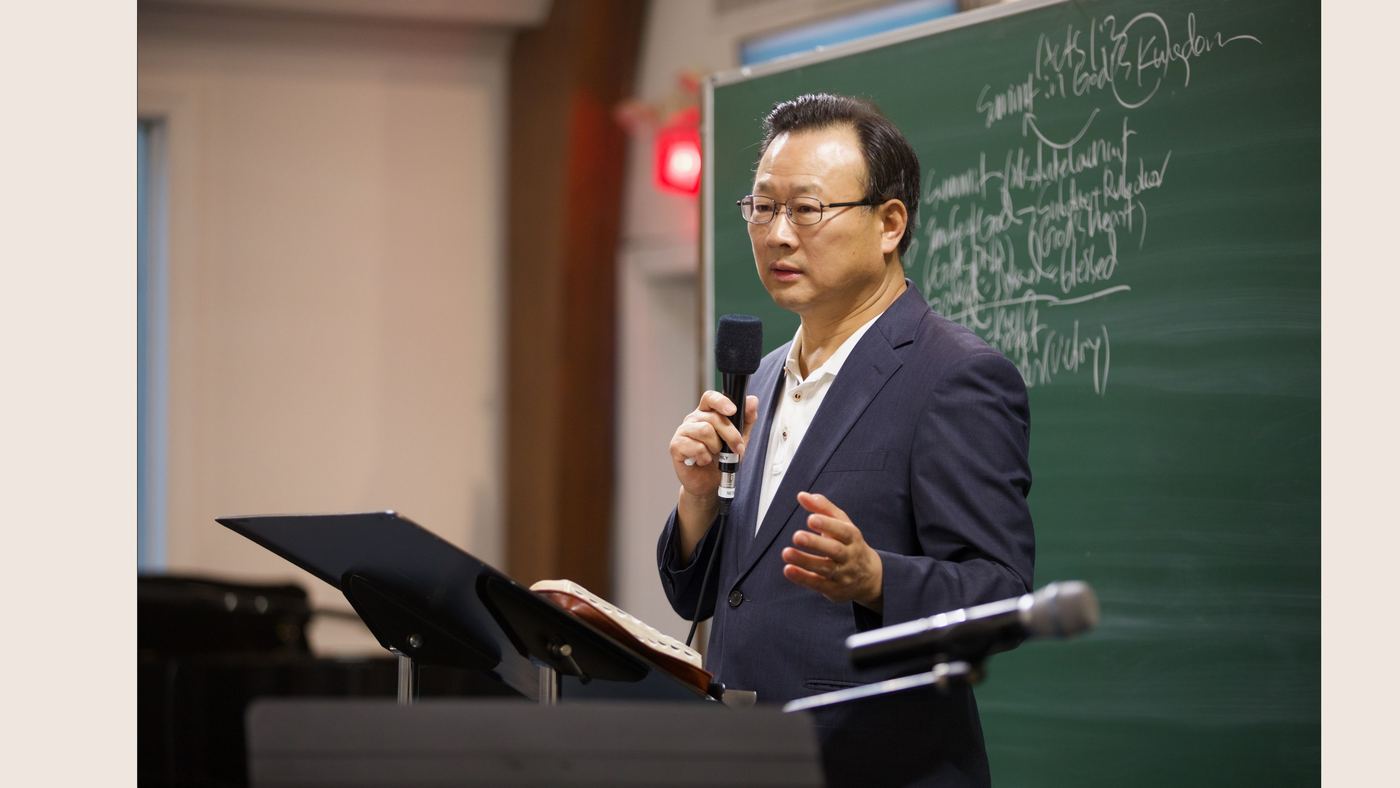
The Blessing of Anointing(1 Samuel 10:1–6) 10/18/2026
Finally, a man named Saul was anointed as king of Israel. Whether in a church or a nation, the appointment of a leader is extremely important. One certain fact is that no leader can be established without God’s permission (Romans 13:1, 1 Timothy 2:1–2).
This is especially true of the church, which is the house of God. The Bible describes Israel as a church that God Himself chose, established, and blessed. When the Israelites were passing through the wilderness, the Bible called them the “church in the wilderness” (Acts 7:38).
This was one of the reasons God was displeased when the Israelites demanded a system of kings.
They blamed their problems on the lack of a particular system. More importantly, they had reached the point of trying to run the church according to worldly standards. As a result, the church becomes secularized, like any other worldly organization, and eventually loses its spiritual strength and collapses.
The time is approaching when we must appoint workers to serve in the various departments of the church for the coming year. We must also appoint new church officers and prepare them to devote themselves to service so that the church can undertake greater works. Especially next year, we must build a multipurpose facility for educating future generations and serving people from many nations.
Through today’s passage, there are two important things we must remember about the kinds of workers and church officers who should be appointed.
- God chooses and appoints the workers who serve in His church.
1) This is why God used the prophet Samuel when appointing a king over Israel.
① First, God leads us to find the people He desires through His servants. In chapter 9, God precisely arranged for Samuel to meet the person He had prepared (verse 16). That person was Saul, from the tribe of Benjamin.
② Saul was not even the kind of person Samuel would have chosen according to his own standards. This is why we must pray deeply. We must seek the person God has chosen, the person God intends to use. Even Samuel had to follow God’s will.
2) God instructed Samuel to find the person He had chosen and anoint him. There are three offices that God established through the anointing performed by His servants (the offices of priest, king, and prophet).
① In the Old Testament, these were special offices, but in the New Testament, all believers have come to share in this blessing (1 Peter 2:9).
Who is a priest? A priest is someone who leads worship and helps people find healing, receive new life, and experience God’s blessings. Therefore, believers must succeed in worship, enjoy God’s grace and blessings, and become people who can bless those they meet.
Who is a king? A king leads the way in fighting against enemies (a spiritual victor). A king also rules over God’s people on God’s behalf. This is why we must stand as watchmen and bartizans in our homes, workplaces, and the church departments we serve, enjoying spiritual victory through prayer. Through our spiritual victories, we must experience the forces of darkness being broken in our fields of life and God’s blessings coming upon them.
Who is a prophet? A prophet receives the Word of God and delivers that Word to others. We must receive God’s Word, meditate on it until it becomes our own, and then share it with others to bring them new life.
② To be anointed means that God has determined to use that person and has prepared that person for His purpose. This is why 1 Peter 2:9 first describes believers who have been saved in Christ as a “chosen people.”
From the moment we are saved, every believer must live with the assurance that their life has been chosen for God’s purpose. We must understand that God’s purpose is fulfilled through every part of our lives—our studies, careers, families, and ministries.
What is that purpose? It is not simply to eat well, live comfortably, or achieve worldly success. God desires to bless us despite our inadequacies so that we may experience happiness and, through our lives, reveal the glory of the God who created and saved us. This is why we must train ourselves to give all the glory to Him after everything we do.
③ From the moment a person is anointed, God’s power begins to work in that person. Because God has prepared and appointed that person, He also provides the ability to fulfill the responsibility. When God entrusts us with an office or responsibility in the church, He also gives us the ability and wisdom to carry it out. Today’s passage says that from the moment Saul was anointed, the Spirit of God came upon him, and he was changed into a different person (verse 6). This was the beginning, not the completion. From the moment we are saved and entrusted with an important responsibility, we must continue to enjoy this blessing throughout our lives.
- God always gives evidence to those He has chosen and intends to use. Our faith, the way we live, and everything we do must become evidence of God’s work in our live (witnesses in Acts 1:8).
1) Find the evidence God gives you, even in your past wounds, difficult circumstances, and occasional failures. Hold firmly to the evidence God has given you. God gives us abundant evidence, but we often take it for granted and live as though it were nothing special and forget about it. As a result, we continually fall into our own standards, discouragement, despair, unbelief, and disobedience, which ultimately develop into spiritual problems (this was one of the reasons Saul failed).
2) What kind of evidence does God give us? We must not miss these things. This is the secret to continually enjoying all of God’s grace.
① The evidence of the Word. God gives us His Word precisely and fulfills it. We must experience this evidence 300%. Samuel gave Saul specific words concerning the things Saul would experience (incident involving the lost donkeys and their discovery).
② The evidence of prayer. The Bible says that when believers pray, the prayers of the saints are brought before God’s throne by the angels in heaven (Revelation 8:4). God treasures the prayers of His people. He accomplishes great things through them and gives us evidence of His answers (John 14:12–14). This is where the 300% blessing of prayer comes from. This is also where Saul failed. Whatever he did, even when he experienced failure, there was no evidence of him praying. This was one of the differences between Saul and David. David also experienced failure, but throughout his life, he lived in prayer and enjoyed its blessings. The Book of Psalms records the blessings and answers that came through prayer. Create your own personal Psalms —a record of the evidence of God’s answers to your prayers.
③ The evidence that God is using me. Even when you do something small, hold on to the truth that God is using you, and look for the evidence of His work.
From this comes the 300% blessing of uniqueness, specialty, and globalization. It means taking a life-committing challenge toward the evidence God will provide. The process through which Saul was selected as king after being anointed is also important. God made even that process become evidence (verses 17–23). In the Old Testament, when appointing people to serve God, the Israelites used the casting of lots to discern God’s will, preventing human standards, personal intentions, and selfish desires from determining the outcome. In the New Testament era, the practice of appointing people through voting began (when the seven deacons were appointed in Acts 6). The person’s faith, wisdom, and fullness of the Holy Spirit were also recognized by others. That recognition became evidence. Being loved by people in your community, family, and workplace, and having even your small contributions recognized, can also become powerful evidence for evangelism.
Conclusion - After Saul was anointed, chosen, and established as king, he accomplished many things. Yet, regardless of all that he did, Saul repeatedly failed, and the Bible says that God regretted making him king (1 Samuel 15:11, 35). Saul lost hold of the grace he had received at the beginning. He lost sight of the purpose for which God had chosen and appointed him. He also failed to continue humbly enjoying God’s grace, power, and blessings. May God bless all of us who have been saved to live lives in which He blesses us and continually gives us evidence of His work, so that we may reveal His glory throughout our lives.
The Blessing of Anointing October 18, 2026What We Must Lay Down and Restore 1 Samuel 8:1–7 10/11/26
God raised up Samuel to lead the Mizpah Assembly and the Mizpah Movement, and from that time onward, He began restoring everything in Israel. Throughout the days of Samuel’s leadership, Israel enjoyed the greatest blessings, peace, and prosperity, just as God had promised. This was not simply the result of Samuel’s character or leadership. God had chosen him, trained him as a Nazirite, entrusted, and blessed him with His work.
- Every believer, church leader, and pastor must hold on to this covenant and live while enjoying this blessing. This was the covenant God gave to Abraham, the ancestor of Israel, from the very beginning when He chose Israel (Genesis 12:1–3). This blessing has now become ours to enjoy (Galatians 3:14). When the Israelites returned to Canaan, God restored this covenant through Moses (Deuteronomy 28:1–19). God gave the same promise even to the Israelites who had lost hold of this covenant, fallen into idolatry, become oppressed by the world, and gone into captivity (Isaiah 55:4–5).
1) Adam was the first person to receive this covenant.
① God created Adam in His own image, blessed him, and entrusted him with the entire world and everything He had created (Genesis 1:28). God also gave Adam a place where he could meet and commune with Him, enabling him to receive God’s wisdom and strength (Genesis 2:15).
② That place was Eden. Theologically, Eden represents the beginning of the church and serves as a model of heaven, the perfect Eden. Even people who have been saved are living while missing out on this blessing. That is why conflicts, problems, and suffering continue.
2) God has given His saved children authority to restore this blessing in Christ. This is the identity and authority given to those who have accepted Christ and received His life.
① Our identity is God’s children (John 1:12; Romans 8:15–17). We are God’s family that possesses His covenant (Ephesians 2:19). Even if we simply understand this blessing and enjoy it through prayer, the problems of our lives, the curses affecting our families, and the forces of darkness will be broken.
② God has also given us the authority to actually enjoy this blessing. Power comes from this authority as well. The Bible calls us ambassadors entrusted with Christ’s authority (2 Corinthians 5:20). Paul said that “we speak on Christ’s behalf.” The Bible also calls us a royal priesthood (1 Peter 2:9). Being a king means having the authority to fight and overcome our enemies and to rule over the world. Being a priest means that we can worship God and enjoy His blessings, and we can use the strength we receive to bring life to others. That is why we are also called Christ’s apostles (John 20:21–23). An apostle is “someone who is sent by Christ.” It says that when we understand this mystery, pray, and experience the power of the Holy Spirit, we can bring life even to sinners and those who have fallen.
③ We fail to enjoy this blessing because we have not yet understood it. When we understand it and begin to enjoy it, everything changes. God gives us the covenant, and “I” am the starting point for its fulfillment (Genesis 17:2, 7). The Jerusalem mentioned in Acts 1:8 also begins with “me.”
- We must stand as people who pass this covenant and blessing on to future generations. A problem arose as Samuel grew old. It was the problem of his children, who became leaders after him (verses 1–3). This was not a problem unique to Samuel’s family. The same problem occurred after Joseph, after Joshua, and after Eli.
1) The first generation of people who immigrated to America to escape persecution by the Church of England did this especially well. The first-generation Puritans were people who came to America determined to hold on to the true Gospel, live by faith alone, and to relay that blessings.
① Through this blessing, America became one of the greatest nations of faith and blessing during the 19th and 20th centuries. To save future generations, they devoted themselves wholeheartedly to the Sunday School Movement, (D. L. Moody, John Wanamaker, and Abraham Lincoln).
② Those who grew up through this movement arose and launched evangelism movements throughout America, which then sent more missionaries around the world than any other nation. Mission movements that developed from Moody’s evangelistic movement included the Student Volunteer Movement (SVM), the youth evangelism movement Youth for Christ (YFC), the campus evangelism movement Campus Crusade for Christ (CCC), and military missions movement through the Navigators. These movements helped bring spiritual renewal around the world. Many missionaries also came to Korea, creating important spiritual turning points.
2) This is why we must pass this unique and absolute covenant on to future generations and ensure that the blessing is carried forward. Hold firmly to the true covenant behind the Remnant Movement, the RUTC Movement, and the Summit Movement. (Why WRC and RCA are important).
① The remnants who emerge from these movements are the future of our families and churches. This covenant and blessing must not end with just one generation (warning).
② The remnants who emerge from these movements are the future of this age. We are raising witnesses, leaders, and spiritual commanders whom God will use (Isaiah 55:4).
③ The remnants who continue to arise are part of God’s eternal future. Even after we are gone, until Christ returns and completes the new heaven and new earth, God will continue to use people through these movements in every generation. Our future generations must be established as watchmen and bartizans who will save their own generations until that eternal day comes. God has blessed those who align themselves with His plan and desire in every age (Matthew 6:33).
- Do not be deceived by people’s reasons, excuses, logic, or public opinion. These things can cause us to lose hold of the Gospel and can develop into serious spiritual problems. Through the problem involving Samuel’s descendants, where did the people turned their attention? they looked toward the world’s standards and systems. They assumed Israel was experiencing difficulties because it did not have a system of kings, so they demanded an earthly king.
1) God said to Samuel, “It is not you they have rejected, but they have rejected me as their king.” What appeared to be a simple problem ultimately led them to reject God and oppose Him.
2) Why is this important? God Himself appoints the leaders of the church, which is God’s house. Therefore, when appointing a pastor or a church leader, our own standards, preference, or proximity should not determine the choice. Who is the person God has chosen? That is why we must pray for the people God desires and intends to use.
3) There is something even more important. The Israelites rejected God’s Kingship. Israel was a nation ruled by God.
Do you understand how important this is? When Christ came, one of the first things He emphasized and taught was the Kingdom of God and His Kingship. His first message was about the Kingdom of God (Matthew 4:17, 23), and is the heart of the Lord’s Prayer. This is what Christ, the Son of God who came as the King of kings, came to accomplish and wants us to experience.
① From the moment we are saved, He becomes our King and rules over us (Luke 17:21). This is the mystery that brings an end to the anxiety, worries, depression, panic attacks, quarrels, and conflicts that arise in our lives moment by moment.
② At that time, the kingdom of darkness that rules the world and the powers of darkness that deceive us are broken (Matthew 12:28). When the forces of darkness are broken, we begin to see the way forward, doors open, peace begins in our relationships, and we are able to save others (Mark 16:17–18).
③ The Kingdom of God that we will ultimately enjoy is the new heaven and new earth—the new Eden (Revelation 22:5). This was the original blessing God gave us. From the moment we are saved, it is a blessing that must be restored, beginning within us.
Conclusion - As the people requested, God permitted the establishment of a monarchy, and Saul was made king (verse 7). But his reign did not last. Lay yourself down. Hold on to the covenant and blessing God has given you (your authority and your mission). Whatever you do, keep the future God is preparing and waiting for in mind, especially the future generations who will be used in His plan. Do not hold on to your own thoughts, your own standards, or the opinions of the world, but hold on to God’s “only.”
What We Must Lay Down and Restore 1 Samuel 8:1–7 October 11, 2026Restore the Blessing of Mizpah (1 Samuel 7:3–9) 10/4/2026
When God brought the age of Eli to an end and opened a new age through Samuel, one of the blessings God restored through Samuel was the blessing of Mizpah. Because all Israel gathered together at Mizpah, it is also called the Mizpah Assembly. And because the course of Israel’s history changed after this event, it is also called the Mizpah Movement. Why was the Mizpah Assembly, or Mizpah Movement, so important? Because this gathering became a turning point through which the Israelites, who were living through a difficult period, recovered the blessing of being God’s chosen people.
First, what kind of nation was Israel, the nation God had chosen? When Abraham left a background of idol worship and went to Canaan with nothing, God gave him the covenant that his people would become a source of blessings. God promised to bless his descendants and make them into a great nation, defeat their enemies, and make them witnesses through whom all the families of the earth would be blessed. After Joseph died, the Israelites lived as slaves for 400 years. But God delivered them, split the Red Sea, and led them back toward Canaan. While Joshua was their leader, they conquered Canaan to the point where the people of the land became afraid of the God who was working through Israel (Joshua 2:10–11). Just as God had promised Joshua, He gave Israel the land on which their feet had walked. They conquered the land, and there was a period of time they prepared for the future.
- What happened to the Israelites after Joshua died?
1) They continued to experience devastating failure. During the period of the Judges, the Israelites repeatedly suffered because of attacks from the Canaanite peoples. Then, during the time of priest Eli, the Ark of the Covenant, which represented the covenant relationship between God and Israel, was captured.
2) Who does this represent? Why does history repeat this kind of suffering and failure? This was not only their problem. It is the present condition of fallen humanity since Genesis 3. Unless we continually enjoy the grace of God’s salvation and hold on to the covenant given to those who have been saved, we will continue to be deceived by our enemies and live in suffering as long as we are on this earth.
① Their faith in God became weak, so they continually fell into the world and looked toward the world. That was idolatry (Colossians 3:5). They did not realize that they were experiencing difficulties because they had lost hold of God and the covenant He had given them. It was as though they thought God was not enough, so they continually looked for other sources of power and other methods. They had not completely abandoned God. They knew that He alone was the Creator and therefore the only Savior. But they had lost sight of the power and blessing that come when He rules their lives. How far did this go? We see it in chapter 8. They thought their problems were happening because they did not have a king, so they demanded a king. As a result, Saul became king through their insistence. What is obtained through human insistence rather than God’s will does not last long. And so Saul eventually fell.
② Why did their faith in God become weak? They did not know what God’s promises (covenant) were. The covenant is the absolute plan of God that He gives as a promise concerning me, His people, and the entire world. God does not give this covenant to just anyone. He gives it to His chosen people (this is why the Philistines were judged even more severely after taking the Ark of the Covenant in chapters 5–6). We must recover our faith and live with the confidence of knowing what makes us different from unbelievers who have no covenant. From the moment you were saved, first hold on to the fact that you were chosen by God before the foundation of the world. In Christ, you were forgiven of all your sins, have become a child of God, and have become someone who can enjoy every spiritual blessing in the heavenly realms (Ephesians 1:3–5). Even when problems come, even when crises come, if we truly look to Him, God promises to give us victory and make everything into a testimony (re-creation, re-production, and re-challenge).
③ This is why we must make the covenant our imprint, our root, and our nature. Without the covenant, we have no strength to overcome when an enemy comes, and we collapse. Even when we fail, we have no assurance that we can rise again. That is why God’s people repeatedly fall and cannot overcome their wounds, their level, and their limitations. Through the message from the pulpit, hold on to the covenant for the week. Meditate on it every day and hold on to the covenant for today. As you do this, the covenant for your entire life will also become clear. Then pass it on to your children, and see the evidence of the covenant in yourself and in the generations that follow you (covenant journey, pilgrim journey, and victor’s journey).
- What are the three things God had Samuel lead the Israelites to do when they gathered at Mizpah? Within God’s time schedule revealed through the message from the pulpit, we must hold onto the time schedule of blessing that God is giving to me, my family, and our church (covenant of Ezekiel 47).
1) He led them to throw away all idols and hold on to “only.” Our lives are ones that He created, chose, and saved. He alone is my Savior, my Redeemer, and my Mediator. There is no one else who can do this work. Christ, the One who came as the Son of God, is the “only.” (Acts 4:12)
① Hold on to only Christ, only the Kingdom of God, and only the power of the Holy Spirit. Christ finished every problem on the cross. He rules over me and establishes me as a witness. It is not my power. It is the power of the Holy Spirit. Study while enjoying this blessing. Work at your job and run your business while enjoying this blessing. It does not matter how inadequate we may be.
② This is when the answers and evidence of “only,” “uniqueness,” and “re-creation” come. Because we have “only,” even the small things we do become uniqueness, and they become opportunities for re-creation that save everyone.
③ For this purpose, God works through With, Immanuel, and Oneness. This was the blessing enjoyed by Joseph and all the remnants. God is with me, He is with the people I meet, and He is with everything I do.
2) He led them to hold on to God alone as the bartizan that overcomes every enemy.
① Israel did not choose God. God chose Israel. Therefore, He also fights against my enemies. Why do God’s chosen people become oppressed, tormented, and live in humiliation under their enemies? Because they have lost this blessing.
② God protects me, fights for me, and gives me His victory and glory (this is what it means to “restore the blessing of the bartizan.”) Do you know why they gathered specifically at Mizpah? The Hebrew word “Mizpah” means “bartizan” or “watchpost.” Why specifically use a word meaning bartizan or watchpost? Because it is something needed in warfare. It is not merely an ordinary word. It is also a theologically important word. It represents the covenant that Christ will fight for me to the very end and give me victory (Revelation 17:14).
③ Look at how God actually gave them undeniable evidence. The Philistines dared to attack at the very moment when God’s people had gathered, restored the covenant, and were praying. But God caused those enemies to be utterly defeated. This is where the confession of faith called “Ebenezer” came from (1 Samuel 7:12). David, who received this secret, held on to this confession throughout his entire life (Psalm 62:2). He defeated every enemy and became a testimony of a victor (Song of Songs 4:4). The One who would come as a descendant of David is Christ. He is called the “Morning Star,” representing the victorious One (Revelation 22:16).
3) Finally, Israel’s lifelong enemies were defeated, everything that had been taken from them was restored, and an age of peace opened in the land. Without realizing it, they had lived allowing so many things to be stolen from them by darkness. Now, rise up, hold on to the covenant of victory, and live. Satan, who will ultimately bow before Christ (1 Corinthians 15:25), will certainly have his head crushed beneath our feet (Romans 16:20). And then all the blessings follow. The Bible says that all the blessings given to us are the result of Christ’s victory (Ephesians 4:8).
Conclusion - Restore the blessing of Mizpah within yourself and within your family. It will become a blessing that revives the church and saves all nations.
Restore the Blessing of Mizpah (1 Samuel 7:3–9) 1 Samuel 7:3–9Preparing for a New Age (1 Samuel 4:1–4) 9/27/2026
By the grace of God, I returned safely after completing the ministries in Korea and the Philippines. Before leaving, I shared messages for two weeks on Light Camp and Language Camp. No matter how much darkness covers the whole earth, those of us who have the light of God can instead enjoy God’s blessings even in the midst of that darkness and do the work of saving lives. The words that come out of our mouths at such times can revive the church and save the world.
The Bible says, “The Lord was with Samuel as he grew up, and he let none of Samuel’s words fall to the ground”(1 Samuel 3:19).
The result of the lives of believers who failed to hold on to this blessing is described in this week’s passage, 1 Samuel 4. Eventually, darkness covered their families, their church, and the entire nation, and the result was devastating. War broke out against the Philistines, their long-time enemies, and Israel suffered two terrible defeats. In the first battle, 4,000 men were killed (v. 2), and in the second battle, 30,000 were killed (v. 10). In this war, the Ark of the Covenant was also captured, and priest Eli’s two sons were killed. When Eli heard the news, he also died of shock.
Why do such shameful and tragic things happen in the personal lives, families, and churches of God’s people? It was God’s discipline toward His people, who had failed to recognize the opportunities God had given them for such a long time. Yet even this discipline is an expression of God’s love toward us (Hebrews 12:6), and it is also a mirror and a message from God for every generation that comes and goes (1 Corinthians 10:11).
But this is not the end. There is an important conclusion. God was preparing a new age. In the midst of all this, God was preparing Samuel, and David who will be raised through him, as the “remnants,” the “ones who remain,” whom He would use for His absolute plan. We are people who are in the covenant to be used in this age as the ones who remain, the remnants. God desires for us in this age to rise as remnants, as the ones who remain, and as disciples whom God will use, who possess three things clearly.
- God tells us to begin anew in the midst of every problem.
In Isaiah 43:18–19, God gave an important answer and message to Israel, a people who had experienced failure and shame.
1) “Forget the former things; do not dwell on the past.” There are things I have done well, and there are things I have done poorly. God tells us not to become trapped by those things. If we become consumed with the things we have done well, we can fall into self-confidence and pride. If we become consumed with the things we have done wrong, we can live under guilt and eventually try to escape from it. We may make excuses for ourselves and begin to lie. We may even shift the blame onto someone else and begin to hate people. That is the spiritual problem that began in Genesis 3.
2) “See, I am doing a new thing!” God said that He would make a way in the wilderness and streams in the wasteland. This means that no one should give up, but instead expect the new work that God will do. That is faith. The moment we are saved, we become a new creation (2 Corinthians 5:17). The Holy Spirit is with us to help us, because we are deeply lacking, and He groans within us and intercedes for us in prayer (Romans 8:26). When we acknowledge and confess our shortcomings, God promises to forgive all our sins and cleanse us from all unrighteousness (1 John 1:9).
3) It goes even further. God makes our problems, failures, and suffering become at least three kinds of opportunities. This is why God called out to Adam and Eve, who had sinned before Him and hidden among the trees (Genesis 3:9).
① God heals and renews our hidden weaknesses and wounds and makes us mature before Him. An opportunity for re-creation As people who have been saved, we must experience this re-creation of God within us every day (Psalm 51:10).
② As we are healed and re-created, God gives us the opportunity to save people who are truly like us. An opportunity for re-production. Even though we may have been shameful, God makes us witnesses who can tell others what it means to live according to His will (Psalm 51:13).
③ Even if we experience shame and discipline for a short time, God ultimately turns it into an opportunity to enjoy His greater blessing. An opportunity for re-challenge (Proverbs 24:16). This is the covenant contained within God’s absolute grace and absolute love (hesed).
- God tells us to go deeper into the covenant in the midst of every problem. The reason the Israelites repeatedly fell into the world and idol worship, experiencing failure and shame, was because they had lost hold of the covenant.
1) Unbelievers are not simply people who do not believe. The Bible calls them Gentiles, meaning people who are without the covenant (Ephesians 2:12). There is an original covenant that God gave us (Covenant of Creation). It is found in Genesis 1:26–28. We were created according to God’s plan. We were created in the image of God, and we were to subdue and rule over the things God created. Yet people live while completely losing sight of this fundamental covenant and blessing. They do not know God’s plan for their lives. Therefore, their own plans and their own will come first. They do not know the mystery of the Holy Spirit being with them. As a result, spirits of darkness control them. Naturally, they follow the culture of the world, become oppressed by the world, and live as slaves to it.
2) What is the covenant God gives to those who are saved? It is called the Covenant of Grace.
① We were people who had no choice but to live trapped in sin, the curse, and our destiny, but God called us by His grace and set us free. No matter how strong the world appears, and no matter how great the problems seem, do not be afraid or anxious. Fear and anxiety are what cause us to make mistakes and experience failure(Job3:25).
② Just as God made Abraham a source of blessing, He has made us a source of blessing in Christ (Ephesians 1:3–5). It does not matter if people disregard me or if the world considers me insignificant. I have become a person who is able to enjoy God’s blessing.
③ Satan tries to cover the whole earth with darkness. He especially attacks the weak areas of God’s people, deceiving them and trying to destroy them. God tells us to become strong by looking to the power of Christ, to hold on to the Word of promise, and to stand against by faith (Ephesians 6:10–11). The Lord Himself will oppose those who oppose us (Genesis 12:3), and He will fight for us to the very end and give us victory (Revelation 17:14).
④ What is the ultimate blessing? It is both a blessing and a mission. “And all peoples on earth will be blessed through you and your offspring” (Genesis 12:3; 17:6; 22:18). We must raise our children so that they can grow into vessels (character, spirituality, and specialty) who can receive this blessing and be used by God to this extent. This is also why we go to the ends of the earth for missions (Acts 1:8).
3) Those who train themselves in at least seven areas are the leading figures of the Remnant Age and evangelists who will save the world. These are the blessings held by people – the evangelists and disciples of their generations - throughout the Bible who were blessed and used by God.
① They held on to the blessing of the “remained” (Isaiah 6:13; Romans 11:5). They were deeply inadequate, yet God chose them by His grace and established them.
② They held on to the blessing of the “pilgrim” (Hebrews 11:16). They were not ashamed of God, and they looked toward His eternal kingdom.
③ They held on to the blessing of the “conqueror” (Romans 8:37; 1 Corinthians 15:57). They did not become discouraged by problems and suffering but enjoyed spiritual victory.
④ They held on to the blessing of the “scattered ones” (Isaiah 49:6). They became witnesses in their own fields and went to the ends of the earth to proclaim salvation.
⑤ They held on to the blessing of the “watchman” (Ezekiel 3:17; Isaiah 62:6). They understood that through the prayer of one person, a family, a household, a church, and an entire generation could be revived.
⑥ They held on to the blessing of the “spy” (Numbers 13:1–16; Joshua 2:1). They were people who sought out the fields God had prepared and the disciples God had prepared.
⑦ They held on to the blessing of the “one who raises the banner” (Isaiah 62:10). They raised only the banner of Christ and stood as people who would save all peoples.
Conclusion - We are living in a difficult time throughout the whole world. May God bless us to experience victory by holding on to the covenant that God is preparing a new age through us.
Preparing for a New Age (1 Samuel 4:1–4) 1 Samuel 4:1–4The Language Camp Believers Should Experience (1 Samuel 3:15–20) 9/13/2026
Last week, we shared the message about the Light Camp that believers must continually experience throughout their lives. This week, we will share the message about the Language Camp that believers should experience and enjoy.
In 1 Samuel 3:1, it says that at that time when the boy Samuel was serving the Lord, “the word of the Lord was rare, and there was no frequent vision.” Eli the priest lived at the end of the period of the Judges. Why did the Israelites worship idols and continually live under oppression by the Canaanite peoples during the time of the Judges? It was because God did not give them the Word. Therefore, all the people lived according to what was right in their own eyes (their own thoughts and standards) (Judges 21:25). The Bible also explains in this way why God’s people suffered during the time of exile (Amos 8:11).
When darkness filled the whole earth, God came among us as the Word, and that Word was the light of mankind (John 1:1–4). This refers to Christ who came as the Light, and to the Word of Christ, which is the gospel. When we hear the Word of Christ, that light comes upon us, and the Word of Light enables us to overcome all darkness. No matter how much darkness, corruption, and suffering fill the world, what matters is that there is the Word of Light, and that there are people who proclaim that Word of Light. The Bible called such people the prophets of their generation, and 1 Peter 2:9 says that all believers are those who proclaim that light.
- We are the spiritual prophets of this age (19–20).
Verse 19 says, “Samuel grew, and the Lord was with him and let none of his words fall to the ground.” This means that in an age when the Word was scarce, God began to use Samuel fully as His prophet.
Therefore, verse 20 says, “All Israel knew that Samuel was established (acknowledged) as a prophet of the Lord.” We must discover three important truths in this passage.
1) God prepared for a long time and raised up those who would proclaim His Word. They are the Preachers of the Lord.
① What work began from that time? When Samuel spoke God’s Word on His behalf and led the Israelites with that Word, the darkness over Israel began to end, God’s vision became visible, and God’s blessings began. This led to the Mizpah Movement (1 Samuel 7).
② What is the most important standard for recognizing a servant of the Lord as a true servant of the Lord? God has given His Word to them (Deuteronomy 18:18; Jeremiah 1:9).
God guarantees their words and works through the Holy Spirit. That is why our attitude when we hear the Word proclaimed from the pulpit is so important (1 Thessalonians 2:13). We must enjoy the blessing of that Word healing us and working in our work, problems, and circumstances. God said that He would be with His servants and that not one of their words would fall to the ground. We must experience this blessing.
2) Who are the ones who will take this Word into the world and proclaim the Light in a world filled with darkness?
① They are all believers who have received salvation (1 Peter 2:9). They proclaim the Word of Light.
The Greek word translated “proclaim” is exangellō, and from this comes the word “evangelism.” God has established all believers as those who will speak His Word on His behalf and proclaim the Word of Light to the world and to unbelievers.
② When we believe this promise and proclaim the Word, the forces of darkness will be broken, and God will put His Word (new tongues) in our mouths (Mark 16:17).
Furthermore, the Bible says that Christ upon the throne will be with us and show us that evidence (Mark 16:20). It may be difficult for a believer to preach a sermon to someone. However, when God sends someone to us, He enables us to give that person the precise answer they need. We do not need many words. If we accurately hold on to Christ and enjoy Him, God will bring people to us and show His evidence.
- In our everyday lives, we must train ourselves and experience the power of the Light being revealed and our words being fulfilled (Language Camp).
1) The more we enjoy the gospel of Light, the more the power of that Light will be revealed.
This is how evangelization of our families must also take place. I must first enjoy the Light within me. Then the words that come from me will carry spiritual authority.
It is the same at school and in the workplace. It is not about becoming someone who simply speaks well. Rather, our words are fulfilled with power and blessing.
① Therefore, the words we normally speak in our everyday lives are very important. They shape our spiritual condition. When my heart is filled with darkness, wounds, resentment, and complaints come out of me without my even realizing it. Gossip, criticism, and evil words about others also come out. Our words come from our spiritual state, but at the same time, our words also influence our spiritual state. Our brain hears the words spoken by our own mouth and directs our body accordingly.
Moreover, when we gossip about or criticize someone, those words inevitably affect that person and eventually reach them (Ecclesiastes 10:20).
② The words of my mouth and what I hold in my heart in my everyday life are brought before God (Psalms 19:14). As we shared last week, carry out the three stages of the Light Camp throughout your entire life, and make every day a time to enjoy the power of the Light.
2) Our confessions of faith bring about the work of the Holy Spirit and creates God’s masterpiece.
① Even my salvation takes place when we hear the gospel of Christ, believe it, and confess it with our mouths (Romans 10:17).
② That confession of faith brings answers and blessings into our lives. Therefore, Scripture says: “Whoever would love life and see good days must keep their tongue from evil and their lips from deceitful speech. They must turn from evil and do good; they must seek peace and pursue it” (1 Peter 3:10–11).
It also says that the eyes of the Lord are upon the righteous, and His ears are attentive to their prayer (1 Peter 3:12). This means that the confession of my mouth becomes righteousness that pleases God. It becomes a righteous prayer that God hears. Those who believe in Christ and have received salvation already possess His righteousness, and now even the confession of faith spoken through our lips in our everyday lives bears fruit.
3) One of the fruits of being filled with the Holy Spirit is the blessing of our words. Pray for only Christ, the Kingdom of God, and the filling of the Holy Spirit. In Ephesians 5:18–21, God tells us not to become drunk with wine, which leads to dissipation, but instead to be filled with the Holy Spirit. Then He speaks of four fruits that follow.
① We will speak to one another with psalms, hymns, and spiritual songs. For the words of my mouth to become like poetry and song means that my words become beautiful. Instead of speaking words that unknowingly hurt others, I begin to speak words that make those who hear them feel encouraged and strengthened.
② Praise will arise from my heart. Just as people begin to sing when they are drunk, when we are filled with the Holy Spirit, spiritual songs arise from within us.
③ We will always give thanks to God the Father for everything in the name of our Lord Jesus Christ. Because the Holy Spirit rules over my heart, all darkness loses its power, and thanksgiving arises in every circumstance. Through this, my relationship with God becomes deeper.
④ A life of submitting to one another out of reverence for Christ will follow. With the heart of serving Christ, we humbly lower ourselves, honor one another, help one another, and live a life of serving one another.
Conclusion - God has established us as the spiritual prophets of this age. May God put His Word in on our lips, allow that Word to be fulfilled, and may the words of our mouths become spiritual authority and power that God uses and blesses.
The Language Camp Believers Should Experience (1 Samuel 3:15–20) 1 Samuel 3:15–20Light Camp for the Next Generation (1 Samuel 2:18–21) 9/6/2026
Beginning this week, schools are starting a new academic year, and our church is beginning Summit School and Summit Preschool. As parents and church leaders, what kind of prayers and support should we provide? There is something that only we can do- the “Light Camp.”
Why is this Light Camp so important? Because the darkness in the world is growing deeper and deeper (Isaiaj 60:2; 2 Timothy 3:1).
Why does the Bible speak about this darkness? It tells us that this darkness was already present when the visible world was created (Genesis 1:2). This was not simply a condition in which there was no physical light. Before the visible world was created, there had already been a spiritual fall in the spiritual realm that was created first. There were spiritual forces at work in that fall. They were the fallen spirits, those who followed the one whom we call Satan and the devil. They are called “the power of darkness” (Luke 22:53) and “the rulers of the darkness of this world” and “spiritual forces of evil” (Ephesians 6:12).
They fell and were cast down to the earth (Revelation 12:9), and they were the ones who tempted and brought down Adam and Eve, the first human beings (Genesis 3:1–5). They are the ones who corrupt the world, who kill and destroy human lives, and who carry out evil works (John 10:10). Why do evil things continue to happen in the world? Why do works of darkness continue in individual lives? We send our children to school hoping that they will have a better future, but why are they wounded even there, and why do things happen that we cannot understand? It is because the spirits of darkness are at work there.
This is where the failure of Eli the priest’s sons, described so vividly in 1 Samuel 2, began. They did not merely commit evil deeds. The Bible says that they despised the sacrifice (worship) of the Lord (1 Samuel 2:17). This was what Satan himself had first done (Ezekiel 28:14–15).
The hell to which these spirits of darkness will go is described both as the lake of fire that never goes out (Revelation 20:10) and as a place of eternal darkness (2 Peter 2:4; Jude 1:13). Hannah also described those who had afflicted her as being sent into the depths of darkness (1 Samuel 2:9).
- God did not want us to live in this darkness or remain in a place of eternal darkness.
1) Therefore, He sent His Son as the Christ, and He is called the Light of mankind (John 1:4). Yet people did not understand that Light. Instead, they blocked and opposed the Light. However, in every age there were those who recognized Him as the Light of their lives and received Him. Who were they? They became children of God (John 1:12), and they are called children of light (Ephesians 5:8). I am not the light itself; I am one who possesses the Light.
2) How does the Bible describe salvation? It is the state in which I receive Christ, escape from all sin, curses, and destiny, and become a child of God. How does the Bible describe this more specifically? It says that we have been delivered from the hand of Satan (Luke 1:71) and transferred from the kingdom of darkness into the kingdom of God’s Son (Colossaisn 1:13). Therefore, we have become citizens of the kingdom of God and people who are to enjoy the blessings of that kingdom (Ephesians 1:3–5). There is no reason for us to live under oppression any longer (Acts 10:38). Enjoying this blessing is the true life of faith.
3) It does not stop there. We have become people who can stand against and overcome the powers of darkness with this power of the light.
① The powers of darkness are covering this world. This is an age in which darkness covers the church, darkness covers the field, and dragging the next generation in the darkness. God has called us to save these three fields (1 Peter 2:9).
② God has actually given us authority and power. We are those who possess the authority of Christ. This is why the Bible calls us “a royal priesthood.” When we pray with that authority, power is revealed. It is “Heavenly Power”, the power of heaven that overcomes the ruler of the kingdom of the air. It is “Thronely Power”, the power of the throne that saves and conquers the world. It is “Eternally Power”, the eternal power that saves the future. We must help our next generation possess and enjoy these blessings as they go to school, enter the workplace, and move into their future.
- Therefore, what we must concentrate on is this Camp of Light. This is something that schools cannot do.
What kind of light is the light of Christ? It is the light of creation, the light of life, and the light of blessing. No matter what, darkness can never overcome light. This is why we and our next generation can rise again even if we stumble and fall for a moment (Proverbs 24:16). We must begin with three light camps in the home. The church helps families do this. A camp is something we can do together. Samuel was sent to the temple and trained there (v. 18), but his mother Hannah continually supported and helped him (v. 19).
1) The First Camp — Training to understand and enjoy this Light
① Do not be deceived by circumstances or present realities. First understand and enjoy Christ, who has come into me as the Light (Isaiah 60:1). We must help the next generation know and enjoy the fact that in Christ they are children of light. This must become their imprint, root, and nature.
② The light that I enjoy is transmitted to others. From this comes true education in the home, as well as true evangelism and missions (Isaiah 60:3–7). At this time, I begin to see the work God has prepared for me to do and the path I need to take. I come to understand my mission.
2) The Second Camp — From this point, the darkness within me begins to be healed. Parents must be healed first.
① There is certainly darkness within us. It may come from family-line problems, hereditary problems, or problems experienced during the process of growing up. These problems may appear even in childhood—ADHD, depression, loneliness, or difficulty controlling anger. God has allowed us to see these things in advance so that they can be healed. Healing takes place when we look to and enjoy Christ, who is the Light. Nothing can destroy me or my next generation. Do not despair. Even if it is an incurable disease, everything changes when the light of God shines upon us. Pray that the power and blessing of that Light will come upon us. Then we begin to see the bartizan of the throne, the blessings, and the guidesigns that God has prepared.
② Through me, as I enjoy this blessing, other people will also be healed. Those who understand what healing is and have personally experienced it become witnesses who can bring healing to others and save them. There is healing of the heart, healing of the thoughts, healing of habits, healing of diseases, and a fundamental healing that underlies every kind of healing. That is spiritual healing. This is why God chose and raised us up. “To open their eyes, so that they may turn from darkness to light and from the power of Satan to God” (Acts 26:18).
3) The Third Camp — From here arise disciples who are willing to stake their lives on the gospel and be used by God
① In the midst of desperate suffering, Hannah staked her life on the covenant, prayed with her life on the line, and entrusted Samuel to God with her whole life. Hannah was a disciple of her age, and through that disciple, another disciple, her son Samuel, arose. Through Samuel, who was dedicated in this way, God saved Israel and raised up another disciple, David.
② After Hannah gave Samuel to God, she received even more children.
“The Lord visited Hannah” (v. 21). The Hebrew word translated “visited” is paqad (פָּקַד). It carries meanings such as “to visit,” “to remember with personal concern,” and “to take account and repay.” In English, the expression conveys the idea that the Lord showed Hannah great grace. The Lord also promised His disciples that if they lost anything because they staked their lives on the gospel, they would receive a hundredfold (Mark 10:29–30). We live only once. Our lives will one day stand before God. May we become people who are willing to stake our lives on the gospel.
Conclusion - Begin the Light Camp within yourself. In this age when darkness fills the three fields, God will raise us and our next generation as witnesses of the Light.
Light Camp for the Next Generation (1 Samuel 2:18–21) 1 Samuel 2:18–21A Woman Who Devoted Herself with God’s Desire in Her Heart (1 Samuel 1:21–28) 8/23/2026
To live with a desire is a privilege given only to human beings. Animals do not have desires. They simply live from day to day. They live because they were born (instinct for survival) and they search for food in order to live (the law of the jungle). Then, as time passes, they die when they become sick or grow old and lose their strength.
Who are human beings? If we set aside, for a moment, the biblical and theological meaning of humanity, we can describe a person as a being who lives with desires and aspirations.
When this desire develops, it becomes a dream and then a vision. We live by holding onto that desire, challenging ourselves to fulfill it, and experiencing a sense of worth and happiness when it is fulfilled.
That is why there are two kinds of people in the world. Those who have desires and aspirations, whether great or small, and those who have none at all. Some people live in such poverty that their only desire is simply to eat well and survive. Others had dreams when they were young, but after being chased by the realities of life, they lost those desires, or simply forgot what their desires were.
- This desire is also extremely important for those who are saved.
1) God works in us to give us the desire to do what pleases Him (Philippians 2:13).
① If we are truly saved people of God, then God’s desire should be placed within us, and we should enjoy the blessing of having God’s desire become our own desire. This is because the Spirit of God, the Holy Spirit, dwells within us (1 Corinthians 2:10).
② This does not mean that we must abandon everything else and live only for God’s desires. Rather, we should discover here the reason why God blesses and answers us as we pursue the things we want to do and the things we need.
This is what it means when Scripture says, “Whether you eat or drink, do it all for the glory of God” (1 Corinthians 10:31).
③ Especially when we face difficulties, problems, and crises, we should pray and search for this. What is God’s will for me? Why does God not allow what I want? What is God’s purpose in allowing this problem, difficulty, or conflict? Why does this kind of problem come only to me? The thoughts, will, and way that God has prepared are greater beyond my thoughts, my will, and the path I want to take (Isaiah 55:8–9). Throughout the Bible, those whom God greatly blessed and used all experienced this blessing (Genesis 45:8).
2) Try meditating on the Word and praying with the desire to be used by God to accomplish His desire. Through the Word, you realize God’s promises. That desire becomes a vision, then a dream, then a prayer, and finally something we are challenged to pursue. We call this the CVDIP that God gives us. Continue to pray and receive strength. You will begin to see and experience things in advance.
① In your ordinary life, make time to truly focus on listening to the Word, meditate on it (the time when you hold onto God’s promises for you) and pray. The problem for many believers is that they have no time or space for God to place His desire within them. Because there is no desire within them, the Word does not enter their hearts, and they have nothing to pray about. That is the kind of life Satan wants.
On the other hand, because they have no time to hold onto and meditate on the Word, God’s promises are not understood within them. Naturally, there is no vision, no dream, and nothing to challenge them.
② Even when doing small things, carry this desire in your heart, and when doing important things, hold onto it even more (Matthew 6:33).
③ Especially, times of problems, conflict, despair, and failure are the greatest opportunities to experience this blessing. Hannah entered into this prayer during an extremely painful and difficult period. She did not merely receive one son because of her prayer. As she came to understand God’s desire and God’s plan, that desire became a dream and vision for a Nazirite. Samuel was born from that vision. Through Samuel, Israel was restored, and David, the ancestor of Christ, arose.
3) This does not happen to just anyone. There is an absolute reason why all our problems, despair, and suffering can become a blessing.
① It is because Christ became our Savior, Redeemer, and Intercessor.
He set us free from eternal our, fate, and the authority of Satan (Savior). He took upon Himself the curse and punishment that we deserved (Redeemer). Through the Holy Spirit, He prays for me in my weakness (Romans 8:26), and He intercedes for me before the throne of God (Romans 8:34, Intercessor).
② Therefore, when Christ has become our imprint, root, and nature, even the way we see problems changes. We may look at the exact same problem, but we see it with different eyes. Everything changes depending on how we see it. Rather than seeing it as a problem, we see it as an opportunity through which God heals us (Luke 22:32), strengthens us (2 Corinthians 12:9), and gives us a greater answer (Jeremiah 33:3). Some people fall into trials and give up because of their problems. Others discover what they must do because of their problems and rise up to accomplish something even greater.
- As our eyes are opened, faith grows, and upon that faith, God’s masterpiece is created. This is what God is speaking about through today’s passage, and He has shown us the evidence of it.
1) Samuel was born through Hannah’s prayer and faith, which were restored in the midst of her problems and suffering.
① To what extent was Hannah’s faith restored? There were three stages. The first stage was that she was able to pray. The second stage was that, through prayer, she came to understand God’s plan (the covenant of the Nazirite). The third stage was when she received the blessing of Eli the priest, and Scripture says that Hannah no longer had a sorrowful expression on her face (1 Samuel 1:18).
② She received peace in her heart. This was the work of the Holy Spirit, because the Holy Spirit governs our hearts (Romans 14:17). She had now completely entrusted everything to God (1 Peter 5:7). We must reach this point for it to become true faith. At that moment, the darkness that had continued within her through anger, despair, and suffering was broken, and the kingdom of God came upon her (Matthew 12:28). It is not merely a matter of having the problem solved. The problem itself is transformed into good and becomes God’s masterpiece (Genesis 50:20; Romans 8:28).
2) The next step is important. When the Holy Spirit begins to work within us, there is something we must do in cooperation with God. This is called devotion and dedication. Salvation is God’s unilateral choice and grace, but answers and blessings involve our cooperation with God. God does not need us because He lacks power, nor does He desire our devotion because He cannot accomplish His work without us. Rather, He gives us the opportunity for our devotion to become our joy, our blessing, and our eternal reward (Galatians 6:7, 9). What kind of devotion did Hannah make?
① She fulfilled the prayer (vow) she had made concerning what she had desired and prayed for. Only then can even something small in our lives become God’s masterpiece (Psalm 50:14–15). When God gives us the desire of our hearts, we should act upon it (the “three bulls”). God is the One who causes us to act, and God is also the One who gives us the ability to act.
② True devotion requires sacrifice on our part (Matthew 16:24–25). As soon as Samuel was weaned, Hannah took him to the temple. He was no longer simply her son, he became a son dedicated to God. God would bless him, but this required an enormous decision of sacrifice. Devotion without sacrifice is not devotion. It is merely selfish desire.
③ She completely entrusted the outcome of her prayer, vow, and devotion to God. She entrusted Samuel to Eli the priest. She trusted the servant of God, but in reality, she was trusting the God who would use him.
Conclusion - May God bless us so that God’s desire is placed within us, that desire becomes our faith, and through our devotion, God’s masterpiece is created.
8.23.26 A Woman Who Devoted Herself with God’s Desire in Her Heart
A Woman Who Devoted Herself with God’s Desire in Her Heart August 23, 2026The Nazarite Covenant Held Onto in the Midst of Suffering (1 Samuel 1:9–18) 8/16/2026
The central theme of the Books of Samuel is the biblical record of how God brought an end to the period of the Judges, a time filled with suffering, and established a kingdom in which God Himself would govern over the king. These books are not simply a historical account of the beginning of Israel’s monarchy.
They record what God did to prepare for Christ, the King of kings, who would come to destroy our enemy and give us eternal victory. Samuel was the first person God used for this purpose. That is why these books are called the Books of Samuel.
What were some of the important things God accomplished through Samuel? First, Samuel played a crucial role in bringing the period of the Judges to an end with Eli the priest and in opening the age of Israel’s monarchy (1 Samuel 10:25). Samuel also established King Saul. And Samuel was the one who anointed, blessed, and guided David, the ancestor of Christ, when David was still young. Through Samuel, the idolatry that had continued throughout the period of the Judges came to an end, and the Mizpah movement began, through which all the people of Israel restored their covenant with God.
The important figures of an age do not simply appear. If Samuel was the person God used to raise up David, then the people God used to raise up Samuel were, in his family, a mother named Hannah, and in the temple, a priest named Eli. These were not people who possessed anything extraordinary. Yet God used them. That standard is the covenant we must hold onto. Hannah was an ordinary wife of a man named Elkanah from the tribe of Ephraim. She had even become the second wife, according to the misguided customs of that time. On top of that, because she could not have children, she suffered severe ridicule and harassment from the first wife. She was especially tormented every year when she went to the temple to worship during the appointed feast. These things happened even inside the temple.
Through such a woman, a leader named Samuel arose. The point is not simply that she eventually had a child and received God’s blessing. What matters is that my life and my suffering can be used to accomplish God’s absolute plan. Through this passage, we must hold onto God’s absolute plan and absolute blessing that He is accomplishing in each of our lives.
- Why does God allow these things to happen, and why does He use people who have experienced such suffering? Because this is the power of the gospel and the way God accomplishes His absolute plan.
1) The Bible tells us that God did not choose and save us because we were perfect. After Adam fell in Genesis 3, no human being could be perfect or righteous before God (Romans 3:10, 3:23). Satan, who worked through Adam, still acts as the ruler of this world and of people’s lives, leading them into darkness. That is why, as time goes on, the world and human life continue to become corrupted, suffering continues, and incomprehensible problems keep arising.
2) God did not want us to remain trapped in this kind of life. That is why He prepared Christ before the ages began. The Old Testament records through all of history and its events how God revealed in advance the Christ who would come. That Christ finally came to this earth, possessed the three heavenly authorities, accomplished everything, and finished it all (John 19:30). In every age, God looks for people who will first realize and enjoy this blessing and then save others like themselves (evangelists and disciples).
3) What is the method and standard? The Bible speaks of at least three things.
① God’s absolute plan and absolute sovereignty. We did not choose God. He did not consult with us. The perfect God determined and called us before the foundation of the world (Isaiah 43:1; Ephesians 1:4). Therefore, our salvation is perfect.
② God’s absolute love and absolute grace (Isaiah 43:4; John 3:16). This is God’s standard.
From the beginning, He loved human beings, whom He created in His image, and gave us everything. Human beings were precious from the beginning and were beings who received God’s love. This is where we must find our self-worth. Our worth is not determined by human standards or the standards of the world. This is where people are wounded and collapse. We must discover who we are according to how God sees us.
③ God’s absolute mercy and compassion. This was also the reason God first chose Israel, the smallest of the nations (Deuteronomy 7:7; Ezekiel 16:5–8). This is also why He chose us (1 Corinthians 1:27). He wants us to live our entire lives enjoying God’s compassion. There is also a hidden reason. God wanted those of us who have been saved in this way not to become proud, but to exalt God alone and live for Him. The devil also became proud and boasted in himself, and fell. Human beings ultimately fall for the same reason (Isaiah 14:13, Ezekiel 28:17, 1 Timothy 3:6).
- What matters is how we respond when God reaches out His hand of sovereignty, love, and compassion to us. Not everyone who experiences hardship takes hold of God’s hand. Many people simply hold onto their difficulties as wounds and end there. Resentment and anger accumulate, and they become a channel for Satan. That is why families, churches, and the world all experience such difficulties.
1) Hannah initially lived this way as well. Whenever she became angry, she wept and would not eat (v. 7). This is completely understandable. But believers must not remain there. Some people try to devise ways to get revenge for the suffering they have experienced. But that becomes a trap and snare that they dig for themselves, ultimately leading to their own destruction.
2) What did Hannah choose?
① She chose to pray before God. While others were eating and drinking, Hannah sat alone in the temple and began to pray (v. 9). To unbelievers or those without the covenant, prayer may appear to be the most powerless and foolish method. But for the people of the Lord who are in Christ, prayer is called the key of the kingdom of heaven that opens door of heaven (Mattew 16:19). Our prayers are said to rise to the heavenly throne through the angels, placed in golden bowls (Revelation 8:3–4).
② Through her own suffering, she thought about God’s will(Prayer 300%). Why would God allow this kind of problem in my life, in my family, and in my field of life? Even if we simply hold onto and meditate on the Word a little, answers begin to emerge. Even if we make just a little effort to seek God’s will, God begins to work. What Hannah realized there was the “covenant of the Nazarite.” She began to think, “In this dark age, I must raise up someone whom God can use to bring an end to the darkness.” From that thought came a prayer holding onto the covenant of the Nazarite. This is how all of God’s masterpieces are created.
3) There are three clear conclusions we must hold onto when we face problems. Without a doubt, Christ suffered terrible suffering and curse on the cross, thereby setting us free and bringing every problem to an end. If that is true, then the other problems that saved believers experience must contain God’s hidden plan and hidden message.
① Through my problem, God wants me to see the problems of the world. Then I can see what I ought to do. I can embrace God’s heart toward those who are suffering (Exodus 3:8; Romans 12:15–16).
② I come to realize that there is someone who needs to devote themselves there. Then I can see what God needs. From the moment Samuel was dedicated to God and sent to the temple, what he had to learn was devotion. We know well how Samuel was trained.
③ From there, God raises up a worker, disciple, and summit who can save an entire age. Then we can see what is absolute in God’s plan. This is also why we engage in multiethnic ministry and Remnant ministry.
Conclusion- We want our children to be used by God like Samuel. However, we often live without recognizing the suffering Hannah went through or the covenant and message she grasped in the midst of that suffering. In every problem we face, may we be able to hold onto this covenant and this message.
8.16.2026 The Nazarite Covenant Held Onto in the Midst of Suffering
The Nazarite Covenant Held Onto in the Midst of Suffering (1 Samuel 1:9–18) 1 Samuel 1:9–18God Who Restores Our Inheritance(Ruth 4:13–17) 8/9/ 2026
Ruth chapter 4 is the conclusion of the Book of Ruth. The central message is that two women, Naomi and Ruth, who had fallen into miserable circumstances and seemed destined to live hopeless lives because one person had missed the covenant and made a wrong choice, had their destiny completely changed through someone whom God had prepared. All their suffering and curses were turned into blessings and an eternal inheritance. What is God trying to tell us through the Book of Ruth? It is the gospel, the mystery of only Christ, and the blessing that we who have become God's people through the gospel are called to recover.
The picture of people falling into curse and a predetermined destiny because of one person's failure to keep the covenant and wrong choice reminds us of whom? Because of Adam's failure to keep the covenant and his wrong choice, all humanity fell into sin, curse, and death (Romans 5:12). Then Christ, the Son who came as the Mediator of the New Covenant, humbled Himself and came to restore everything that humanity had lost. This is called atonement and salvation. There is an important term throughout the Book of Ruth that we must hold onto. "To redeem the inheritance" and "the redeemer of the inheritance." The Hebrew word translated "redeem" carries the meaning of to redeem or ransom, and to restore.
This is exactly what Boaz did for these two women. The key point is not simply that Boaz showed kindness and love to a poor, unfortunate woman named Ruth and married her. This is not merely a beautiful story about one person's good deed. Rather, it reveals the tremendous blessing of God's salvation—the way God saves people who are trapped in curse, destiny, and the power of darkness because of one person, Adam. Furthermore, it foreshadows the restoration, through Christ, of the magnificent blessing that Adam originally possessed. What blessings did Adam originally have? He was created in the image of God. He was the central figure in the Garden of Eden and the one given authority to rule over all creation.
We were all originally meant to live in that blessing, but we lost it (the curse of original sin).
Therefore, the two women in Ruth represent us—the believers who are saved through Christ, have everything restored, and are called to save the world. Only Christ can do this, and only we who are in Christ can participate in it. This is the blessing represented by this year's World Remnant Conference theme, "The Spiritual Emperor Who Saved the Emperor." Therefore, through the Book of Ruth, we see three things God has prepared, and we must restore them.
- God prepared Boaz to rescue these two women from their miserable destiny
This is why many theologians regard Boaz as “a model of Christ” and a “foreshadowing of Christ”.
1) Although Boaz lacked nothing, he extended a hand of unlimited mercy to women trapped in miserable circumstances (love of hesed). What is faith? It is holding onto and looking toward that hand of love and mercy. What is worship? It is the time when we enjoy Him as though we were kissing that hand of love and mercy (proskyneō). Christ, whose power is far greater than Boaz's, used His power for people living miserable lives (Philippians 2:8 the Incarnation and the humiliation of Christ).
2) Boaz paid the price to recover the inheritance that had been lost for these women (He paid on their behalf, a ransom or redemption)
① In the Old Testament, the Israelites were not permitted to sell their land. Because the land had been given by God and represented the eternal inheritance He would give His people. But Elimelech, a man from the tribe of Judah, abandoned this covenant land and went to Moab, which represented the world. To recover this land, Boaz sought out the closest relative who had the right to redeem it. Because no one else was able to do it, Boaz stepped forward.
② Hebrews 9:15 explains that Christ died to redeem us and enable us to receive the promised eternal inheritance. He restored us to our identity as God's children and people who have recovered the covenant (John 1:12). In Christ, He restored our right to enjoy every spiritual blessing belonging to heaven (Ephesians 1:3–5). We have become heirs of the blessings of heaven together with Christ (Romans 8:17). We are to know and actually enjoy those eternal blessings while living on earth. This is the blessing of the throne (the bartizan of the throne, the journey of the throne, and the guidepost of the throne).
3) What Boaz did went beyond that. He accepted Ruth, who was lowly, ashamed, and weak, as his bride.
① What does this symbolize? It symbolizes the blessing that in the new heaven and new earth, Christ will receive us as holy and honored brides. This is the conclusion of the Book of Revelation. Even as we pass through many trials, He enables us to keep our faith to the end and transforms us into holy brides clothed in fine, bright linen (Revelation 19:8). They become the central figures of the new heaven and new earth (Revelation 21:1–2).
② In that new heaven and new earth, there will be no more darkness, and the saints, as the bride of Christ, will reign over all creation (Revelation 22:5). This is because Satan, who brought Adam down and continues to work to destroy God's people, will ultimately be imprisoned in eternal hell (Revelation 20:14).
- What was the first blessing Naomi enjoyed after restoring the blessing of the covenant and salvation? Although she had failed and experienced shame, she returned to the covenant land of Judah and rerstorerd two important blessings.
1) Although Naomi herself had experienced unimaginable pain, she had something else. Naomi had the covenant given by God and the answer from God. This was what mattered. That is why she returned to the land of Judah. Even when she was in Moab, where she experienced great pain, and later when she returned to her homeland, she accurately gave Ruth the answer and guided her. This is the model of an evangelist. Evangelism means seeing the pain of others and the pain of the field through our own experiences of suffering, walking alongside them, and giving them the answer of Christ and the covenant.
2) Through Ruth, whom Naomi guided and established, she received a son, and he became God's comfort and reward to Naomi.
① The people recognized this blessing and said, "He will renew your life and sustain you in your old age" (14) They also said that this child would restore her life and provide for her in her old age, and that Ruth, who loved her, was more valuable to her than seven sons.
② This was not simply a child obtained through physical bloodline. He was a spiritual child received within the covenant. Through him, the kingdom of David would be established. Ultimately, Naomi did not merely save one household or one family line. She became a woman who would enjoy eternal glory in Christ.This is the reward and crown that evangelists who proclaim the gospel will receive (2 Timothy 4:8).
- The blessing Ruth enjoyed through Boaz and Naomi was the blessing of a disciple. In one word, it was the blessing of discipleship.
1) The child born through Ruth was Obed, who became the grandfather of David (Ruth 4:17). Through David's descendants, Christ would come, and Ruth would be recorded as one of the women in the genealogy of Christ in Matthew 1. She became part of the spiritual royal family. How could Ruth, a Gentile woman whose life was filled with pain, enter into such blessing? This is the blessing of the gospel (Romans 1:16–17).
2) What was the beginning of this blessing? It was pain and suffering. But God transformed all of it into a foundation for blessing.
① In the midst of her suffering, Ruth chose the covenant and followed her mother-in-law Naomi, who held onto that covenant, staking her life. This is the life of a disciple who is in Christ. She denied herself and took up her cross (Matthew 16:24).
② At every decisive moment, Ruth received Naomi's guidance, whom God used, and through that guidance the 300% blessing was established. This is the blessing of a life in which we meditate on God's Word, follow His Word, and receive the guidance of the Holy Spirit (Psalm 1:3).
Conclusion - Do you have pain from your past? Are you in despair right now? Can you not see your future? Hold onto the covenant of Christ alone. Now, hold onto the blessings that Christ promises us from the throne. We are royal priests and spiritual emperors called to save this generation.
God Who Restores Our Inheritance(Ruth 4:13–17) Ruth 4:13–17I Will Do as My Mother Says (Ruth 3:1–6) 8/2/2026
In Ruth chapter 1, we reflected on the choice that the “remained ones” should enjoy lifelong through the choice made by Ruth, who chose God's covenant even in the midst of failure and despair. Though Ruth had lost everything including her husband, God saw the covenant and the faith she chose.
In chapter 2, we saw how God practically blessed Ruth because she chose that covenant and faith. What appeared to be a coincidence was actually God's precise guidance. He led her to meet the very person who would help her, making that the beginning of eternal blessings.
Chapter 3 teaches us how we can make such God-prepared meetings become actual blessings in our lives. There was someone who gave Ruth practical guidance and direction in every step. It was Naomi, whom Ruth determined to follow for the rest of her life.
Through Ruth, Naomi hoped to raise up an heir who would continue her deceased husband's family line. She was not simply trying to arrange a remarriage. According to Israel's covenant law, if someone married Ruth and had a child, that child would belong to Naomi's deceased husband's family.
This may seem like an unusual law, but it was God's way of preserving His covenant people and protecting the land He had given them. Through those descendants, the twelve tribes of Israel would continue, and through the chosen tribe of Judah, Christ would eventually come. Therefore, Ruth needed to meet someone who could help both her and Naomi's family.
That person was Boaz, the key figure in chapter 3, and Naomi was the one God used to lead Ruth into that meeting.
- It is a great blessing to have someone who mentors and guides your life Who are these people? They are certainly human beings, but behind them stands the Holy Spirit, who sends them and works through them.
1) The Holy Spirit protects, guides, and trains believers who belong to God's covenant through Christ.
① When we hear and believe the gospel of Christ, the promised Holy Spirit seals us and becomes the guarantee of our inheritance (Ephesians 1:13–14).
② When we do not know which way to go or fall into discouragement and despair, He intercedes for us and helps us (Romans 8:26). Through God's Word, He comforts us, gives us understanding, and leads us (John 14:26).
③ When Satan deceives us and brings difficulties, the Holy Spirit rules over us and gives us victory. This is the mystery of experiencing God's Kingdom while living on earth (Matthew 12:28).
2) Whatever we do in life, we must do it while enjoying the blessing of the Holy Spirit.
① Whether studying, working, or running a business, do not simply do it. Receive the Holy Spirit's guidance and experience His power and help. Only then is a system established that can save yourself, your field of ministry, and the future. This is what is meant by the "300% blessing."
② Only then do even our small tasks, our pain, and our tears become testimonies and masterpieces of God. Joseph was sold by his brothers, but God was actually leading him to Potiphar's house, then to prison, and eventually to the palace. Ruth married into Naomi's family and suffered greatly, yet even that suffering became part of God's greater plan. This is also why Elisha continued following Elijah despite repeated discouragements (2 Kings 2:9).
③ Only then is God's great desire placed within us, making us able to accomplish what He calls us to do(Philippians2:13). Joseph had no formal education or influential background, yet he became Egypt's prime minister and saved Israel and countless lives (Genesis 41:38–39). He even saved a king who was tormented night after night. This is the blessing described in this year's World Remnant Conference theme: "The Spiritual Emperor Who Saved the Emperor." Likewise, people with little education—a shoe repairman, a brickmaker, even someone who was visually impaired—were able to influence and bless America because of this same spiritual mystery.
- Whom did the Holy Spirit place beside Ruth and who did He use? These are the people God prepares and sends. Learning to recognize them is essential if we do not want to miss the blessings God has prepared for our lifetime.
1) God may use complete strangers. There are many examples of this in Scripture (Genesis 18:1–10; 19:12–13, 29). Those strangers were actually God's angels (Psalm 62:6–7; Hebrews 1:14).
2) God often uses parents. This is one reason He gave us parents. Parents are called the priests of the home. For Ruth, Naomi became her only parent. Although Naomi herself had experienced overwhelming suffering, she faithfully led Ruth into God's covenant. David's father Jesse sent young David to tend the sheep while his older brothers were elsewhere. Later he sent David to the battlefield to deliver supplies. While shepherding sheep, David learned the heart of a shepherd and practiced using his sling. It was on that errand that he encountered Goliath. None of these events happened by accident. Therefore, parents should cultivate spiritual maturity, and children should obey their parents in the Lord (Ephesians 6:2–3).
3) God uses pastors who shepherd our souls (Hebrews 13:17). A pastor is not merely someone who preaches sermons. The biblical meaning of a shepherd is one who leads God's people (John 21:15–17). Throughout David's life, three prophets continually guided him, corrected him, and blessed him (Samuel, Nathan, Gad).
- What blessing did Ruth ultimately receive? She met Boaz, and through him God gave her a completely new beginning.
1) What kind of man was Boaz?
① Ruth 2:1 tells us he was a man of great standing and influence. Yet he was not merely powerful—he was generous. During harvest he intentionally allowed extra grain to remain for the poor and for pilgrims to gather. He was also thoughtful and careful in every decision. Even when Ruth came to him at the threshing floor, he followed the proper legal procedures rather than acting impulsively.
② More importantly, Boaz willingly accepted Ruth, a woman who had lost everything, as his wife and gave her a son. For this reason, many theologians view Boaz as a prophetic picture, or type, of the coming Christ. His love symbolizes God's hesed (steadfast covenant love) (Psalms 107:1; 118:1; 136:1). He protected and gave life to a Gentile woman (John 3:16; Romans 5:8). He served as the kinsman-redeemer, giving her an eternal inheritance (Hebrews 9:15).
2) What is the most important encounter in our own lives?
① It is meeting someone who introduces us to Christ and helps us understand the gospel. Such a person helps us receive the priceless and eternal gifts of eternal life and an everlasting inheritance.
② It is meeting someone who continually helps us know Christ more deeply, so that the gospel becomes imprinted in our hearts, takes root, and becomes part of our very nature. This is why Ruth followed Naomi, and that blessing ultimately led her to Boaz.
③ It is meeting those who helped and guided us during our times of difficulty. Treasure such relationships and hold onto them as lifelong blessings. One reason God greatly used David was because he valued and honored such relationships (2 Samuel 9:1; 19:37).
Conclusion - Why did God choose and use Ruth? Although she was a Gentile who had endured many painful and hopeless experiences, she was not defined by those hardships. She chose God's covenan, she entrusted everything to God, and she looked to His grace. Most importantly, Ruth was not merely obeying her mother-in-law. She was following the will of God through Naomi's guidance. May this become a lifelong blessing for each of us as well.
I Will Do as My Mother Says (Ruth 3:1–6) Ruth 3:1–6She Happened to Come to the Field of Boaz (Ruth 2:1–4) 7/26/2026
One of the greatest blessings in life is meeting. The meeting of our family line, our parents, children, and siblings. We do not choose these relationships ourselves. They are appointed by God. Even unbelievers sometimes say that certain meetings are “destined by heaven.”
What about meeting a spouse, or lifelong coworkers and friends? These relationships also come only by God's permission.
In the field of evangelism, it is God who leads us to those who will receive the gospel and be greatly used by Him. When Philip the deacon met the Ethiopian eunuch and preached the gospel, Scripture says that the angel of the Lord, the Holy Spirit spoke to and guided Philip (Acts 8:26–29). When Saul the persecutor needed to meet Christ and become God's chosen instrument, the Lord appeared to Ananias and instructed him (Acts 9:15). The same was true when Peter met Cornelius, the Roman centurion (Acts 10:1–23), and when Paul met Lydia and the other disciples.
- God's saved people of the covenant should enjoy this blessing throughout their lives.
1) This blessing accompanies God's calling, choosing, and saving us within His eternal covenant. When God called Abraham as His covenant people in Genesis 12:1–3, He said, "I will bless those who bless you, and whoever curses you I will curse." This blessing is implied within these words. Spiritually speaking, those who bless God's covenant people are encounters prepared by God, and those who oppose or curse them are encounters prepared by Satan. Even Judas Iscariot was used in this way (John 6:70).
2) The covenant is God's absolute plan, absolute love, and absolute blessing for His chosen people.
① Adam and Eve had the condition of the fruit from the tree of the Knowledge of Good and Evil. Adam and Eve’s crime broke the covenant (Hosea 6:7).
As a result, they lost God's plan. They lost the privilege of enjoying His love and blessings.
The Bible calls such people those without God and without the covenant (Ephesians 2:12). We too once lived in that condition.
② God could not simply abandon Adam and Eve, whom He had created in His own image.
Before the foundation of the world, He had already chosen His people according to His eternal plan (Ephesians 1:3–5). Therefore, He established a new covenant by sending Christ so that we could recover everything we had lost.
Christ became the Mediator of the new covenant (Hebrews 9:15). Scripture calls this a better covenant (Hebrews 8:6), because Christ paid for everything through His atoning sacrifice and freely gave to us by grace.
③ Who are those saved in Christ? They are certainly called children of God (John 1:12). More specifically, they are God's covenant people, members of His household (Ephesians 2:19), and children of the covenant (Acts 3:25; Galatians 4:28).
- The life of those who live in this covenant blessing is called the Covenant Journey.
1) We have only one life that God has given us. That is why we call it a journey. Since our lives are filled with weaknesses, failures, and regrets, we must continually hold onto and choose God's covenant (as emphasized in last week's message).
① Every time we hear God's Word, we should engrave His covenant into our hearts.
It is Holding onto God's promises for yourself, your family, future generations, the church He has led you to, and the field and generation in which He has placed you.
② Spend time meditating on God's Word. Only then will the covenant take root. Psalm 1:3 says we will become like a tree planted by streams of water.
③ Choose the covenant during problems, conflicts, and crises. As this becomes your habit, the covenant and the gospel become part of your spiritual nature. Then you will overcome everything.
2) What blessings come when the covenant becomes our imprint, root, and nature?
① True faith develops. God promises to work far beyond all that we ask or imagine (Ephesians 3:20). He will not allow even a single word spoken by His covenant people to fall to the ground. This was the blessing Samuel enjoyed (1 Samuel 3:19). Ruth went out simply to gather leftover grain in order to survive, but she hoped someone would show her kindness (Ruth 2:2). God did far more than Ruth had imagined because she held onto His covenant.
② Even greater, God begins His prepared encounters. Ruth merely followed the harvesters into a field (v. 3). The text describes it as though she "happened" to arrive there. Yet God's prepared blessing was waiting for her. This is the covenant we should hold onto this week. Ruth left everything behind and followed Naomi back to Bethlehem, where God's covenant people lived. She simply did what was necessary to survive. Yet the place she "happened" to enter became the beginning of her meeting Boaz, the covenant husband God had prepared.
③ What kind of man was Boaz? Boaz sincerely blessed the poor and the foreigners who came to gather grain (v. 4). It was God’s heart that some grain be left behind during harvest so the poor and foreigners could gather food. Boaz even intentionally left extra grain and instructed his workers to share their water with them. This reflects the life we are called to live - holding onto God's covenant, overcoming suffering and persecution through prayer, and sharing the gospel. This is also why we should care for foreigners and people of every nation with generosity (schoalrship offerings). We are to freely share the grace we have freely received. That is the life of a true worshiper (this is called the pilgrim's journey).
- This is God's reward for those who hold onto and choose His covenant. These blessings are not earned by extraordinary effort. Rather, they come because we love the God of the covenant and seek to follow Him alone. This is how Ruth met Boaz. It was a meeting prepared and rewarded by God.
1) Although Ruth had lost everything, she chose the God of the covenant and His people. News of her faith spread throughout Judah (v. 11). Boaz heard about her and recognized that the young woman gleaning in his field was the very Ruth everyone had spoken about. God not only remembers the covenant we hold onto and ensures that our faith is not in vain. The Triune God who gave the covenant, fulfills it, and prepares our eternal inheritance from His heavenly throne works beyond time and space with unprecedented blessings and with the power of His light that overcomes all darkness and despair.
2) What blessing did God give through Boaz? (v. 12)
① "The God of Israel" This title refers to the God who establishes, reveals, and fulfills His covenant (Genesis 17:7; Genesis 32:28).
② "You have come to take refuge under His wings." This is Ruth's only faith and only choice. She held onto “only.” This was not an easy decision. She made this choice after losing everything, even risking her own life (Ruth 1:17).
③ Boaz blessed Ruth saying, "May the Lord give you a full reward." The Hebrew word translated "full" (šĕlēmāh) is related to the words shalom (peace, prosperity, wholeness) and shalem (complete, lacking nothing). This is the lifelong blessing God desires for His people. Exactly as Boaz blessed her, these words were fulfilled in Ruth's life. She became the ancestor of King David, and ultimately an ancestor of Christ—and thus one of our spiritual ancestors as well.
Conclusion - If we truly are people who hold onto God's covenant, we will experience this blessing of God-prepared encounters throughout our lives. Nothing is a coincidence. Treasure the people you meet within God's covenant, and hold onto those relationships with an eternal perspective. Even the smallest things we do in God's covenant can become part of our inheritance of eternal blessing.
She Happened to Come to the Field of Boaz (Ruth 2:1–4) Ruth 2:1–4The Woman Was Left Behind (Ruth 1:1–5) 7/19/2026
The Book of Ruth is a continuation of the Book of Judges. It reveals that even in an age when God's people and individuals failed and fell into despair, there were still "the remnant" who held firmly to God's covenant.
There are two main women in this book. One is Naomi, whom we will focus on today, and the other is Ruth, Naomi's Moabite daughter-in-law. When the husbands, who should have been leading their families spiritually and into God's covenant, collapsed, God demonstrated through His extraordinary providence how He would use these women.
Before looking at these two women, we must first see the God who called them, blessed them, gave them His covenant, and accomplished His work through them. Through the Book of Ruth, we will learn what covenant blessings God gives to His redeemed people, how He fulfills that covenant, and how we are to experience and enjoy the God of the covenant.
There is a world of difference between those who have the covenant and those who do not. Ephesians 2:12 says that we were once people without God and without the covenant. But in Christ we have become God's covenant people, His citizens, and members of His household (Ephesians 2:19). This is the blessing represented by the twelve tribes of Israel in the Old Testament, and now we who have become Abraham's spiritual descendants through Christ enjoy that same blessing (Galatians 3:29). Revelation 7:4 also speaks of the remnant who are sealed by God in the last days.
How does God help us today? When we hear and believe the gospel of Christ, God seals us with the Holy Spirit, who becomes the guarantee of our inheritance (Ephesians 1:13–14). He is with us through the Holy Spirit (John 14:16–18), He teaches and guides us through the Holy Spirit (John 14:26), He intercedes in prayer for our weaknesses (Rom. 8:26), and He raises us to become His witnesses (Acts 1:8). The mystery of true spirituality is to enjoy the filling of the Holy Spirit, live under His guidance, and be used as people of the Spirit (1 Corinthians 2:10; 3:1).
This blessing has been given to everyone who has been saved in Christ (Galatians 3:14, "the promise of the Spirit"). The reason many believers fail to enjoy this blessing is one of two things. Either they do not know what this covenant blessing is, or they know it but fail to choose the covenant at decisive moments.
This is why we must imprint, root, and make the covenant our spiritual nature in everyday life, so that in critical moments (during problems, conflicts, crises, and suffering) we choose the covenant.
- The Result of Elimelech, a man of the tribe of Judah who lost hold of the covenant
1) The entire Book of Judges records the suffering of Israel because they lost hold of the covenant.
① God first chose Israel as His people, saved them, and placed them within the blessings of His covenant (Genesis 12:1–3).
He repeatedly reminded the Israelites of this. Even when He delivered them from 400 years of slavery and brought them into Canaan, He emphasized it again (Deuteronomy 6:1–3; 28:1).
② When spiritual leaders like Moses and Joshua held firmly to this covenant, Israel conquered Canaan. The period of the Judges was the age when there were no such covenant-centered leaders. Everyone lived according to what seemed right in their own eyes, resulting in idolatry and spiritual corruption. Consequently, the entire nation and people suffered.
This is why even a nation's destiny changes when the true gospel is preached (this happened in England, America, and Korea). Once the covenant is lost, both the nation and its people begin to collapse.
2) The Book of Ruth shows how the family, family line, and the future generation collapses when one person loses hold of the covenant.
① Verse 1 describes Elimelech simply as "a man from Bethlehem in Judah." He belonged to the tribe of Judah, one of Israel's twelve tribes. Each tribe represented a family line descended from one of Jacob's twelve sons. When Jacob blessed his sons, he gave Judah a special covenant blessing. “Judah would become the praise of his brothers,” “He would seize the neck of his enemies,” “The ruler's scepter would never depart from Judah” (Genesis 49:8–10).
From Judah's descendants would come kings who would rule among their brothers and defeat their enemies. King David would come from this lineage, and ultimately Christ, the King of kings, would be born through this family line (Isaiah 11:1; 40:9–10; Micah 5:2).
② This is why Elimelech should never have left Bethlehem in Judah. It was not merely a piece of land. It was the land of the covenant. It was the place where God's absolute plan would be fulfilled (where his family line and the church was). However, because life became difficult, he moved down to Moab. From a human standpoint, it seemed reasonable. Yet, there he lost everything. Elimelech died, and both of his sons also died there. This teaches us that every family, every household, and every home needs the covenant. When the head of a family firmly holds to God's covenant, that family, household, and future generations become different.
- God's covenant fulfilled through two women who held onto the covenant. From a worldly perspective, these women had suffered an unimaginable tragedy by losing their husbands.
The important question is how God transformed them.
1) Naomi, who lost both her husband and her two sons.
① Verse 5 says, "The woman was left behind after her two sons and her husband." In Hebrew, there are two expressions for "the remained." One means "left alone" (sha'ar). The other means "one preserved within the covenant" (she'erit). The biblical concept of the “remnant” refers to these meanings. In this passage, Naomi is described simply as one who has been left alone in loneliness.
② Yet by God's absolute grace and plan, she becomes one who is preserved within the covenant. This is the heart of the Book of Ruth. Someone may feel abandoned alone because of another person's transgressions, poor choices, or circumstances. But God can completely change that situation.
③ The key is that Naomi chose the covenant. In the midst of grief and loneliness, she determined to return to Bethlehem in Judah. She did not return merely because she had nowhere else to go. Later she would lead Ruth to Judah, where Ruth would work, meet Boaz, and continue the covenant lineage. This shows that Naomi still held to God's covenant for the lineage of Judah. Ruth eventually gave birth to a son within the tribe of Judah, and Naomi became his grandmother (Ruth 4:17). That child became the grandfather of King David. Therefore, even in seasons of loneliness and despair, it is important to understand and choose the covenant. The result becomes a blessing beyond imagination. That is why it is so important to teach children the covenant and plant it deeply in them from an early age.
2) Ruth, the Gentile widow
① Ruth was a Gentile from the beginning. Even among unbelievers, there are those whom God has chosen to save through His covenant, those who will choose the God of the covenant. Naomi told both of her daughters-in-law to return to their own people since there seemed to be no future with her. The older daughter-in-law wept and returned.
② But Ruth clung to Naomi (Ruth 1:14). She was not choosing a person or pursuing personal benefit. In Ruth's confession (16), we see a desperate commitment to the covenant that Naomi embraced. She was staking her very life upon it (17). She became a true disciple. Who influenced Ruth? Through whom was she established as a disciple? Naomi and Ruth became a team within God's absolute covenant. Even if just one such disciple stands firmly in a family, workplace, or church, God's work begins, and He creates His masterpiece.
Conclusion - God is the One who places all of His plans and blessings within His eternal and absolute covenant. He has allowed that through Christ. In every problem and every circumstance, look to the God of the covenant. Choose the future promised by His covenant. The result will be an unprecedented and never-repeated eternal blessing
The Woman Was Left Behind July 19, 2026